
FDJ Score: 8.5/10 (Solid Three-Star Level)
Review
Some restaurants stay with you because of one dish. Others you remember as a whole atmosphere, bound up with the weather and whatever else was happening that day.
My first meal at L'Oustau de Baumanière was the second kind. April 2014, a rainy afternoon, no reservation, two Michelin stars at the time. We came as a family, our son seven, our daughter three.
I've always brought our kids to serious restaurants, not because I expect them to behave like adults, but because they learn by being there. L'Oustau didn't hesitate. The staff cooked a meal for our three-year-old with the same care as everything else coming out of the kitchen. Nobody was humouring her.
What stuck was a dining room built on the classical grammar of French hospitality, composed, serious without being stiff.
Twelve years later we came back, this time staying for three nights at Baumanière rather than a single dinner. The restaurant's Michelin history is eventful: opened in 1945, three stars by 1954, lost them in 1990, regained the third under Glenn Viel on 27 January 2020, and still holds it in the 2026 guide.
I wanted to see what had survived, and what hadn't.
Location & Atmosphere
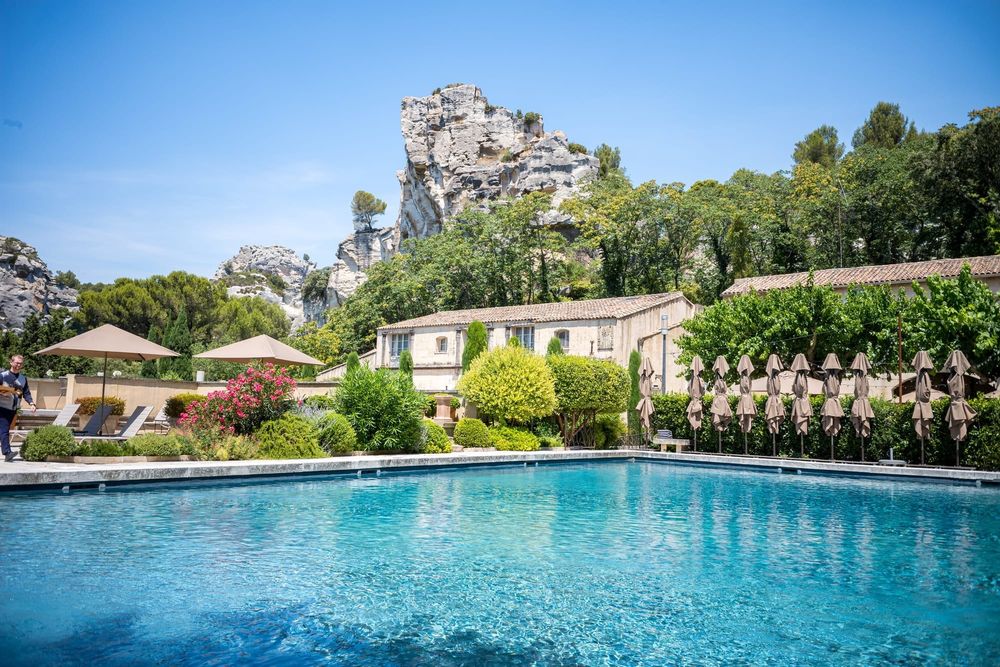
Baumanière sits beneath the pale limestone of Les Baux-de-Provence, rock, cypress, dry scrub. Nothing that needs dressing up.
Lunch by the pool gave the first real sense of the kitchen: simple dishes, cooked with three-star precision, served without ceremony in the sun.
Dinner was on the terrace, starting during golden hour while the rocks above still held the day's heat. By the second half of the meal, the landscape had gone dark.
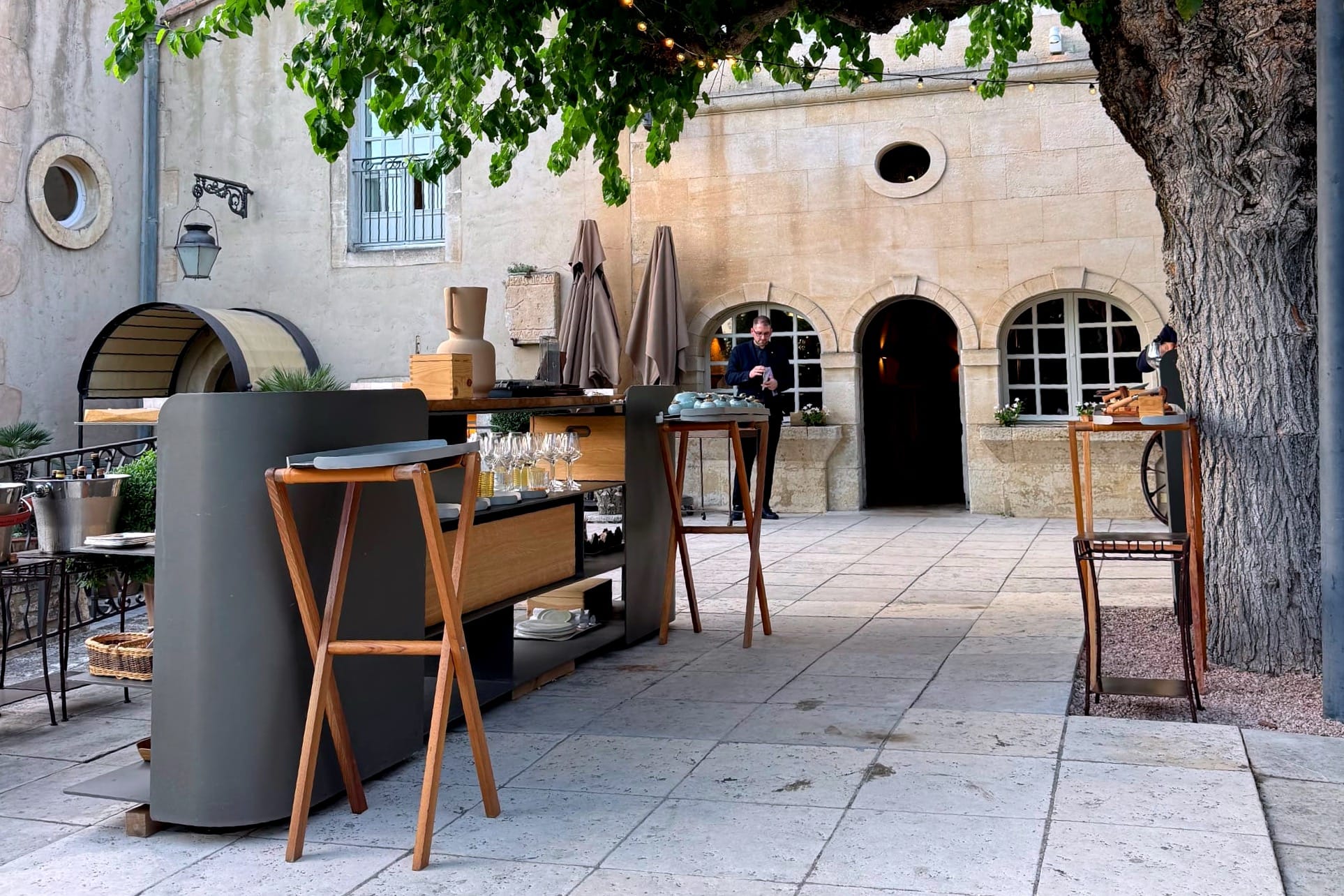
Service was precise without being rigid. Plates arrived on schedule, but nobody felt watched. The concentration you'd expect at this level, without the tension.
Culinary Style or Distinctive Character
We took the shorter tasting menu, Flânerie, entre tradition et création, eight courses, €285, wine pairing €120. Reasonable by the standards of contemporary three-star dining, Paris especially, though not cheap.
Glenn Viel's cooking sits between inheritance and invention. Classical sauces hold the structure; around them he plays with form, temperature and presentation.
Menu / The Dishes
The opening ran under the theme of Twenty Thousand Leagues Under the Sea:
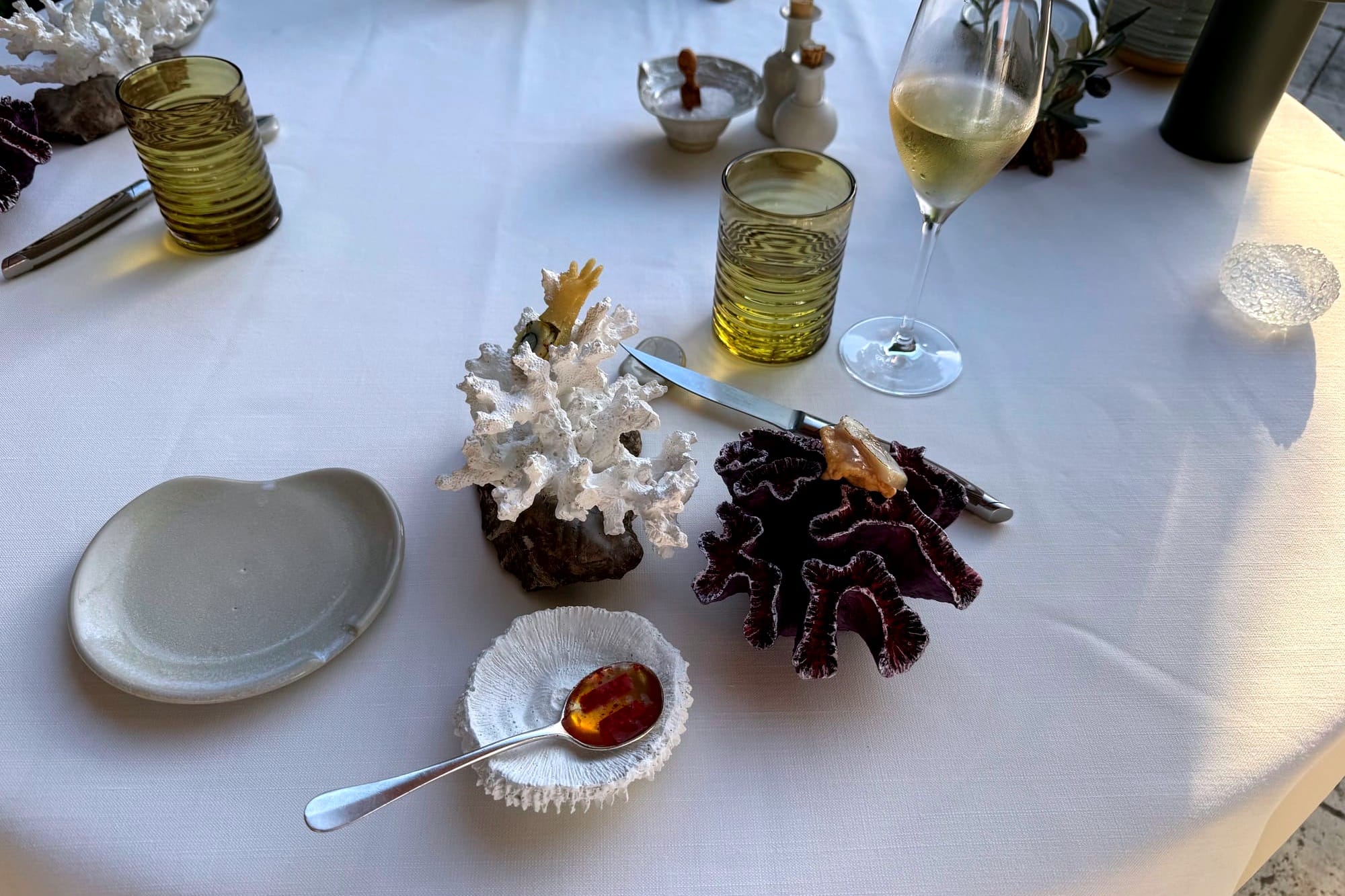
Squid, a clam, a few other small bites building a marine register through shifting textures. Restrained, more introduction than performance.
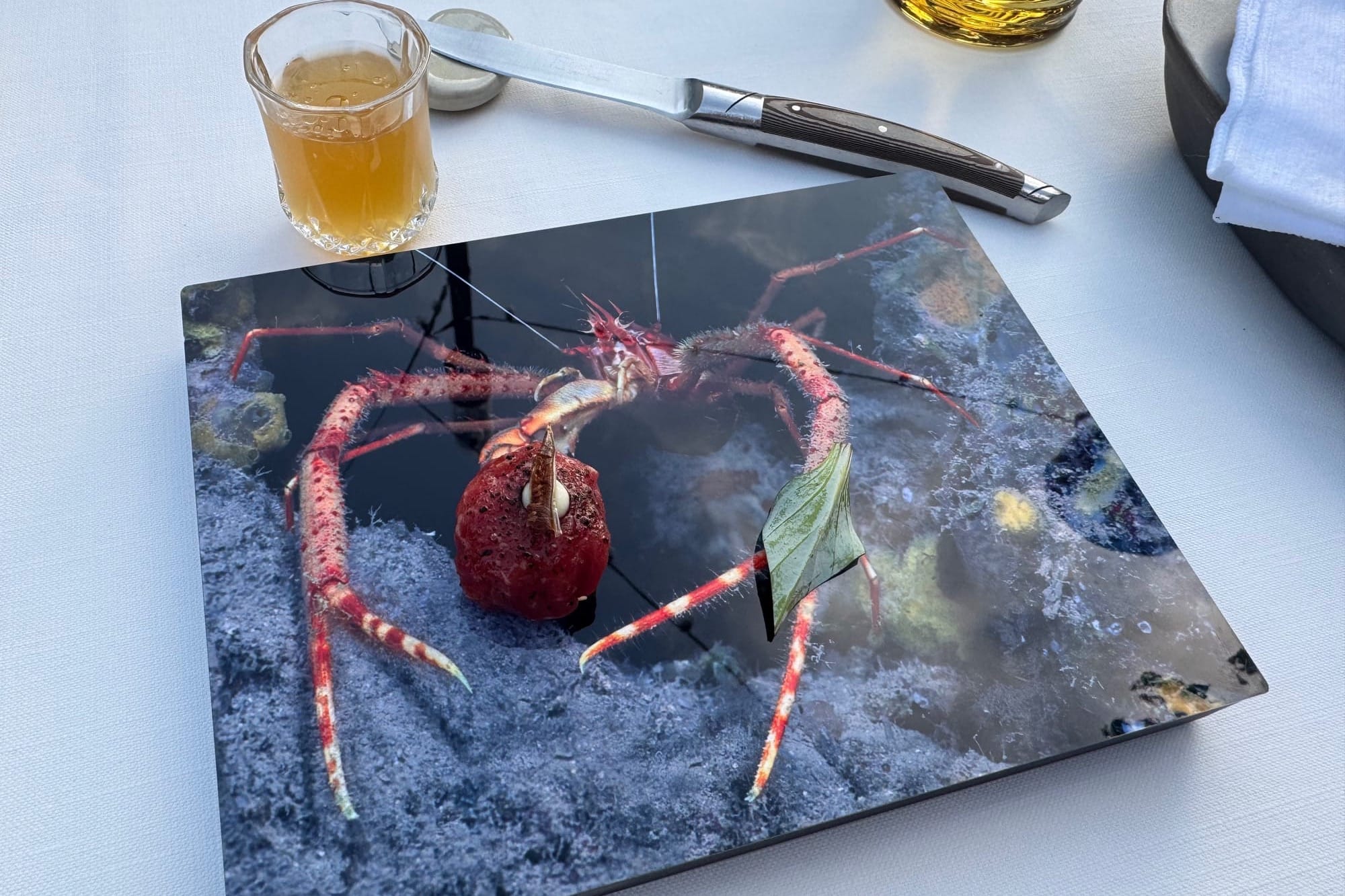
An amuse-bouche of crab wrapped in raw beef followed, with oyster leaf, crab mayonnaise and a cold crab consommé. Unexpected on paper, it worked on the plate, sea and land combined not for novelty but to show flavours you don’t usually connect.
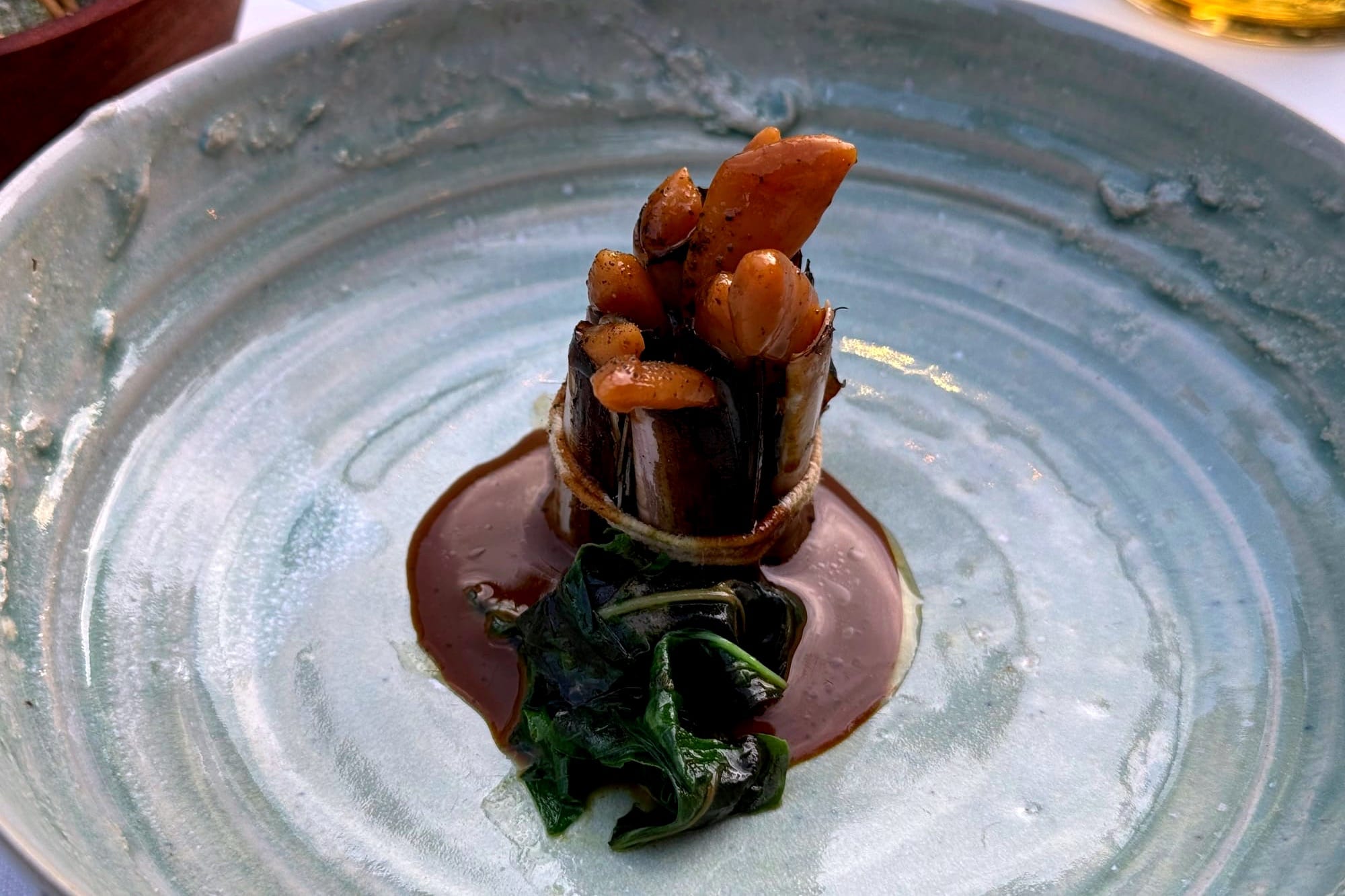
Razor Clams, Their Toes in the Water opened the meal properly: clams bundled tight, served with tweezers as if just gathered from the shoreline. Their "feet" sat not in water but in a rich, maritime sauce. Genuinely wonderful, clean and precise, the kind of course that doesn't turn rubbery under all that presentation. My daughter called it her favourite of the night, immediately.
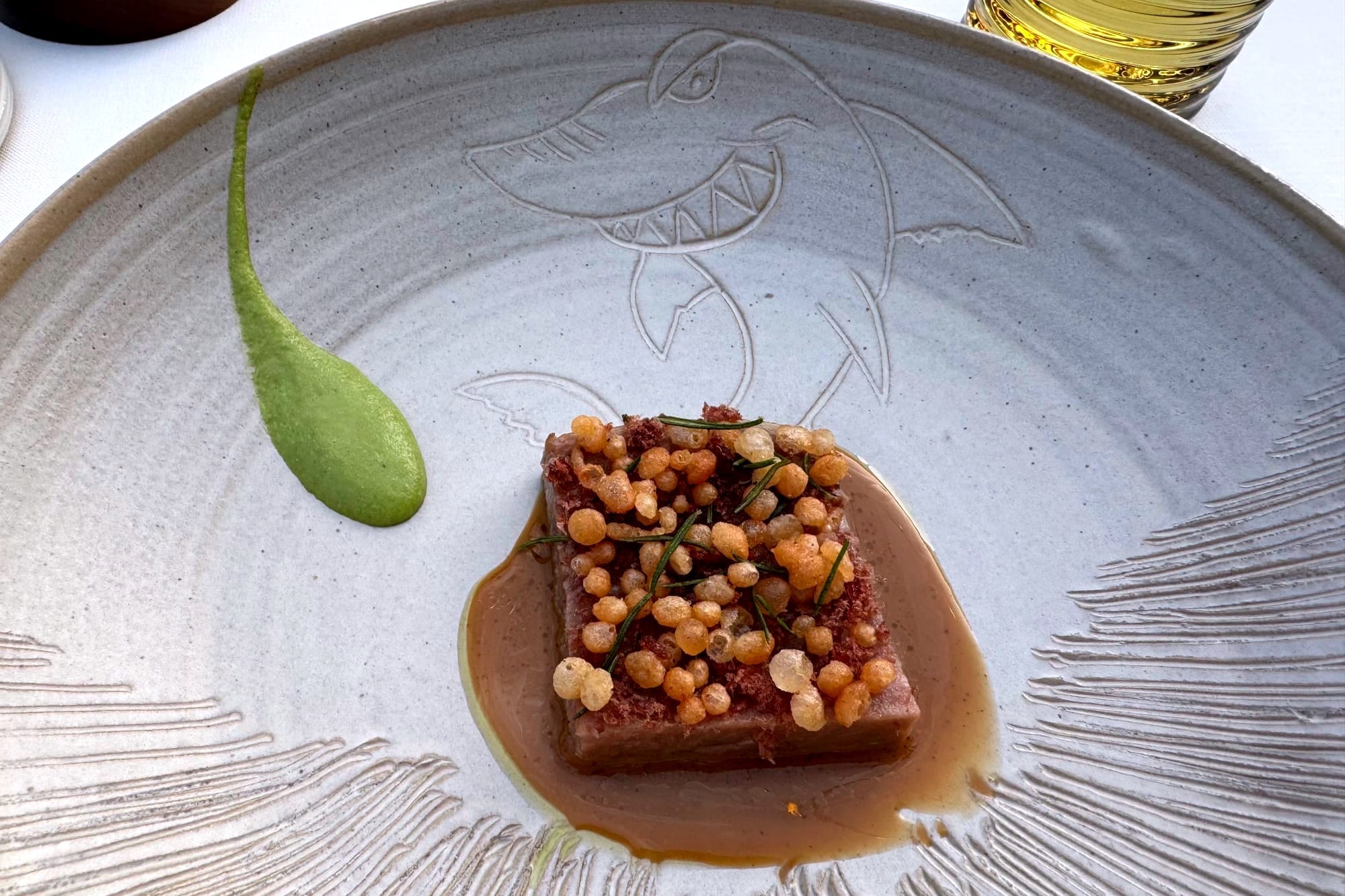
Tuna Tone on Tone followed: tuna belly, crisp sourdough pearls, cecina, a concentrated beef sauce. The cecina brought salt and age against the tuna's richness; the beef sauce pulled the fish closer to a meat course than anyone would expect. Strong, controlled, confident.
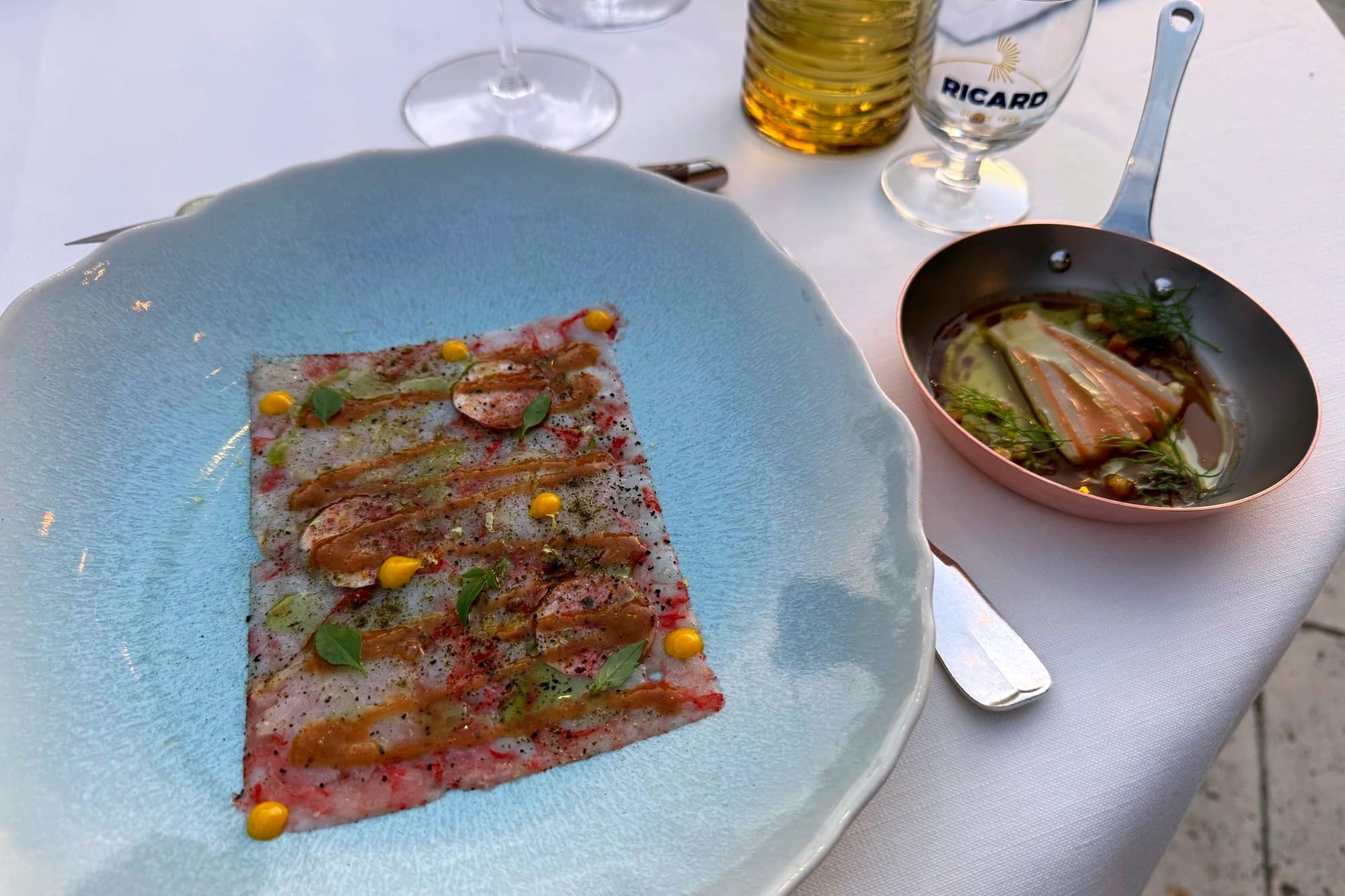
There Are Bouillabaisses and There Is Ours took carabinero prawn and monkfish, pressed into a terrine with fennel and a bouillabaisse sauce. Not bouillabaisse as anyone knows it, but the same underlying logic: maximum flavour from the sea, held together by spice and stock.
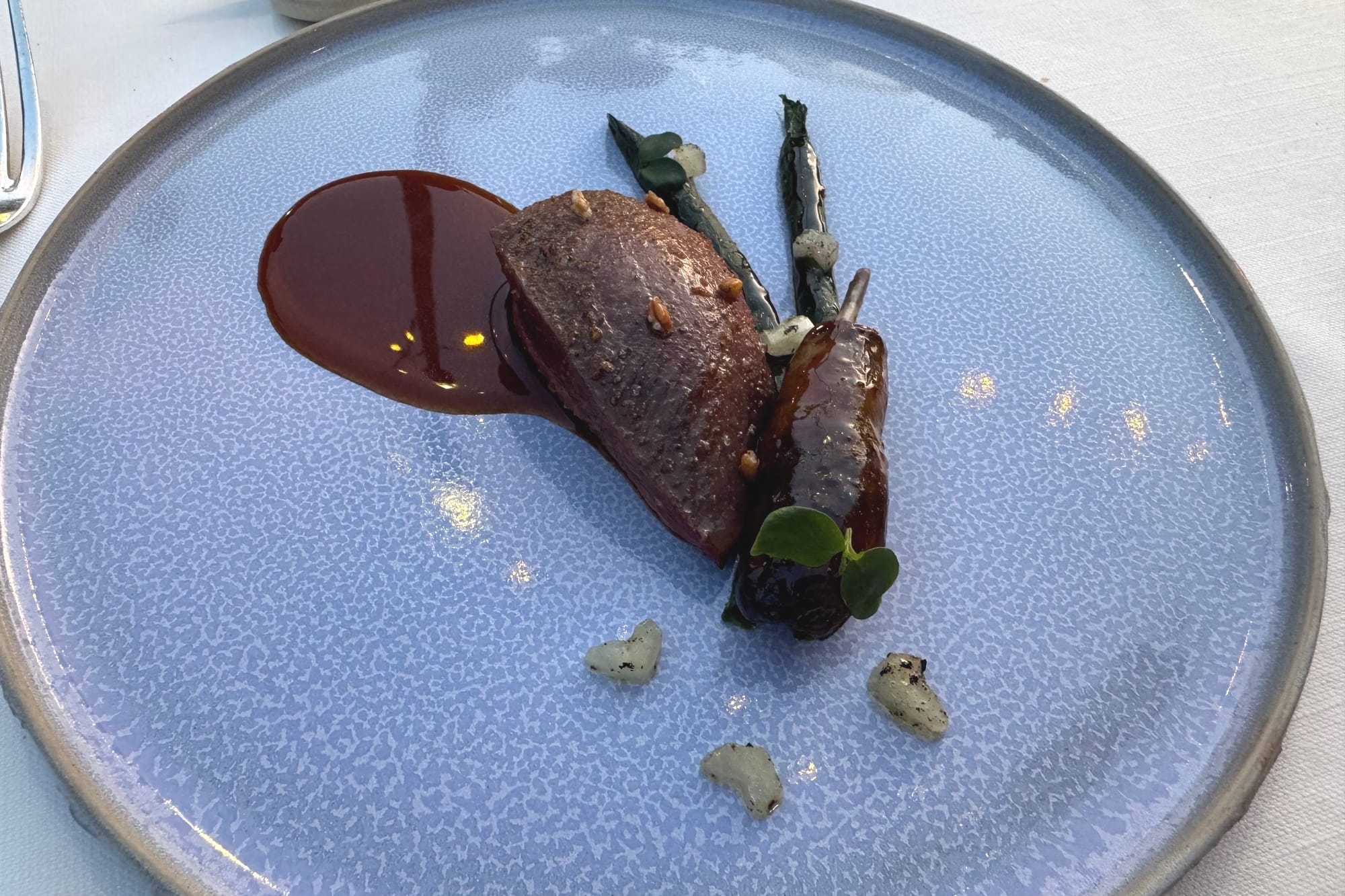
The pigeon, An Inner Pigeon, came in two forms: breast, tender and precise, and a compact cylinder of leg meat, more rustic and concentrated. I've lost the detail of the sauce by now, but the dish itself was complete and assured.
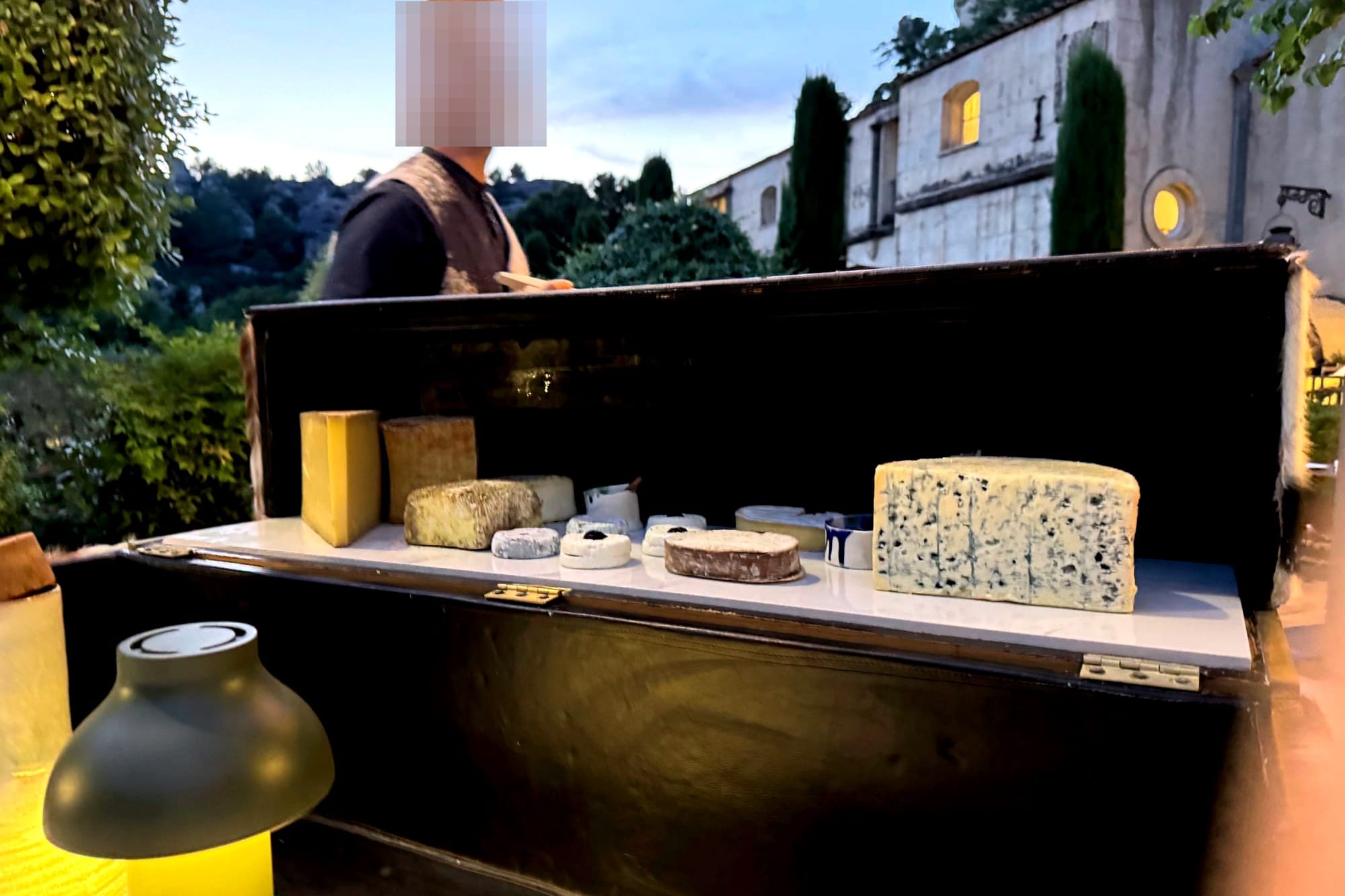
Cheese came from the trolley, a small return to the more classical L'Oustau of 2014. Before dessert, everyone got a different pre-dessert, cucumber, rhubarb, a loosening gesture ahead of the full dessert menu.
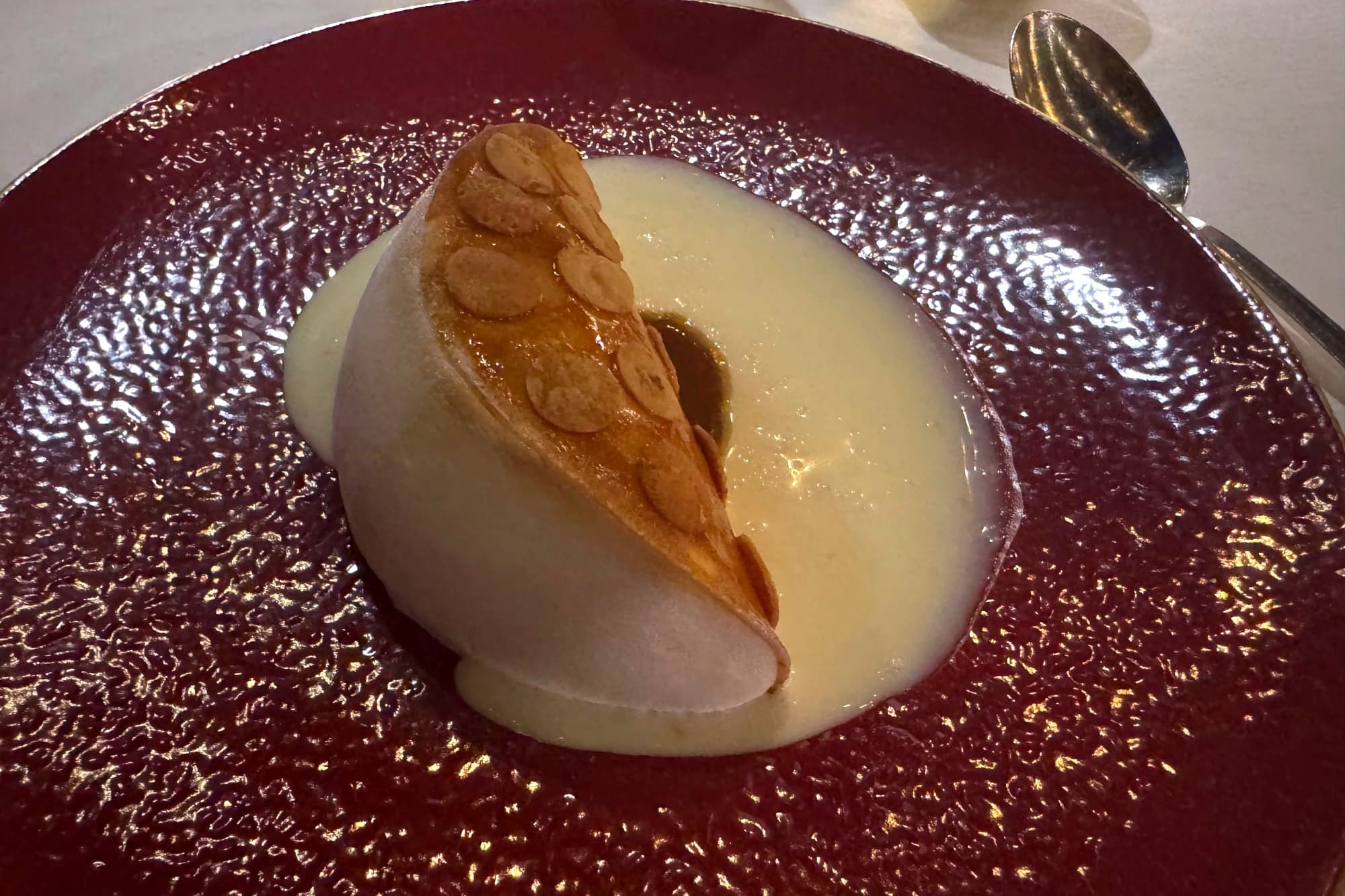
I chose the crêpe soufflée with Grand Marnier sauce, a Baumanière classic made in memory of founder Raymond Thuilier - served since 50 years. Light, orange-scented, unapologetically classical. After everything before it, the directness was a relief.
A Quiet Exchange
Jean-André Charial, the proprietor, came to say hello towards the end of the evening, Glenn Viel just after. The chef's dining-room visit can easily become a ritual gesture. This one wasn't. Viel wanted to know what we'd liked, and when my daughter said the razor clams, he took her answer seriously rather than treating it as something cute to wave off.
A small moment. But it closed a gap between the kitchen and the table that's easy to leave open. And it echoed 2014: the same child, once welcomed with a meal made just for her, now heard out as someone with her own opinion.
Wine
The €120 pairing moved across France with real geographic logic: a Crocci from Domaine Zuria in Bonifacio for a Corsican, mineral note; the 2022 Tavel from Pfifferling's L'Anglore and Château Simone Blanc from the small Palette appellation near Aix; and, for red, the 2022 Équinoxe Crozes-Hermitage from Domaine Equis, Maxime Graillot's Syrah from the northern Rhône, savoury enough to sit beside the pigeon without overpowering it.
No prestige labels. The coherence was the point, salinity, herbs, restraint, at a reasonable total cost.
Verdict
Coming back after twelve years is a strange exercise, memory keeps atmosphere better than detail, and it flatters the past. But the essentials held up: the 2014 L'Oustau was a two-star restaurant that took two young children seriously, not just tolerated them. That hasn't changed.
What has changed is the cooking. More contemporary, more playful with form, more willing to build ideas around its ingredients, but without losing the classical backbone, the sauces, the cheese trolley, the crêpe soufflée untouched by any of it. The razor clams, the tuna, the reworked bouillabaisse show a kitchen that keeps moving without needing to prove it.
The terrace did real work too, not just scenery: watching the rocks above Les Baux go dark over dinner tied the whole meal to something outside the plate. But the setting alone doesn't explain the evening. The cooking, the service and the landscape lined up.
L'Oustau suits diners who want the foundations of grand French cuisine without wanting them frozen. What stayed with me longest wasn't the third star or eighty years of history. It was a three-year-old, once welcomed with a meal made just for her, coming back twelve years later to tell the chef her favourite dish, and finding that he actually listened.
Location: Les Baux-de-Provence, France
Chef: Glenn Viel
Michelin rating: ★★★
Visited: July 2026
For a different expression of French haute cuisine, explore my reviews of Paris restaurants, where classical technique meets a more urban, often more experimental rhythm.