Restaurant KEI Paris Review: French Cuisine with Japanese Precision
Kei Kobayashi’s 3 Michelin star tasting menu delivers French haute cuisine with Japanese precision, from the signature “vegetable garden” to perfect blue lobster and Gunma wagyu, in a discreet dining room with calm, professional service.

FDJ Score: 8.5/10 (Three-Star Level)
Review
I booked Kei for an 8pm dinner during a Paris trip with my wife and daughter. We have spent time in Japan as a family, and that history shaped my anticipation in a quiet way. Not as a search for familiarity, but as a question.
What happens when a Japanese chef reaches the most guarded summit of French dining, and does it without turning his origin into a theme.
Kei Kobayashi, from Nagano, has become a symbol of that possibility. And he is no longer alone. Paris now counts two Japanese chefs at the helm of three-star kitchens, a small but telling shift in a city that rarely changes its peaks quickly, and one that invites comparison with my recent meal at L’Ambroisie. At Kei, the language remains French, but the precision feels learned elsewhere.
Location & Atmosphere
Kei is discreet from the street. You could walk past without understanding what is happening inside.
When we arrived, the door was still closed. A small group of guests had formed outside, the particular silence of people who know they are early, and prefer not to look eager. I noticed that many of the diners seemed to come from East Asia, which made sense. Kobayashi is not only famous in Paris. In parts of Asia he carries a different kind of weight, as someone who entered French gastronomy from the outside and ended up at its highest level.
Inside, we were seated in the main room. The space feels polished and controlled, built around reflection and light, rather than grandeur. It is not the open-armed luxury of the palace hotels. Compared with Epicure, Le Gabriel, or Plénitude, Kei is more concentrated, less theatrical, and in some ways more honest. There is nowhere for the evening to hide. The room holds you close, and the food has to do the work.
That closeness also changes the mood. The dining room is serious, but not tense. It asks for attention without demanding reverence.
Culinary Style or Distinctive Character
Kei’s cooking is French in structure and Japanese in posture.
You can find Japanese ingredients, wagyu, shiso, yuzu. You can sense Japanese technique in the way temperatures are managed, in the cleanliness of textures, in the refusal to overstate. But the cuisine is not Japanese. It remains French, creative and modern, built on sauces, progression, and the careful logic of a menu that moves by degrees rather than jolts.
The precision is the point. Not precision as perfectionism, but as a form of respect. Respect for product, for timing, for the diner’s palate.
Menu / The Dishes
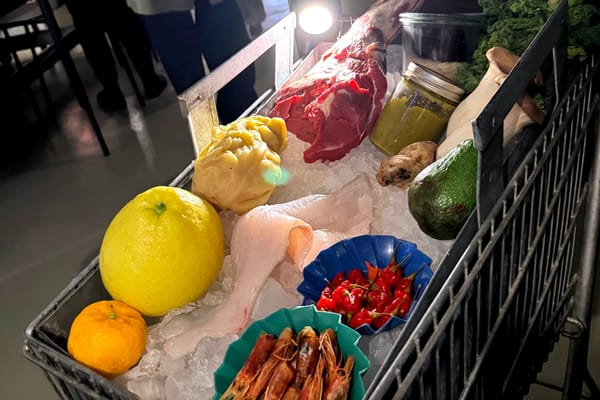
The restaurant offers only one seven-course menu, in four versions that differ by ingredients and price. The entry-level Dégustation menu at €280 felt unusually fair for three-star Paris. The most expensive version, Gran Horizon, costs €560, which is now close to the city’s three-star norm. The higher tiers bring the familiar luxury signals, caviar, black truffle, lobster, wagyu. In the more modest version, pigeon becomes the principal meat course.
I chose Gran Horizon, partly out of curiosity and partly because I wanted to understand the restaurant at its fullest volume.
The amuse-bouches arrived as a sequence of short, intelligent statements.
A red shiso granita that cooled the palate without flattening it. A smoked yoghurt tart topped with Spanish sardine and red onion, where smoke stayed elegant and the sardine’s salt felt clean. A green shiso tempura paired with confit tomatoes and avocado, crispness and softness placed carefully against each other. Then a gougère filled with Comté and ichimi chilli, French comfort given a precise edge.
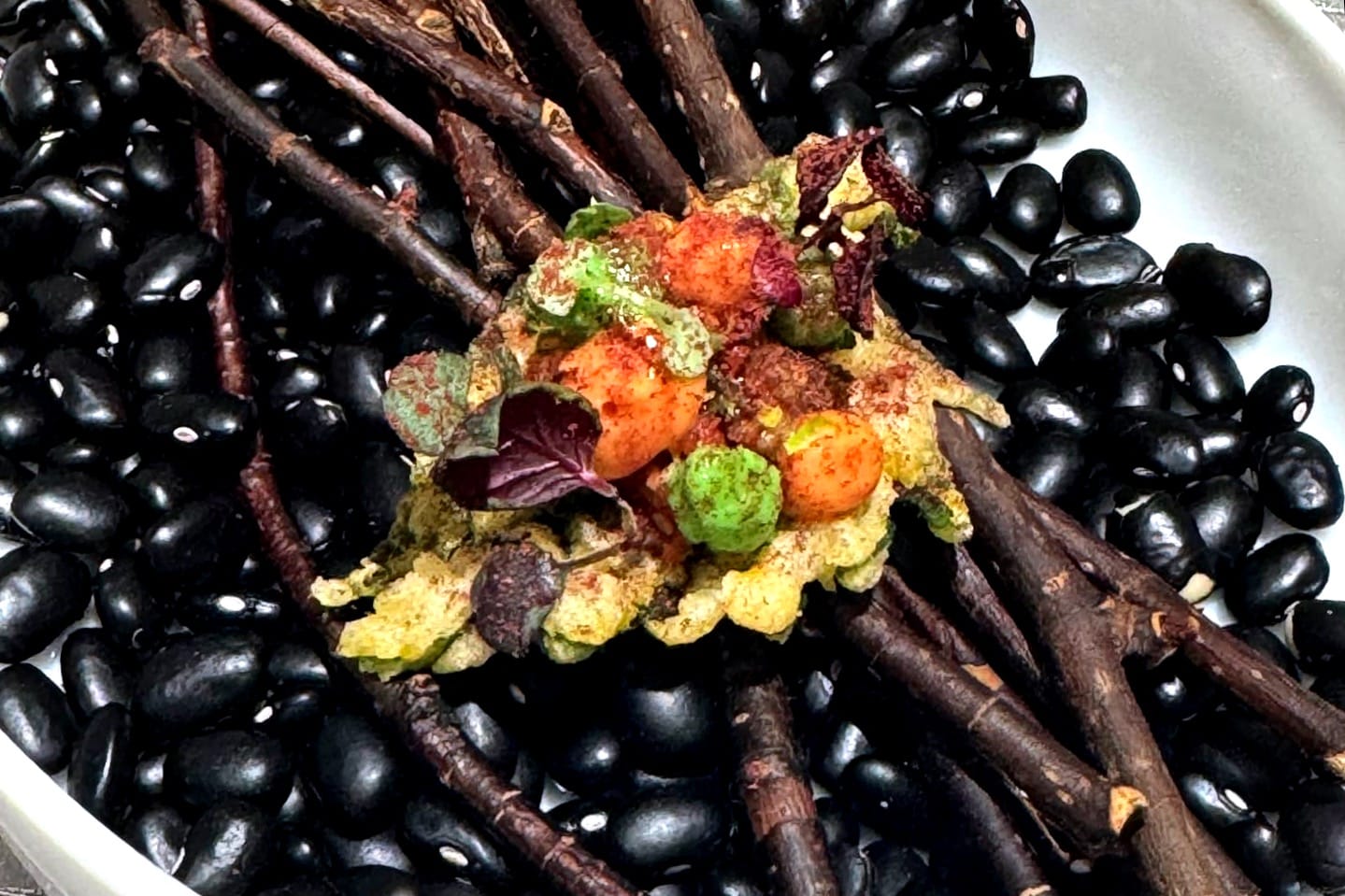
An extra bite followed, a macaroon with black truffle. It could have been a flourish. Instead it tasted like the kitchen’s confidence in restraint, the truffle used for depth rather than dominance.
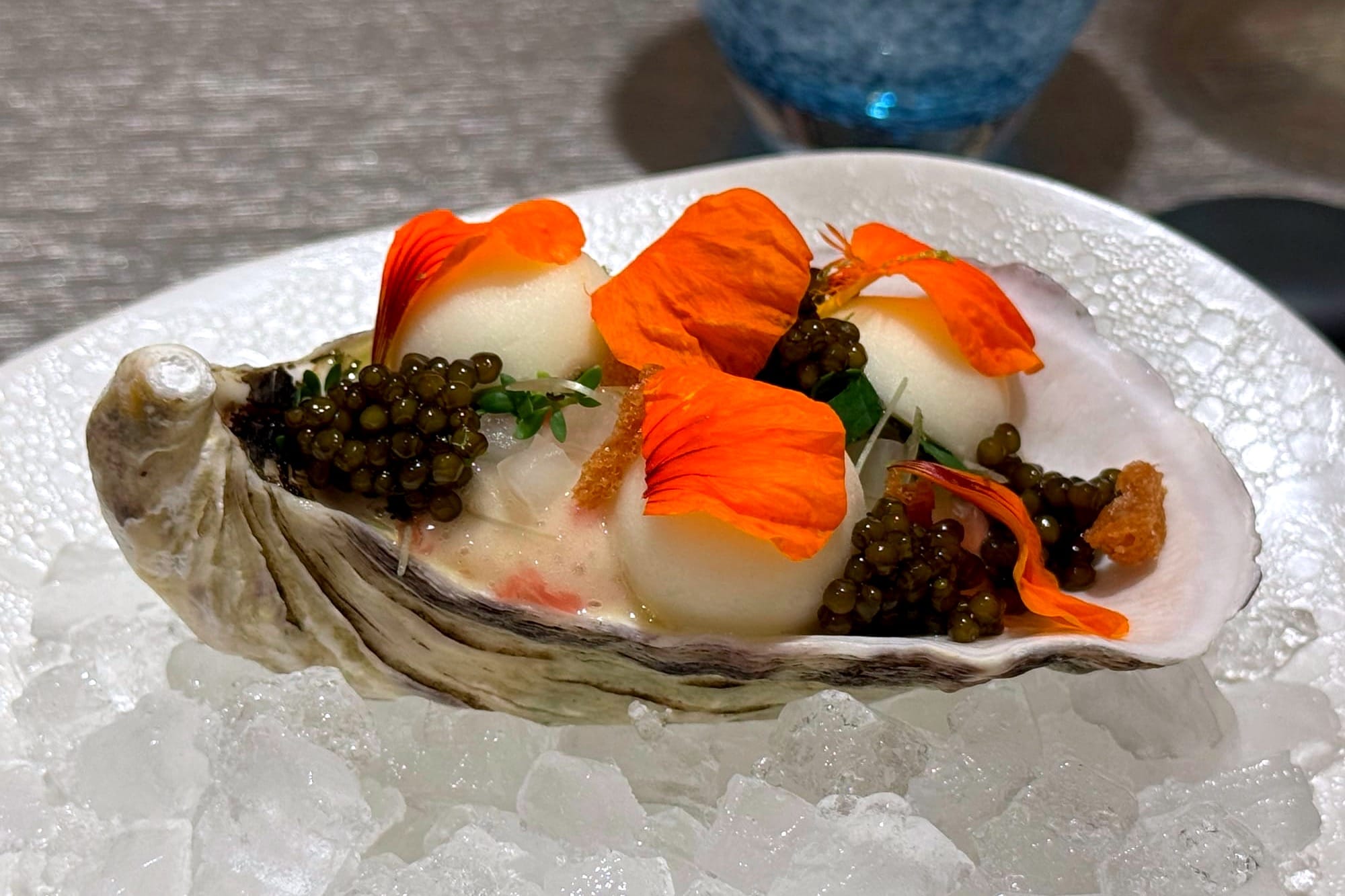
The first course was a Gillardeau oyster with daikon radish, seaweed jelly, yuzu sorbet, and Kristal caviar. It was built on cold, salinity, and the clean friction between textures. The oyster’s weight, the daikon’s snap, the seaweed’s quiet iodine, and the yuzu’s brightness held together without forcing harmony. It felt exact.
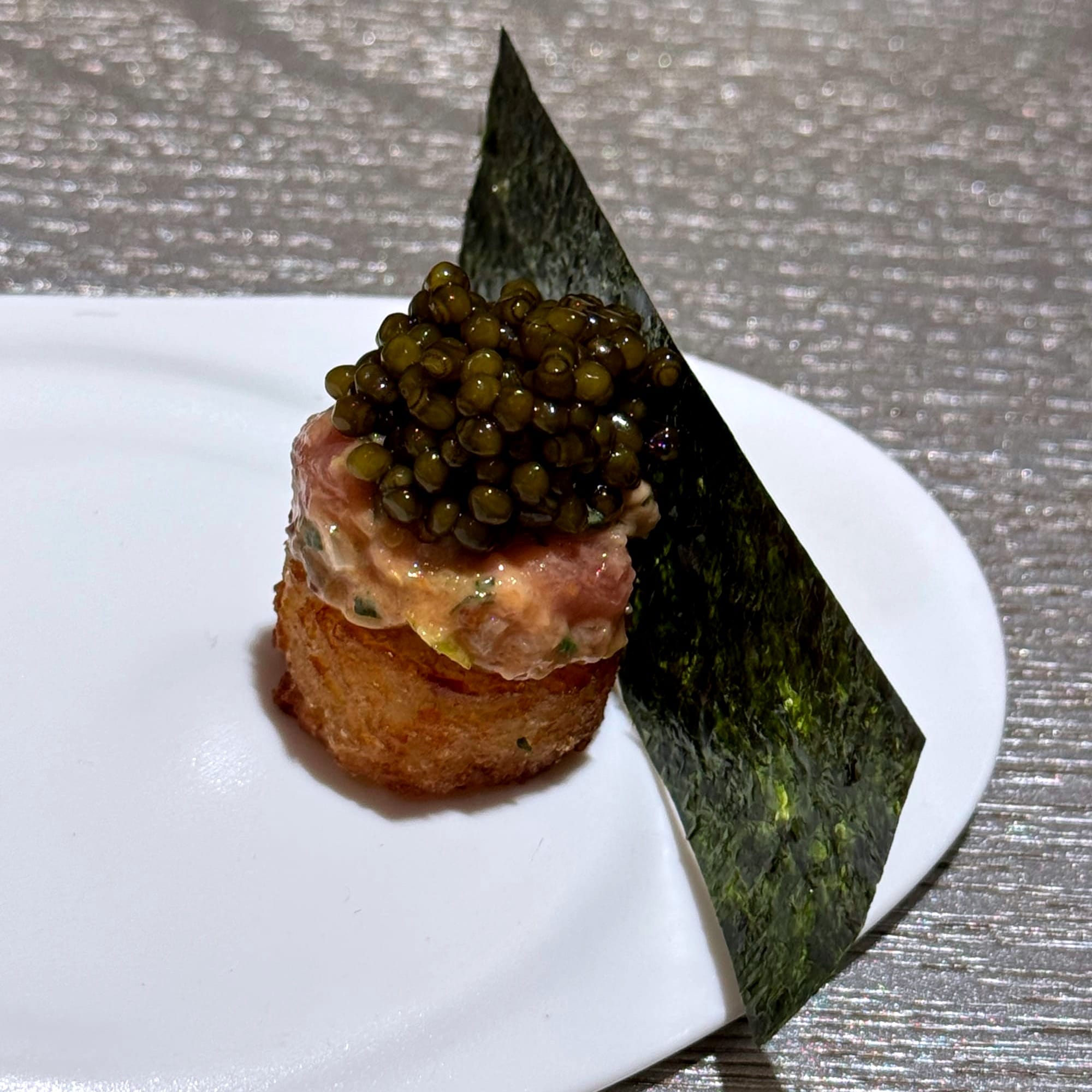
Another supplement followed, a maki made with fried rice, red tuna tartare, Kristal caviar, and nori. Here the Japanese reference was more explicit, but it still did not feel like an identity performance. It was simply delicious, and tightly composed.
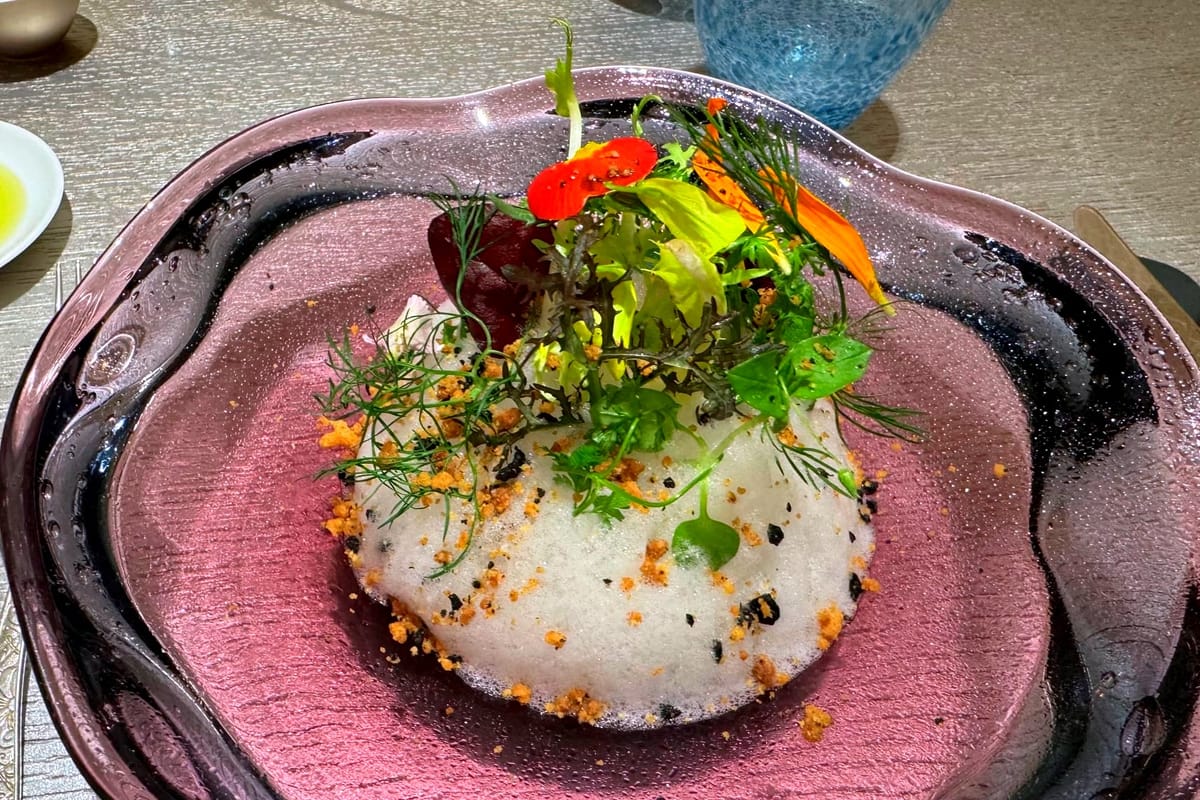
Then came the dish that seems to have become one of Kei’s signatures, and I understood why. “The vegetable garden” arrives with the apparent simplicity of a salad, but it is not a salad in intent. Scottish smoked salmon sits beneath arugula cream, lemon mousse, tomato vinaigrette, and black olive crumble. It was shockingly aromatic. The flavours did not blur. They unfolded in layers, bright, bitter, creamy, salty, with a kind of freshness that felt engineered rather than accidental.
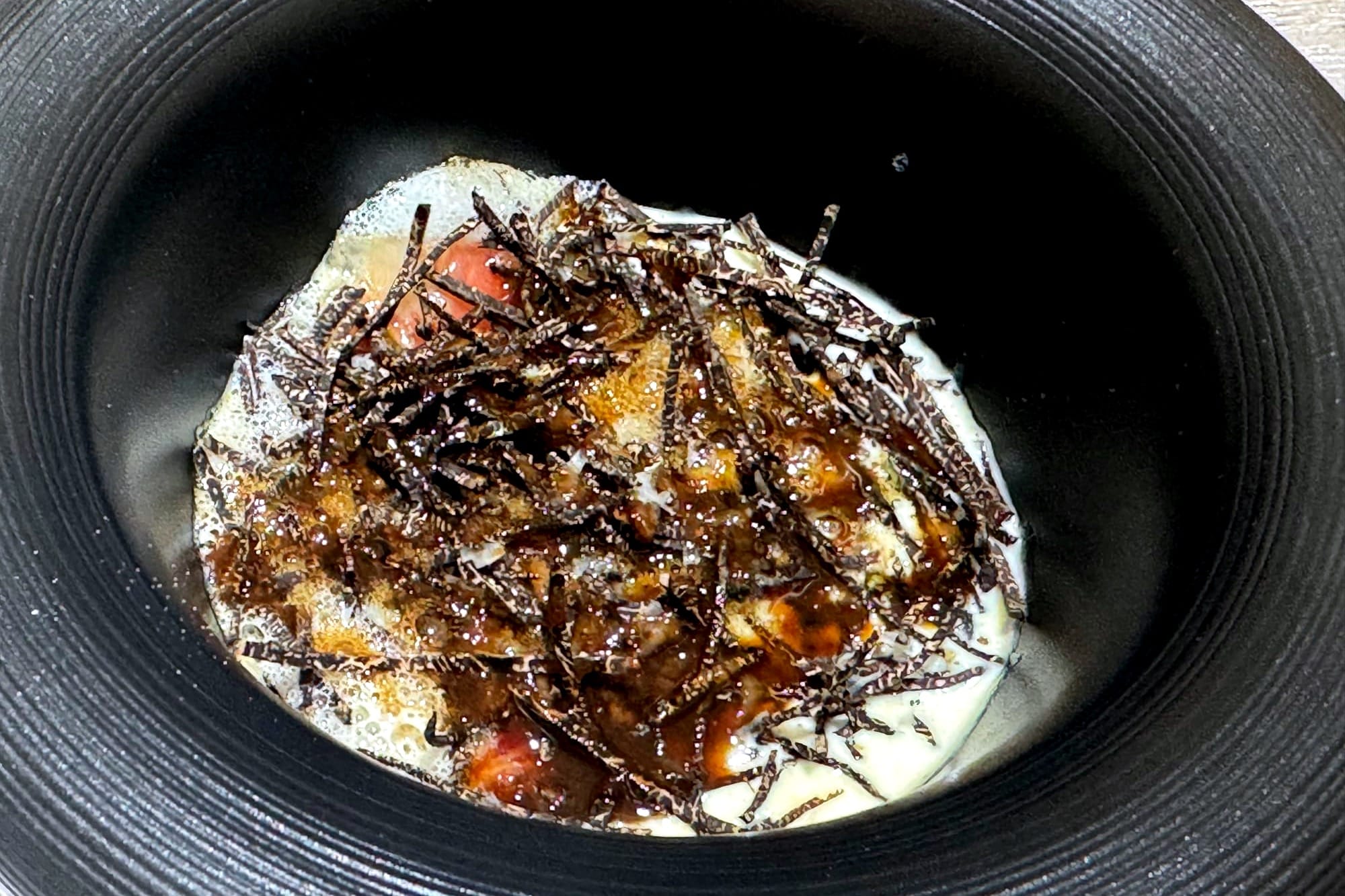
Gnocchi with parmesan cream, bellota ham, and black truffle followed, and the menu turned toward winter. This was a perfect stage for winter truffle, warm, fat-driven, and quiet enough to let aroma rise slowly. The dish did not try to modernise comfort. It simply refined it.
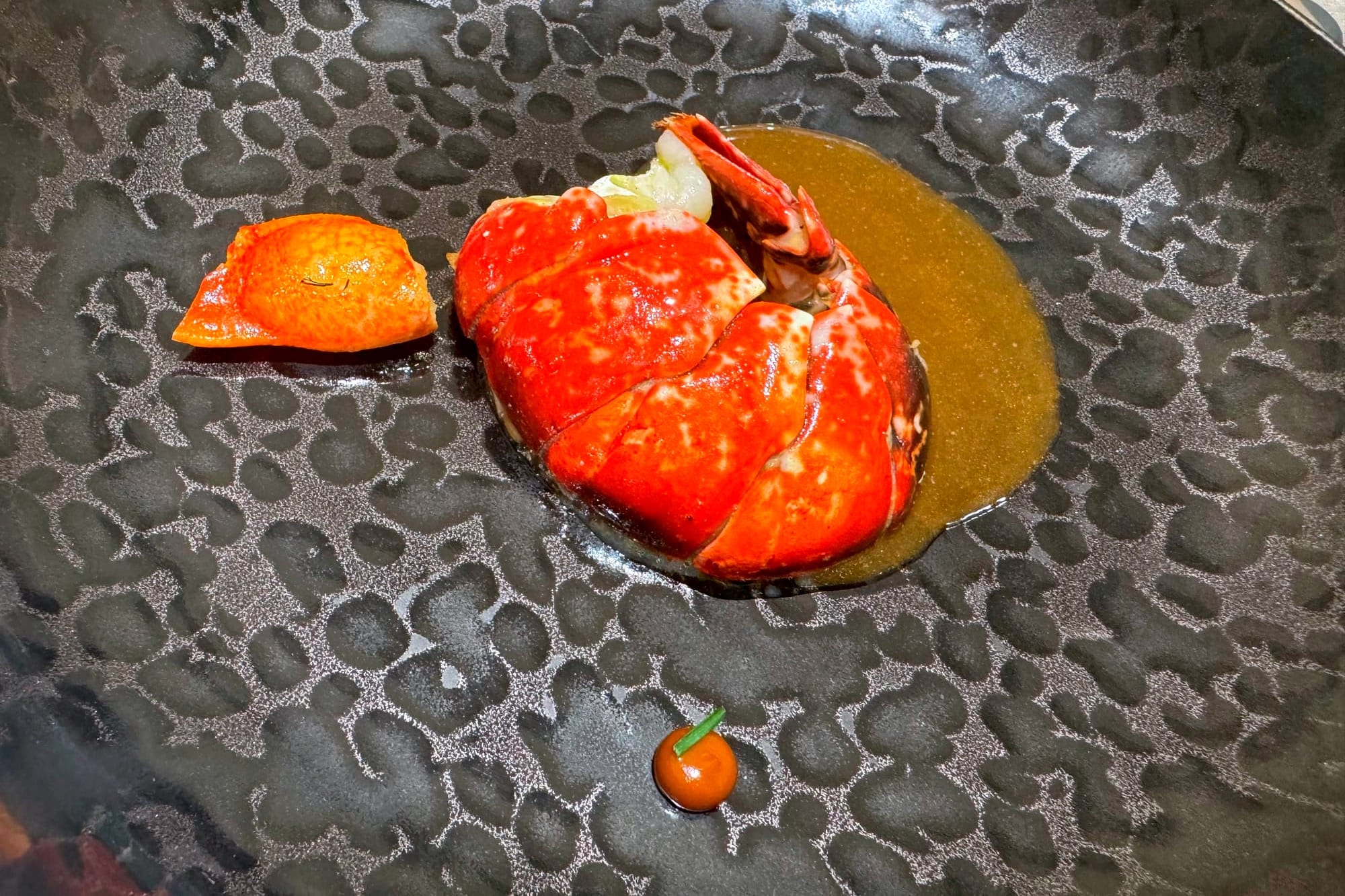
The blue lobster was the evening’s first moment of disbelief. Served with grilled enoki, lemon and walnut condiment, and a cognac-laced lobster sauce, it was cooked with a precision that is hard to describe without sounding theatrical. The texture was exactly right, firm but yielding, the sauce amplifying sweetness rather than masking it. It may be the best lobster I have ever eaten.
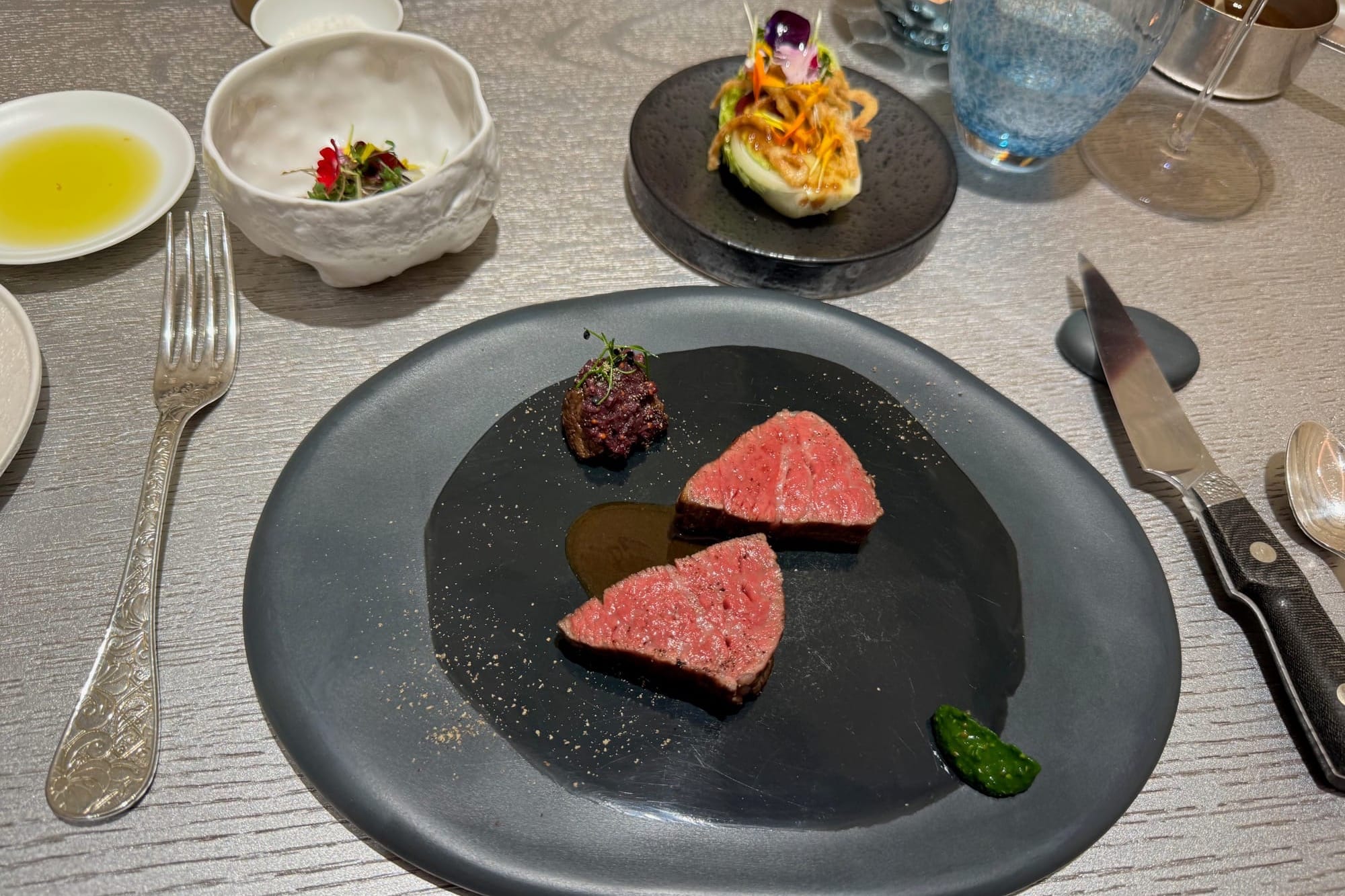
Wagyu from Gunma arrived next, grilled and served with a piece of its fat lacquered with soy sauce, with horseradish, watercress, and an old-fashioned mustard condiment. Alongside it, wagyu tartare with yukke seasoning and puffed rice, plus a salad with fried onions and sour dressing. It was again an exercise in control. Richness was present, but it never became heavy. Even in Japan, I have not often eaten beef that felt so composed, so calmly confident.
There was a human ease to the evening that mattered just as much as the cooking. Service was highly professional and genuinely welcoming, but the room still felt relaxed. That balance is rare in three-star dining, where warmth can slide into performance, and formality can harden into distance. Here, the tone stayed steady, attentive without tension. As a family, we felt we could breathe.
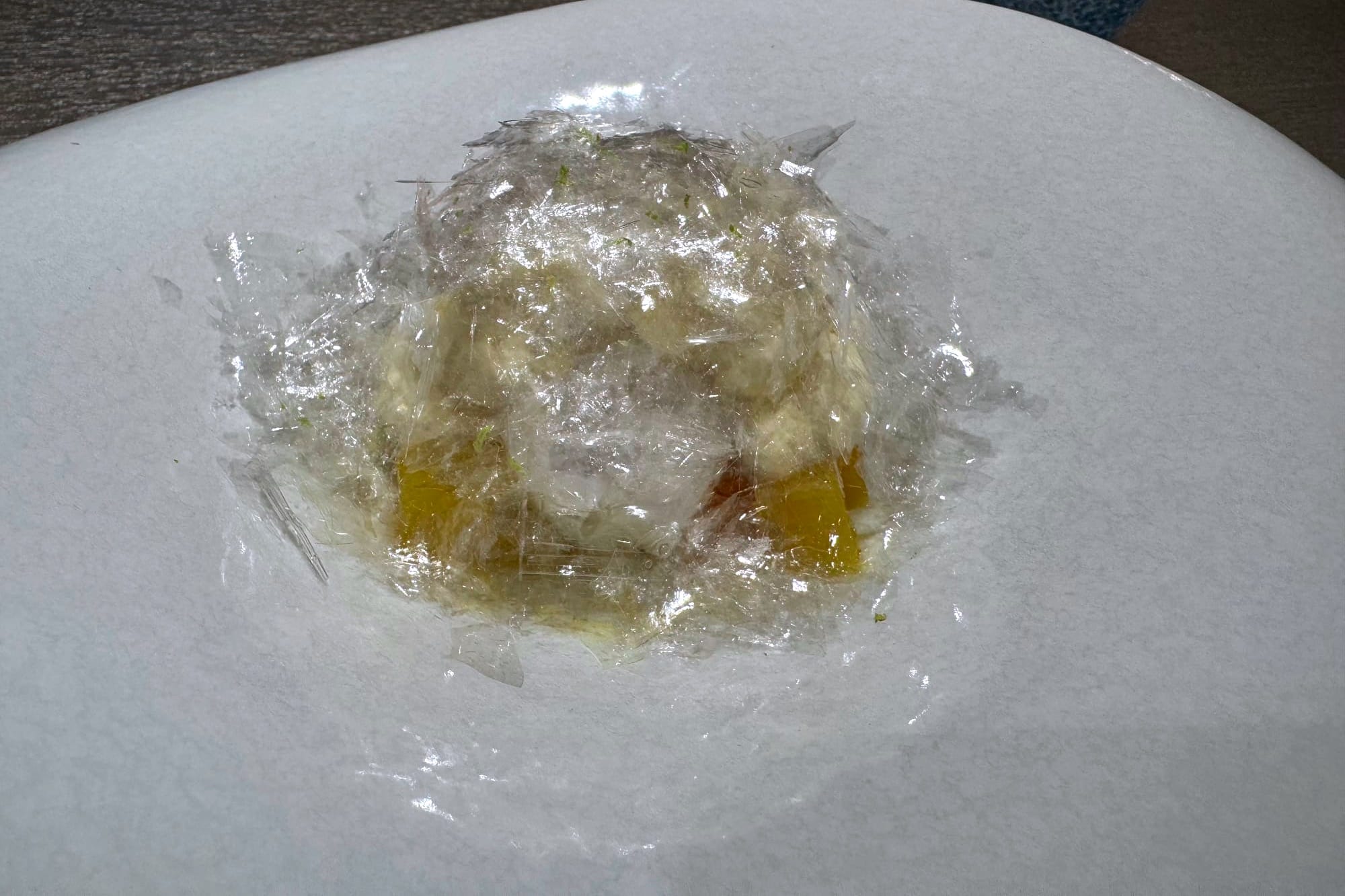
Dessert began with citrus, a smoothie and a granita lifted by puffed sugar. It cleansed the palate without turning cleansing into austerity.
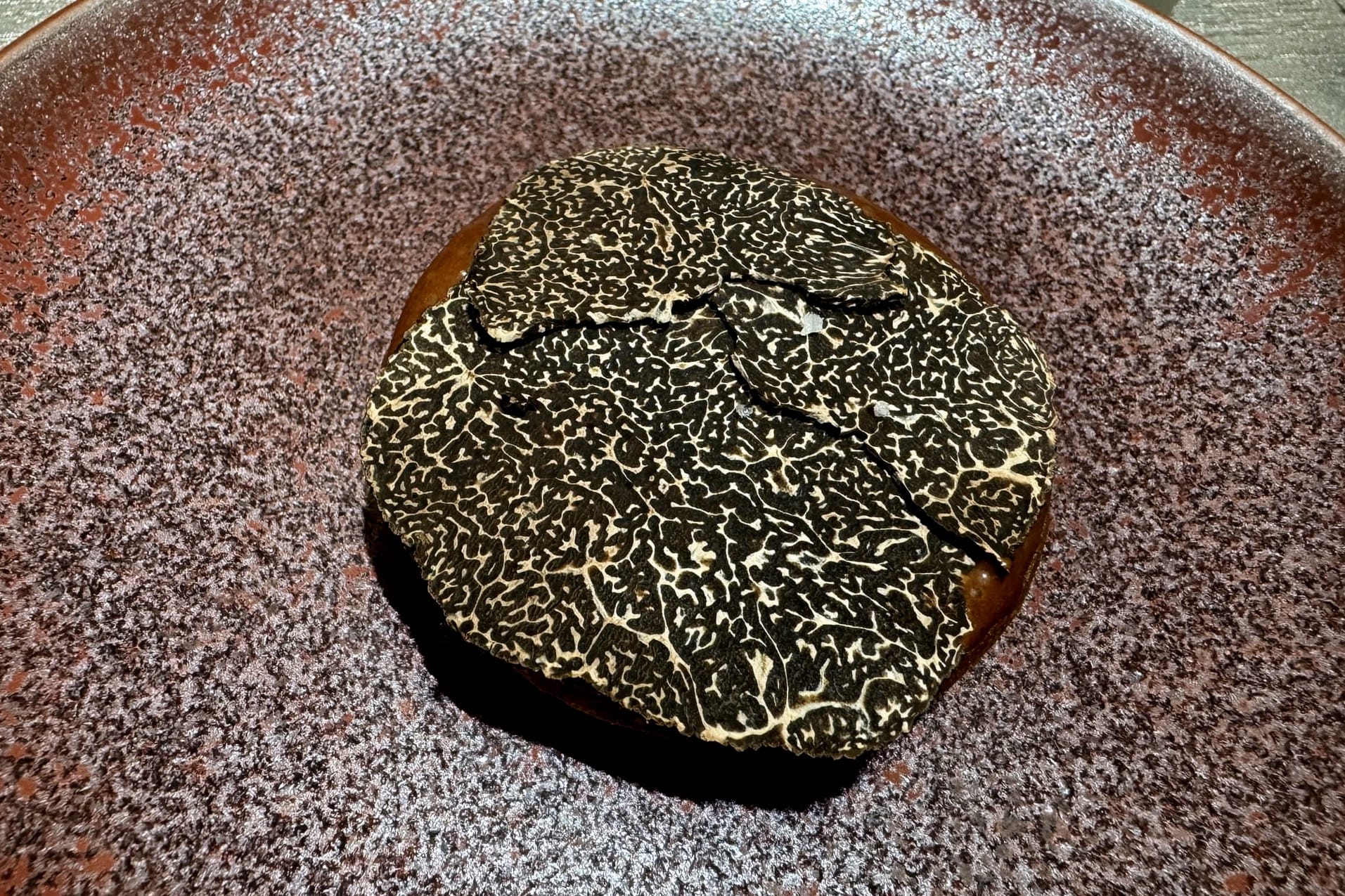
The final dessert was a creamy Guanaja chocolate tart with black truffle, a pairing that can easily become vulgar if pushed too hard. Here it was measured and seamless. The truffle did not announce itself. It lingered in the background like a darker register, making the chocolate feel deeper rather than louder.
Petite fours closed the meal with a lighter touch, pina colada frozen marshmallow and a caramel tartelette. Small sweetness, clean finish.
Wine
I did not take a pairing. Instead, I drank various glasses over the course of the menu, which suited the meal’s shifting register and kept the evening feeling light on its feet.
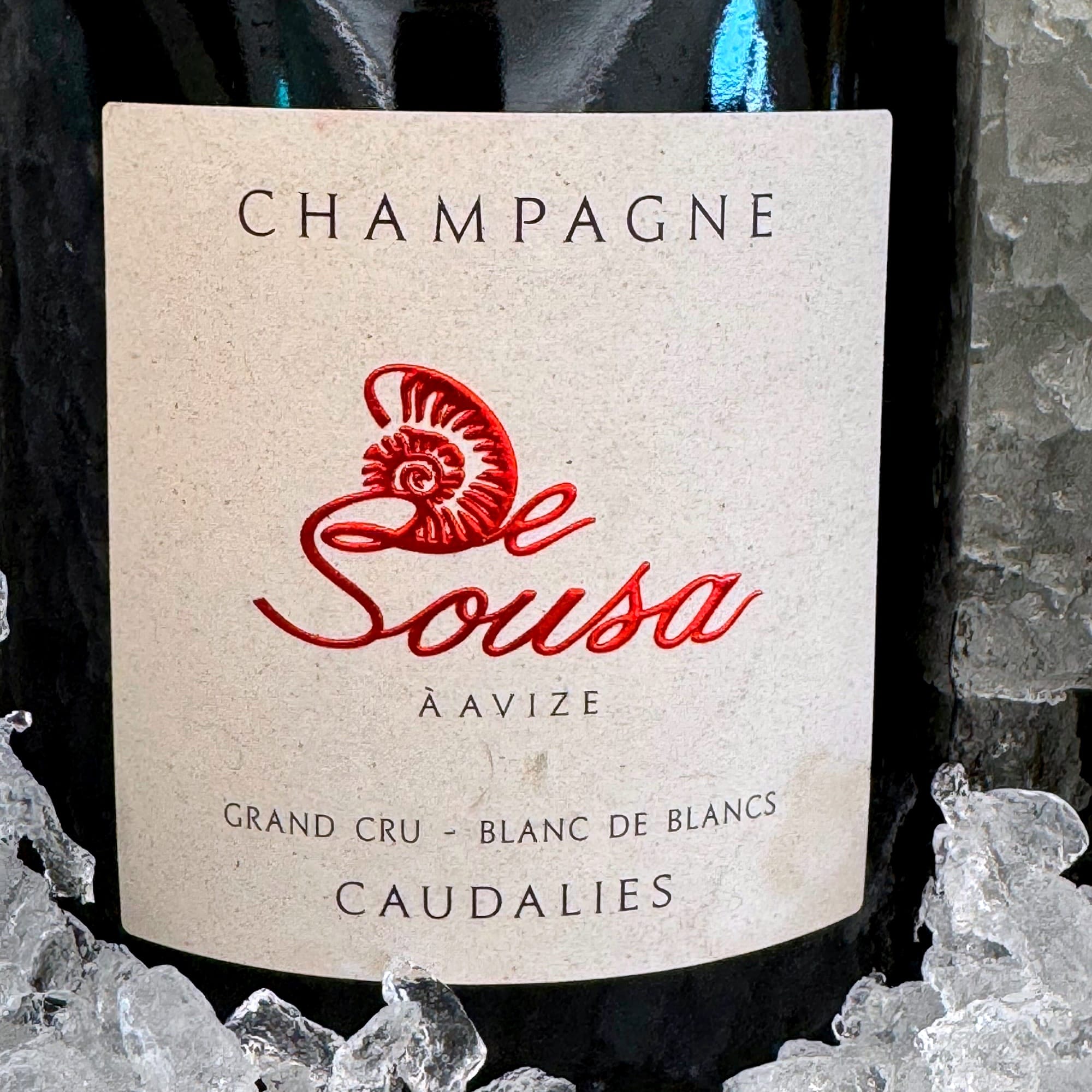
I began with a superb Champagne, De Sousa “Caudalies,” Avize Grand Cru Blanc de Blancs. It set a clear, mineral tone with a quiet, vinous depth. With the early marine courses it stayed precise, bringing a gentle line of salt and citrus and a long, chalky finish.
Later, I moved into Burgundy, including a glass of 2017 Corton-Charlemagne Grand Cru from Domaine Rapet, a wine with the kind of firm, chalky structure and measured power that makes sense at this level. It held its line against richness rather than competing with it, and it brought a calm gravity to the middle of the meal.
Verdict
Kei is compelling because it refuses the obvious narrative.
It is not Japanese cuisine transplanted into Paris, and it is not French classicism worn like a costume by an outsider. It is French cooking, modern and creative, made with Japanese discipline. The ingredients are luxurious when you choose the higher menu, but luxury is not the restaurant’s true argument. Control is.
Compared with the palace hotels, Kei feels more concentrated and more exposed. That exposure becomes its strength. The room is close. The service is calm and precise. The dishes arrive with purpose, and the evening progresses without noise. I left with the feeling that the restaurant’s greatest achievement is not its status, but its sincerity, expressed through precision, and through the quiet confidence to let each course speak clearly.
- Location: Paris, France
- Chef: Kei Kobayashi
- Michelin rating: ★★★
- Visited: February 2026
For a broader comparison of how Kei stands among Paris’s highest level of dining, see my overview of the eight Michelin three-star restaurants in Paris I have visited.

![Best Food & Cooking Blogs to Cook Like a Pro ([year]) - OnToplist.com](https://www.ontoplist.com/images/ontoplist32.png?id=6907c0787bcda)