Shiki Omakase Vienna Review: Authentic Sushi Omakase in the Heart of Vienna
With Shiki Omakase, Vienna gains an intimate sushi counter dedicated to Japanese-style omakase. A thoughtful, chef-led experience that balances authenticity, ambition, and the realities of sourcing exceptional fish in a landlocked city.

FDJ Score: 6.0/10 (One-Star Level)
Review
Shiki has long been a familiar name in Vienna’s Japanese dining landscape. Founded and operated by Joji Hattori, the restaurant built its reputation on a polished, cosmopolitan interpretation of Japanese cuisine, one that appealed equally to business diners and an audience curious about contemporary Japan. With the opening of Shiki Omakase in December 2025, Hattori takes a more focused step. The ambition is clear and unambiguous: to bring an authentic sushi omakase experience to Vienna, one that moves closer to Japanese tradition than the main restaurant ever intended.
Strictly speaking, the menu is not limited to sushi alone. It follows the logic of a sushi kaiseki, allowing space for cooked and seasonal dishes that frame the nigiri rather than overwhelm it.
Omakase and the Nature of Sushi
High-level sushi omakase differs fundamentally from everyday sushi. The sequence is paced by the chef, each piece formed and served at the precise moment it should be eaten. Temperature, texture, and balance are transient. Nigiri waits for no one. The nori, especially, is crucial. It must be crisp, aromatic, and alive with seaweed perfume. Once it softens, the experience collapses. This is sushi that demands attention and immediacy, rewarding the diner who eats instinctively rather than cautiously.
Omakase, which in its Japanese sense implies a chef-led menu shaped and served in real time, can also inspire more structured tasting menus; a distinctly Spanish interpretation is explored in my review of Smoked Room Madrid.
Location & Atmosphere
The experience begins in the Shiki Boutique, located roughly one hundred meters from the main restaurant. The space is filled with refined Japanese objects: porcelain, yukata, knives. The atmosphere feels quietly assured, the kind of shop one might encounter in Kyoto without second thought. The transition from retail to dining is gentle. A greeting, a seat, an offered aperitif.
I choose a glass of Louis Roederer Blanc de Blancs 2017. The acidity and restraint suit the anticipation.
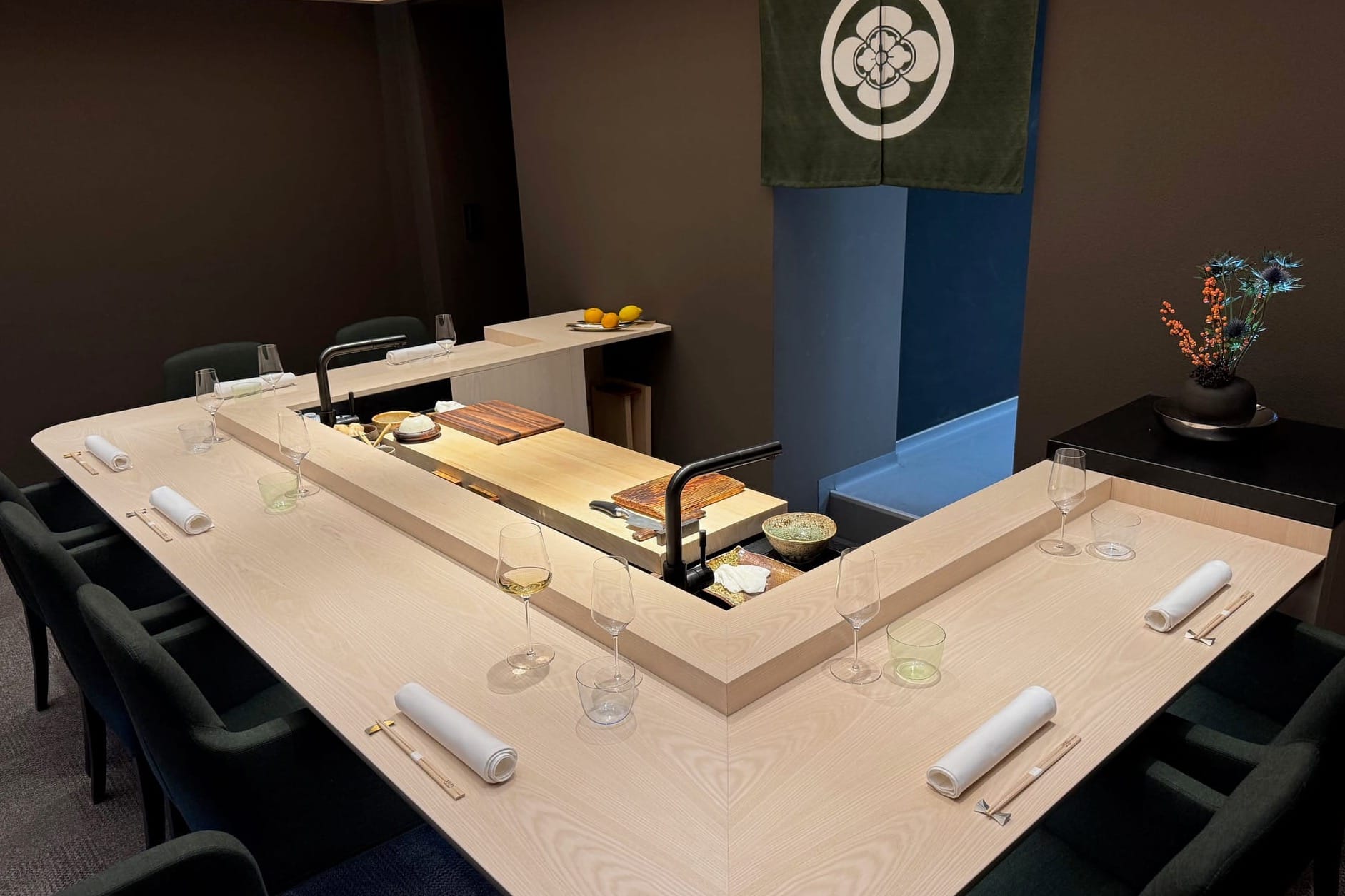
Once all guests have arrived, we are invited into the adjoining room. The sushi counter seats eight. Wood, light, and proportion are carefully judged. It is an intimate setting without theatricality.
Culinary Style and Structure
I visit on a Saturday lunch and opt for the extended Akasaka menu at 348 euros. The intention of the kitchen is pedagogical as much as culinary. The two chefs speak openly, explain techniques, origins, and decisions. This openness defines the character of the meal as much as the food itself.
The structure follows classical Japanese sequencing, moving from light and vegetal to rich and marine, before resolving in sweetness.
Menu / The Dishes
The meal opens with sakizuke. Snow peas in dashi are clean and calming. Toasted nori, gently crisped over binchotan charcoal, arrives topped with toro tartare and natto. The contrast between warmth, fat, and fermentation is immediate and satisfying.
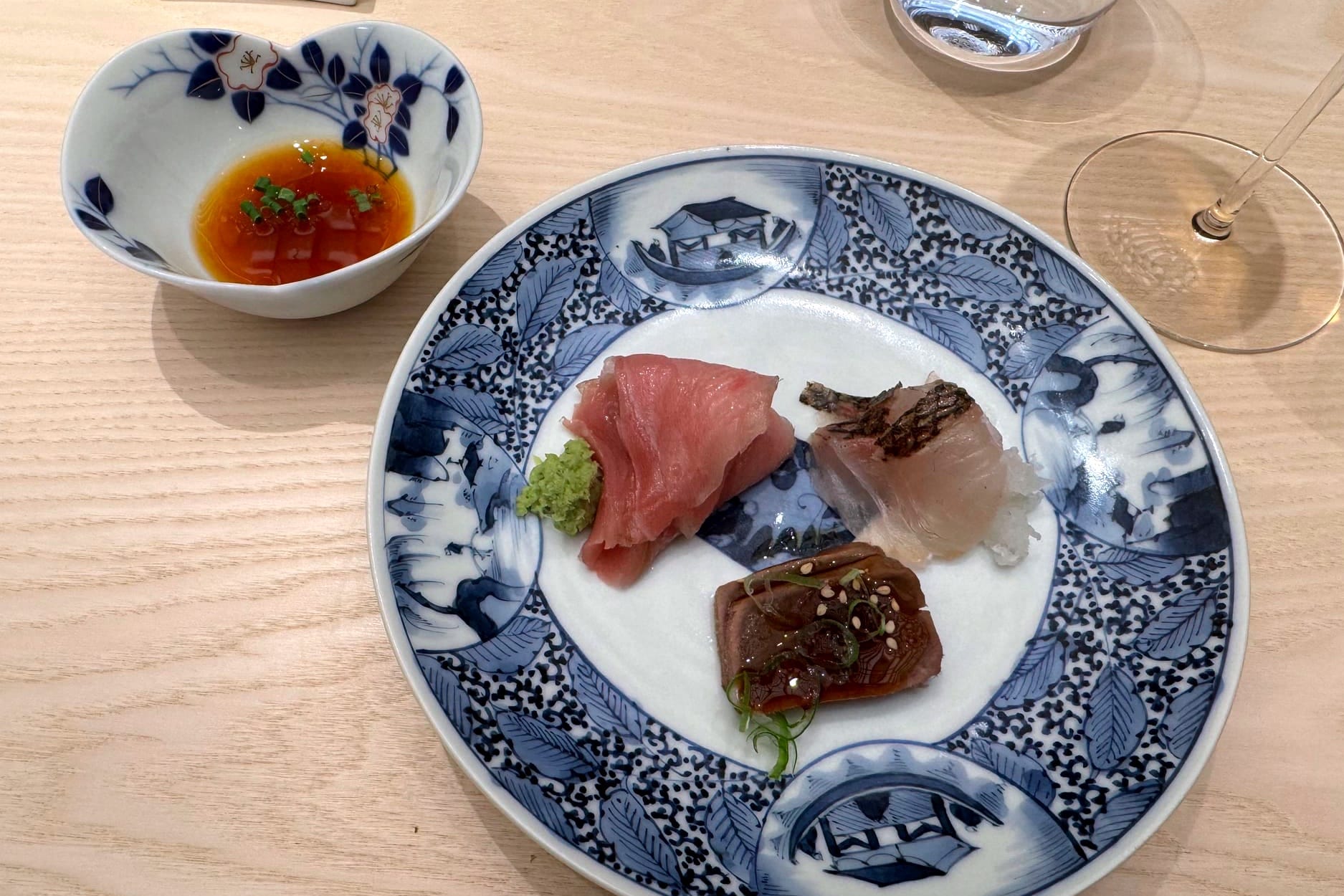
Otsukuri follows. Bluefin toro, lightly smoked bonito, and sea bream are sliced with precision, though the selection feels conservative rather than expansive.
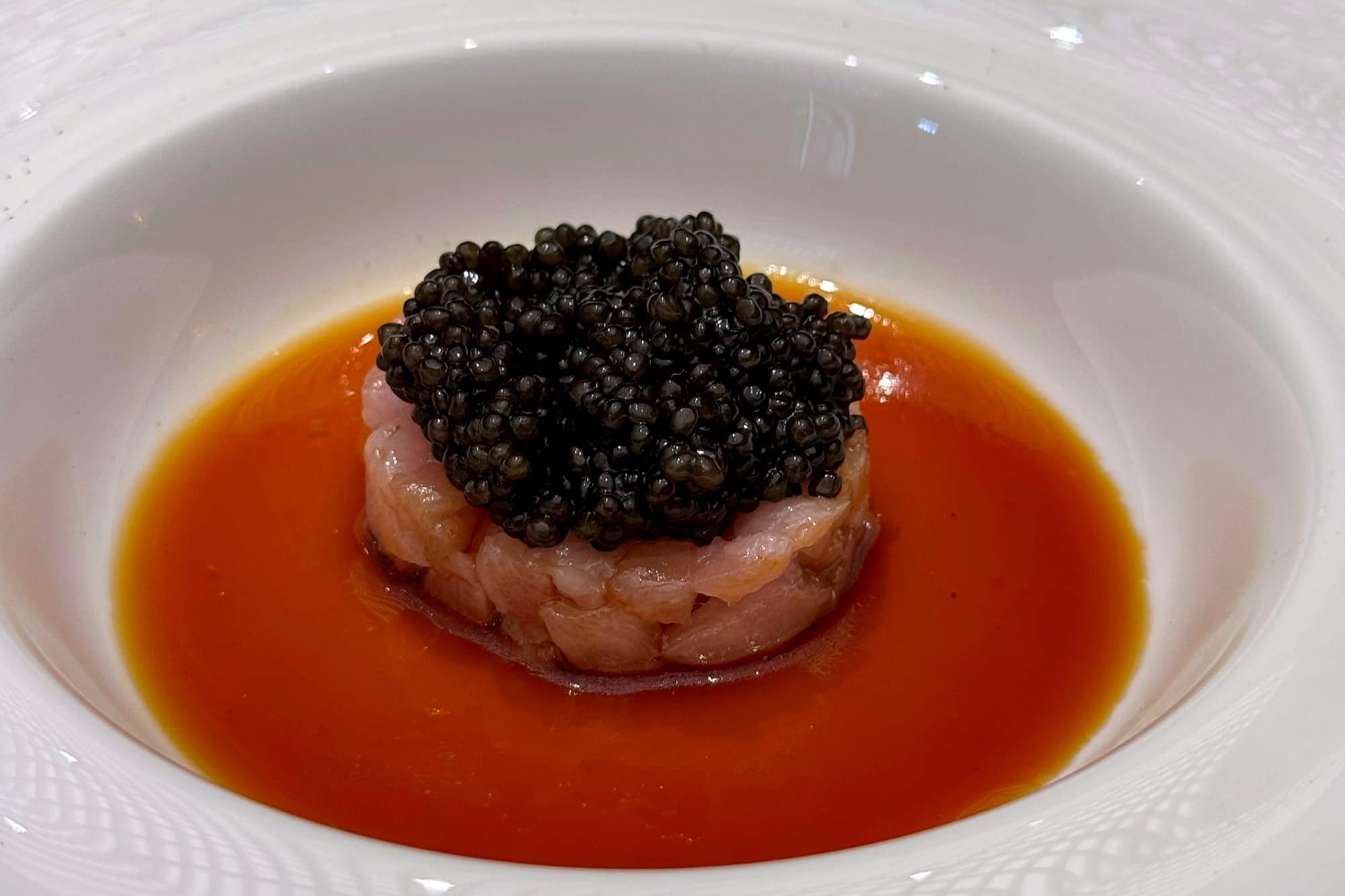
As part of the extended menu, a toro tartare with caviar appears under mukouzuke. It is generous and indulgent, more Western in instinct, but well executed.
Sunomono brings relief. Tomato and artichoke, lightly pickled, reset the palate.
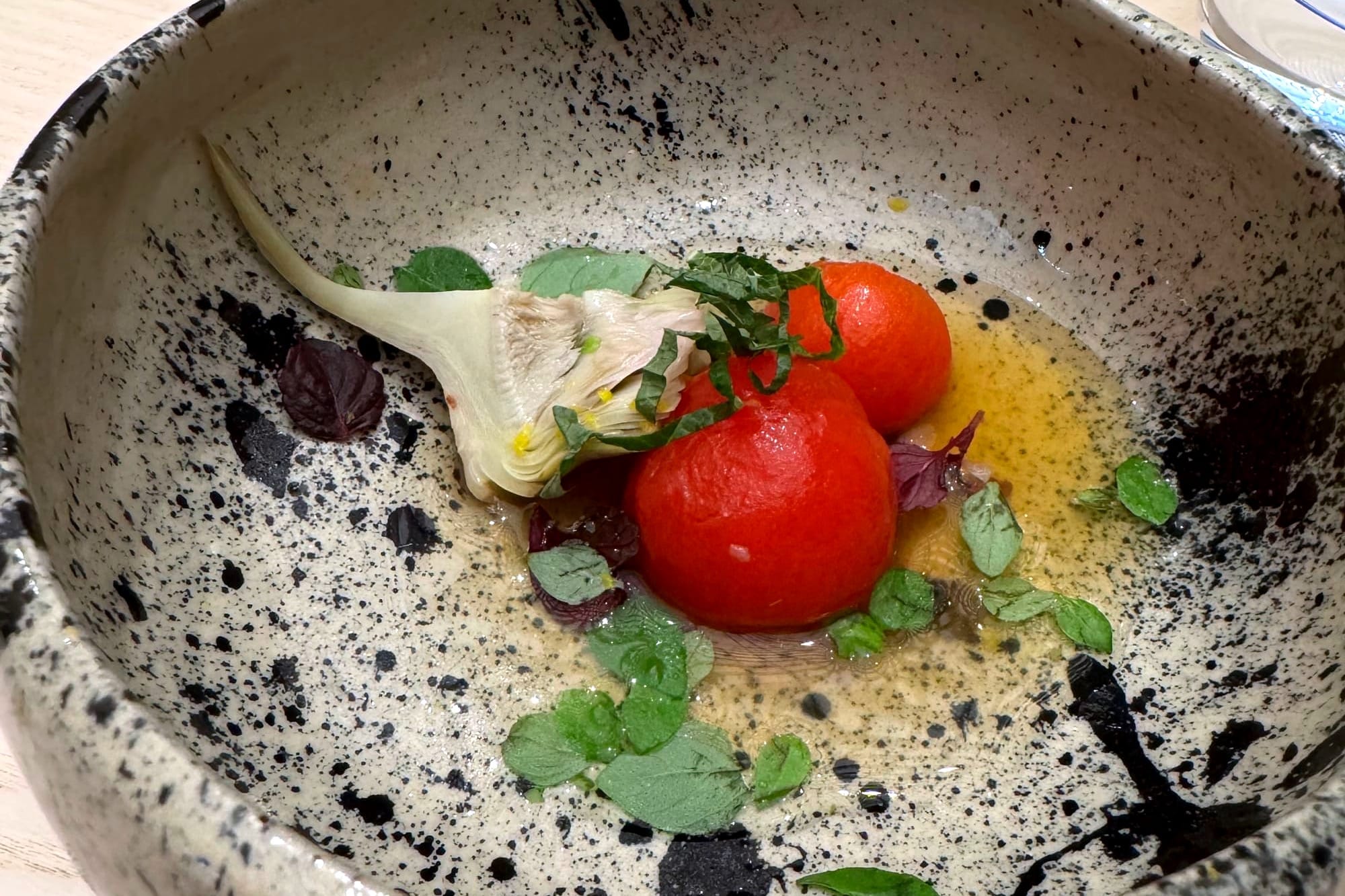
The mushimono course is restrained. Steamed sea bass, moist and gently seasoned.
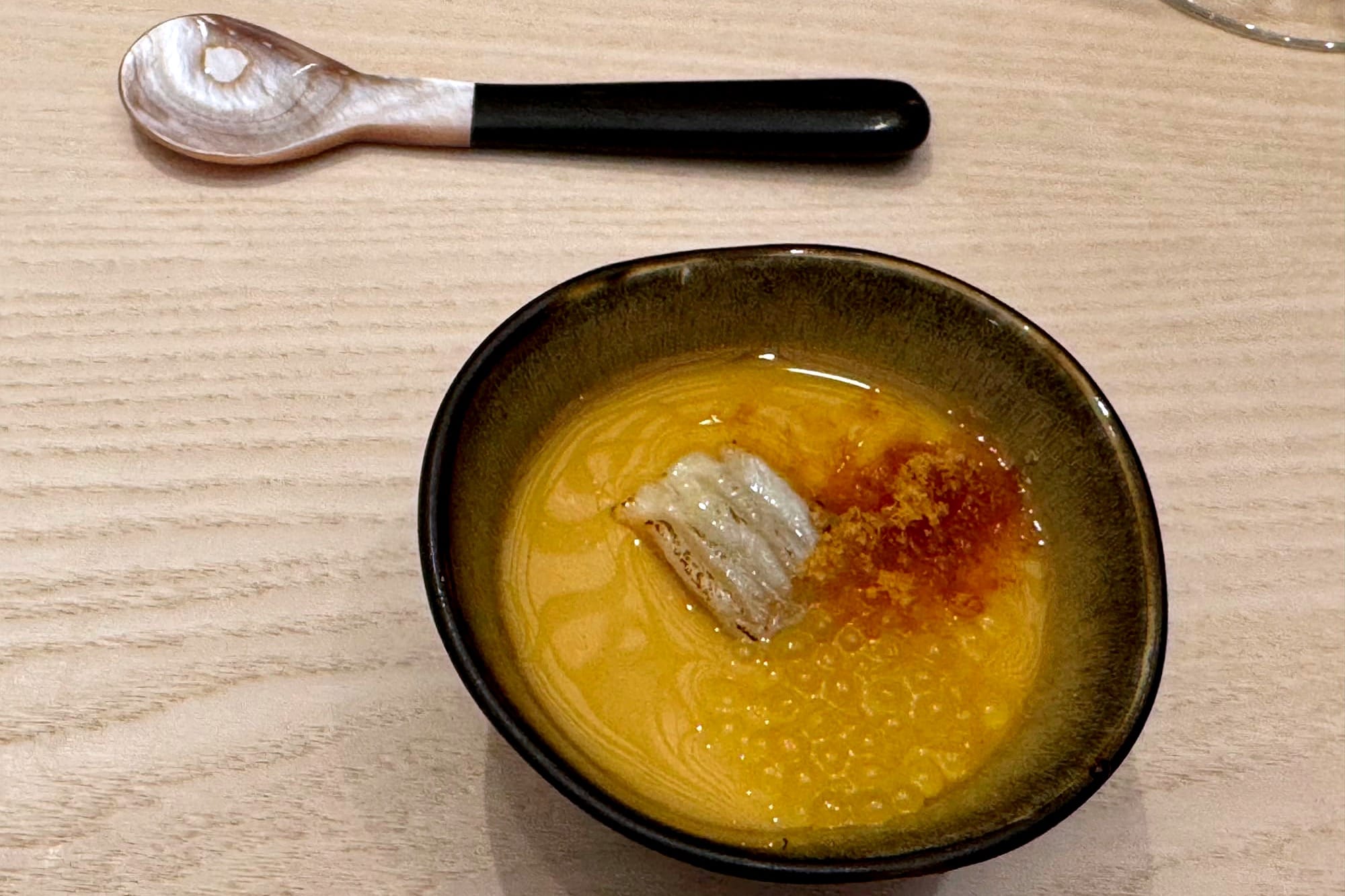
A highlight arrives with the chawanmushi. The custard is infused with dashi and enriched with engawa, the prized fin muscle of turbot. Silken, savory, and quietly luxurious, this is one of the most convincing expressions of Japanese technique in the meal.
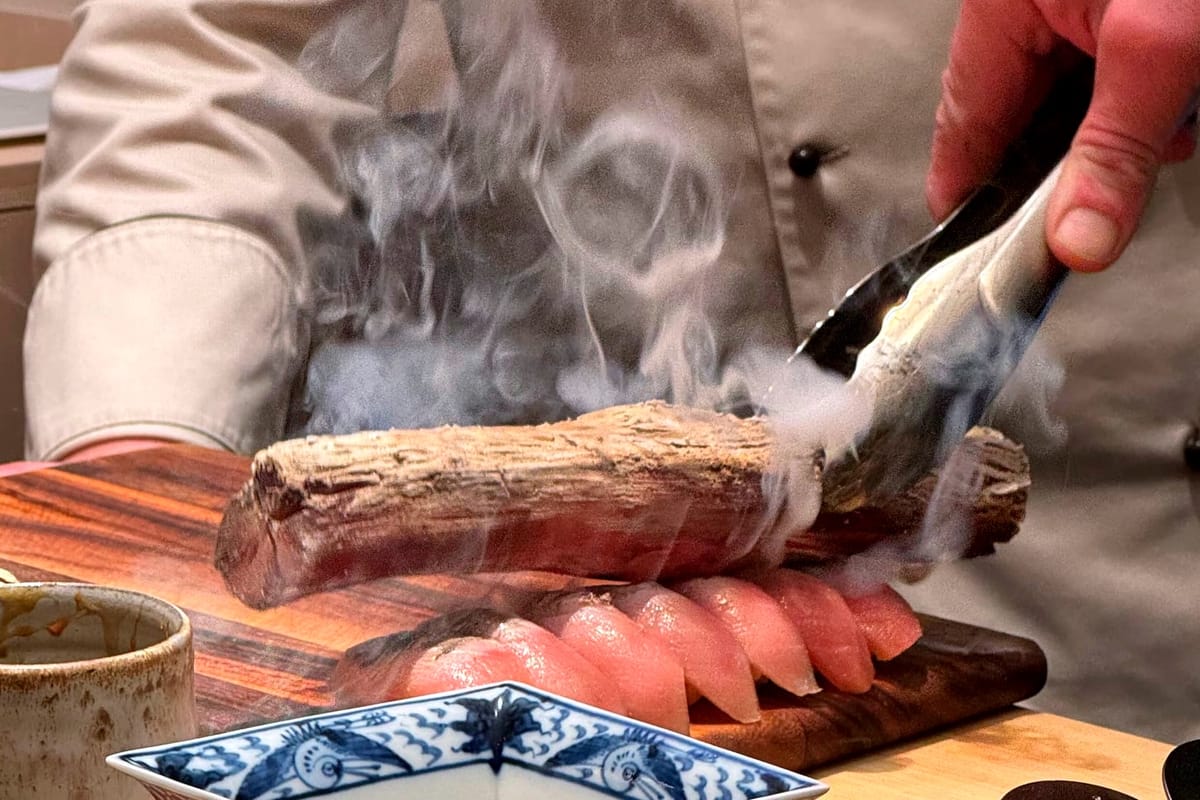
The first sushi sequence follows. Nigiri of halibut, sea bream, and a delicately poached oyster are served in measured rhythm. One toro nigiri is briefly touched to binchotan charcoal, just enough to perfume its surface with smoke while leaving the interior intact.
From the grill, yakimono brings A5 wagyu, replacing pork in the standard menu. Rich, tender, and cleanly grilled, though arguably peripheral in a sushi-focused experience.
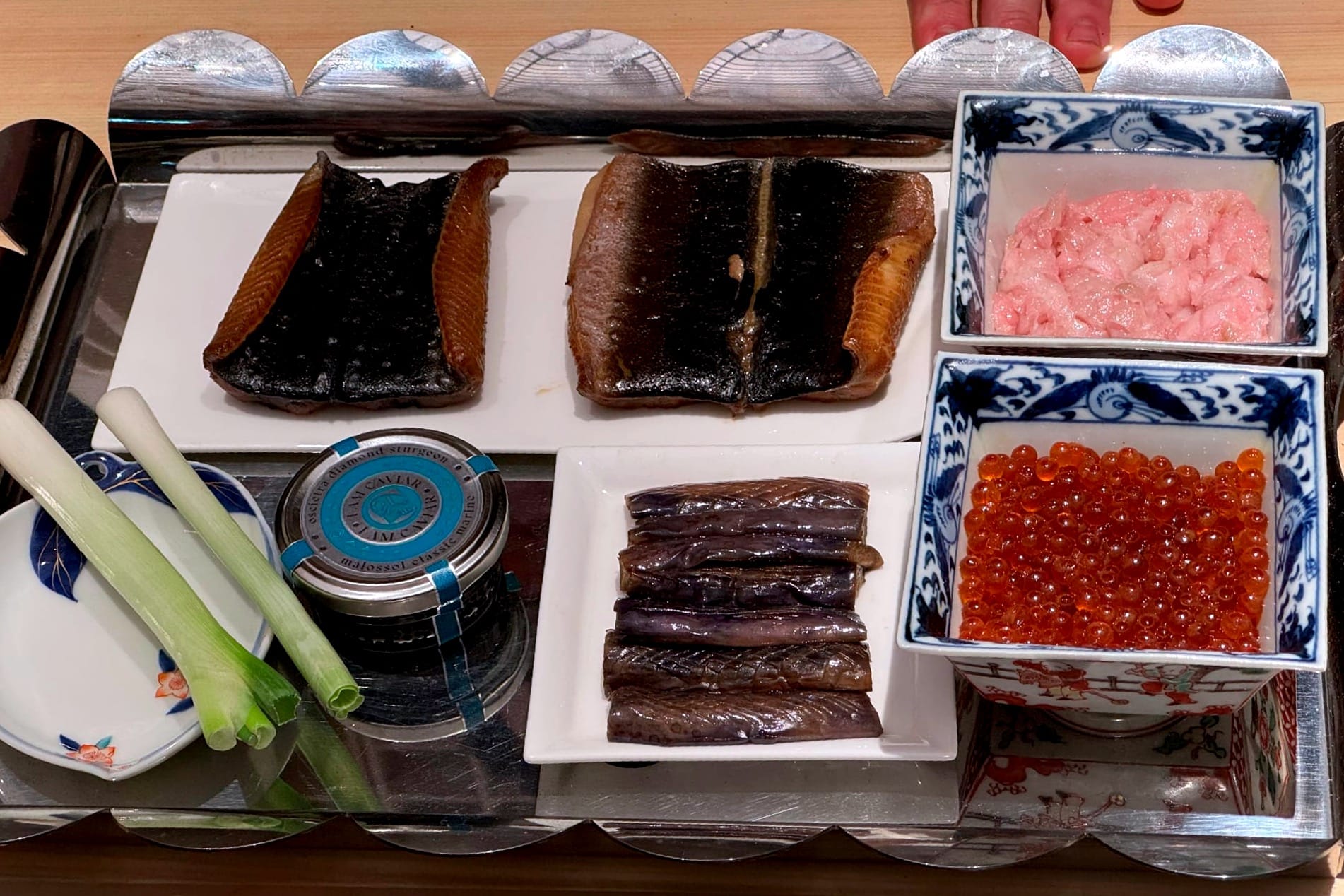
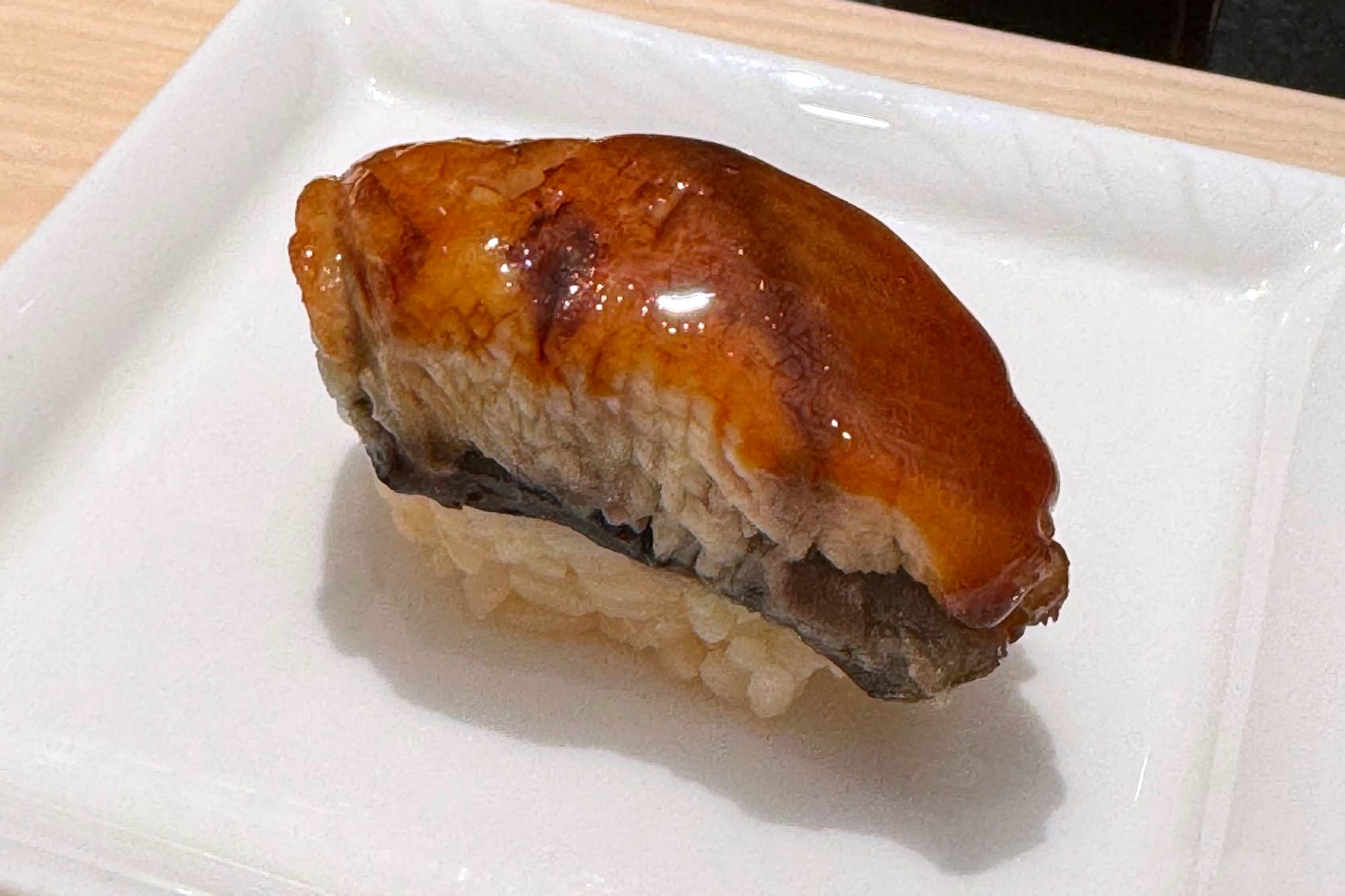
The second sushi sequence is more playful. Unagi, marinated Japanese aubergine, salmon roe, and finally a hand roll filled with toro tartare and finished generously with caviar. The hand roll, eaten immediately, restores focus on texture and timing.
A clear fish soup closes the savory courses.
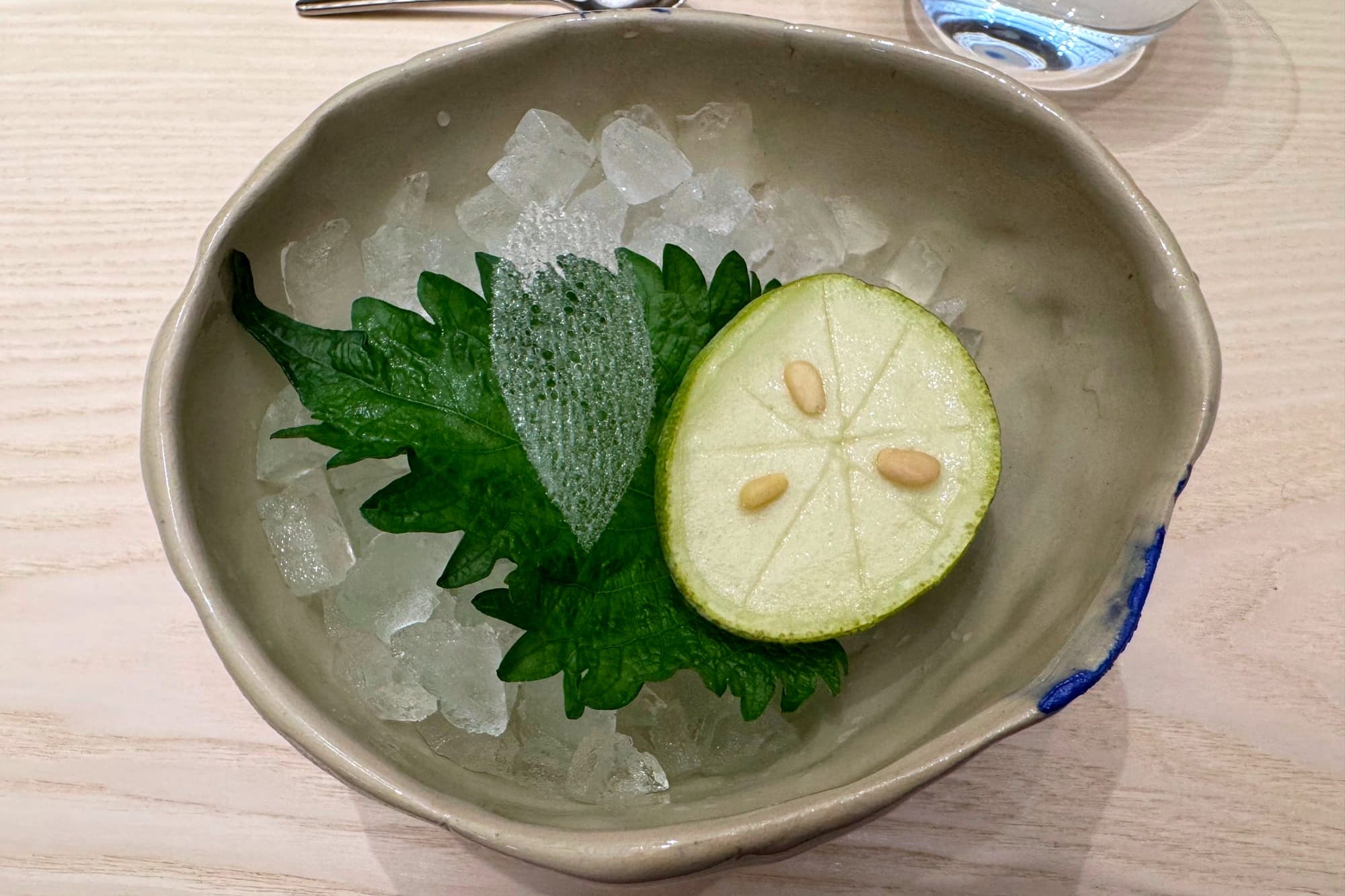
Dessert remains understated. Mochi with matcha and chocolate filling, followed by lime sorbet with pine nuts. Clean, cooling, and mercifully brief.
Context and Comparison
My expectations are shaped by extensive experience with sushi omakase, in Japan and beyond. Recent visits include counters in Sapporo and Tokyo, as well as international references in New York, London, Madrid, and Marbella.
Against this backdrop, the lunch at Shiki Omakase stretches unusually long. Nearly four hours pass. The conversation is engaging, the atmosphere warm, but for a lunch service this duration feels excessive. Typically, such meals resolve within ninety minutes to two and a half hours. This is likely a symptom of a new opening rather than a permanent flaw.
Verdict
Taken as a whole, Shiki Omakase is an ambitious and sincere attempt to bring authentic Japanese omakase into a Viennese context. Within that effort, there are two clear points of criticism. The fish selection lacks both breadth and, at times, the depth of quality encountered at leading counters in Japan or Spain. This is not entirely surprising. In a landlocked city like Vienna, the consistent sourcing of truly exceptional fish remains a structural challenge. The rice, the quiet foundation of nigiri, also leaves room for further refinement.
What compensates is the visible enthusiasm of the chefs. Their pleasure in the craft is evident, and it lends the room a sense of generosity that cannot be trained. More importantly, the flavours themselves feel authentic, closely aligned with what one encounters at contemporary counters in Japan. This is a team still calibrating its voice, but already speaking a language that is recognisably and convincingly Japanese.
Two menus are offered. Ginza at 298 Euro, or 198 at lunch, and Akasaka at 448 Euro, or 348 at lunch. The differences are tangible but not decisive. In truth, the standard menu likely delivers nearly the same pleasure.
For Vienna, this is an important opening. Shiki Omakase offers a genuine encounter with Japanese omakase culture, grounded in respect rather than spectacle. With time, sourcing, and refinement, it has the potential to grow into something quietly significant.
Location: Vienna, Austria
Chef: Alois Traint and Ruben Gorcea
Michelin rating: None
Visited: January 2026
Readers interested in a more classical expression of Japanese cuisine may also want to read my review of The Tawaraya, Kyoto.

![Best Food & Cooking Blogs to Cook Like a Pro ([year]) - OnToplist.com](https://www.ontoplist.com/images/ontoplist32.png?id=6907c0787bcda)