
FDJ Score: 9.0/10 (World-Class Three-Star Level)
Review
I had not heard of La Villa Madie. Twenty minutes along the coast from Marseille, three stars, and until I sat down with a map of southern France it did not exist for me. We were planning a family week down there, Les Baux first and then the coast, so I did what I always do and read the red guide along the route. Cassis sat on the line. I booked months ahead on three stars and nothing else.
Two days earlier we had eaten at L'Oustau de Baumanière, seventy minutes up the road, a house I have known since 2014.
Dimitri Droisneau is a Norman who runs the place with his wife Marielle. Le Bristol, La Tour d'Argent, Lucas Carton, then L'Ambroisie under Bernard Pacaud, which is the address that shows on the plate. Second star in 2014, third on 22 March 2022. He gives few interviews.
A July lunchtime, thirty degrees. We sat down at half past twelve and got up at quarter past three.
Location & Atmosphere
The restaurant sits in the Anse de Corton, a cove under the Cap Canaille. From the terrace you look over the pines at a Mediterranean that photographs badly, because nobody believes the colour. A wind off the water made the thirty degrees irrelevant. There is a dining room inside, pale wood and curves, and I can tell you nothing about it, because at half past twelve on the ninth of July nobody sensible was sitting in it.
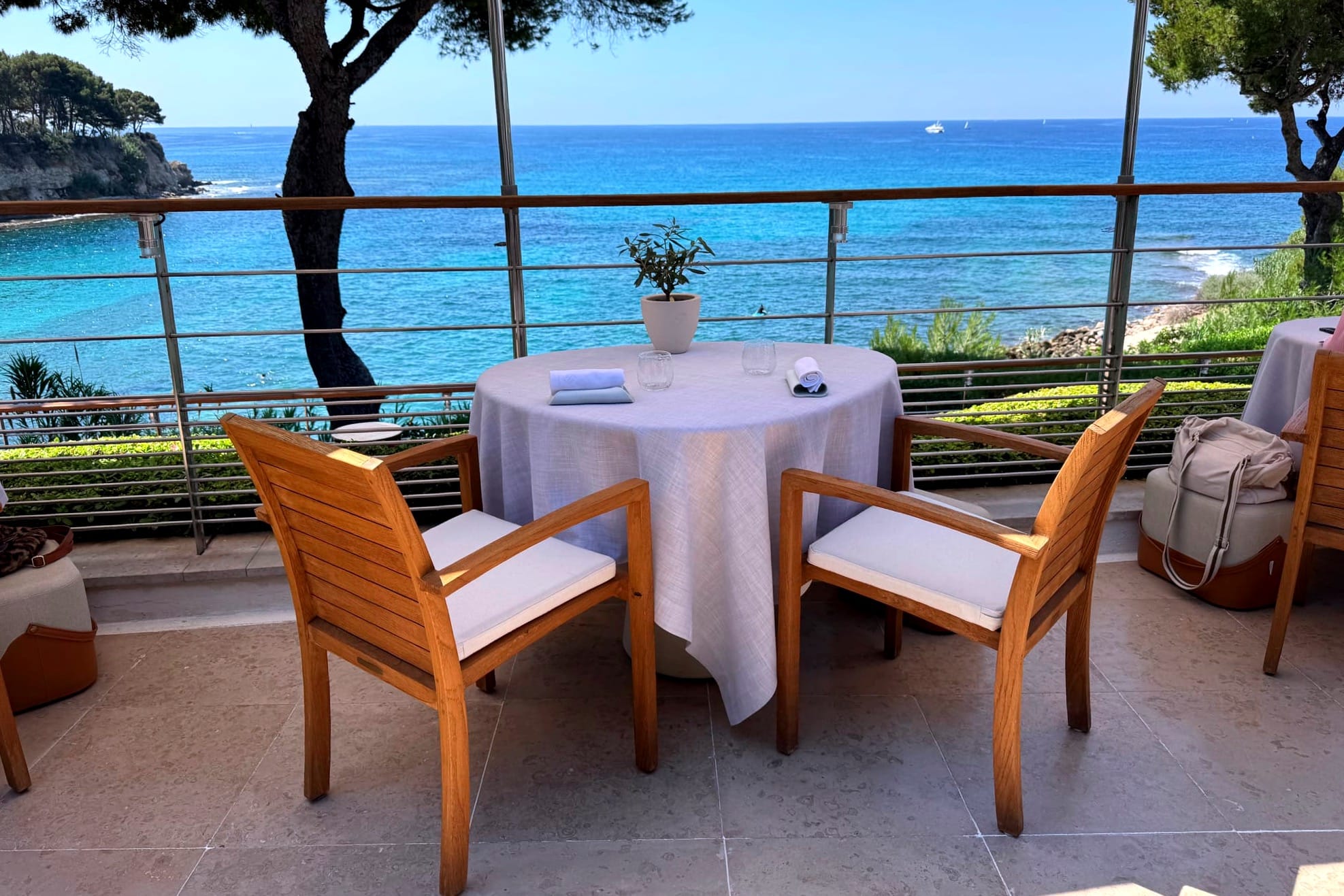
The floor was a young team, quick and keen, and they moved six acts at a speed nobody at the table had to think about. At the end of the meal Dimitri Droisneau came out of his kitchen, went round the tables and thanked us for coming. That is old-school French haute cuisine, and it is going out of fashion: the chef in the room at the close of service, treating your visit as something he owes an answer to. Glenn Viel had done the same at L'Oustau three days earlier, taking my daughter's verdict on the razor clams seriously while he was at it.
Culinary Style
Droisneau's fixed point is the water twenty metres below the terrace. His signature is "Mon écosystème", the morning's catch assembled on a plate. The other is "Lou Carambou", a carabinero prawn with an ice cream made from the prawn heads. That ice cream idea comes back later, on the crab. The card is written in Provençal, and it reads like affectation until you look up from it at the cove.
Menu / The Dishes
We took L'Espassado Cap Canaille, six acts, €295. The whole table took the same menu.
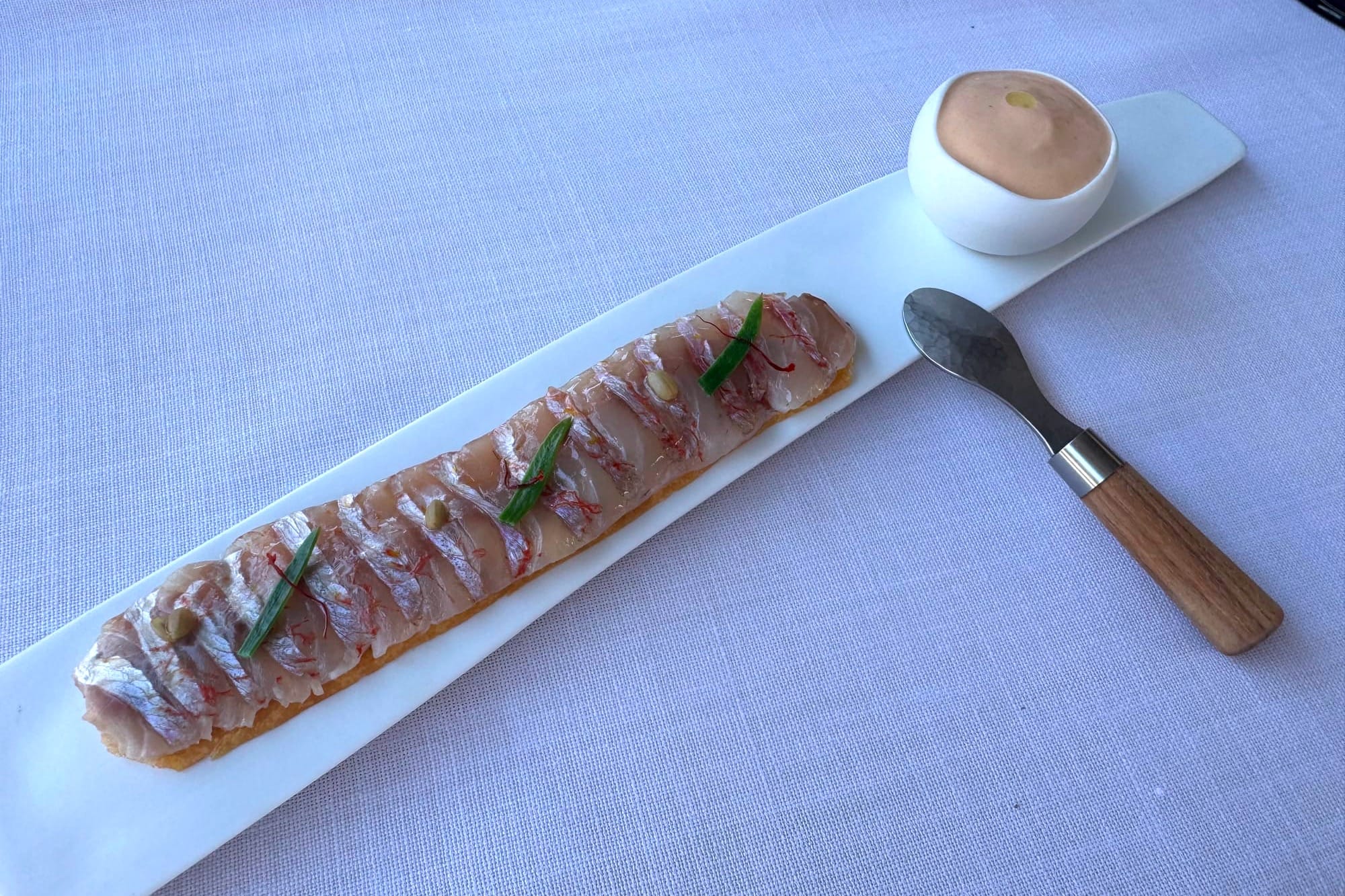
A run of amuse-bouches first, long enough that plenty of houses would have sold them as a course. One was the meal's first real event. Red mullet, sliced and laid along a cracker so thin it was barely there, the sea urchin alongside in its own dish, as a foam, with a spoon. You pick the bread up in your fingers, spoon the urchin over the fish yourself, and eat it in one. Two things happen. The bread reaches you dry, so it shatters. And you decide how much urchin goes on, which three-star kitchens rarely hand over. The urchin has that flat briny weight and the mullet holds up under it.
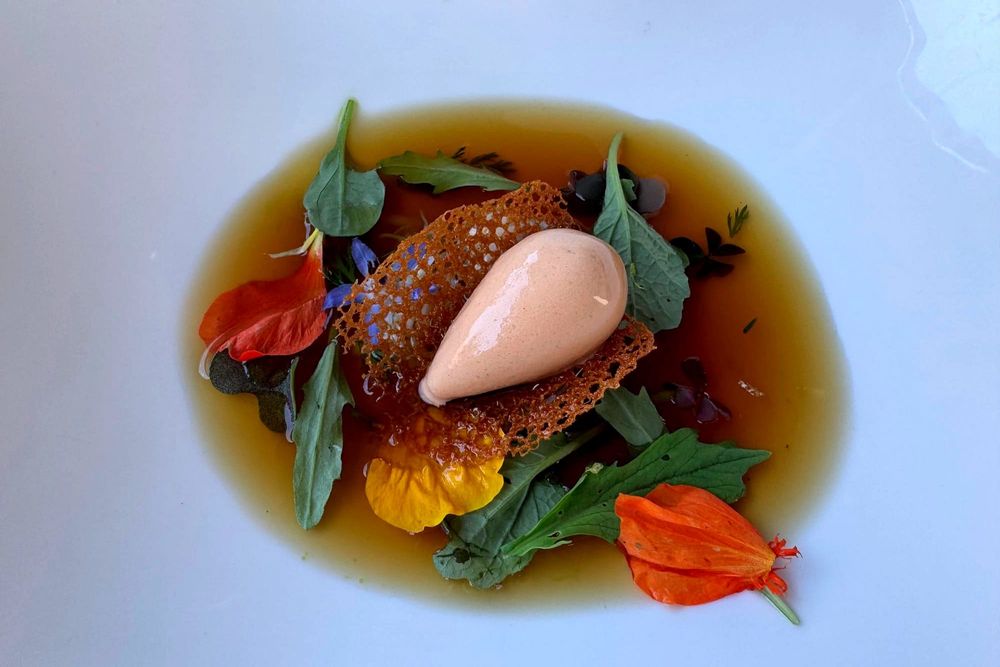
Lou esquinado. Crab, immersed in a cold broth of its own shells with the herbs of the Janots, and an ice cream made from the meat in the head. Madeleines of crab butter alongside. The broth was clear, the herbs sat raw on top, and then the ice cream melted down through it and carried the concentrated, faintly bitter depth of the head into the clarity of the broth. The madeleines did the opposite job, warm and rich. It is the carabinero ice cream from the card, moved onto a crab, and I have had enough bad savoury ice cream to sit down suspicious of it. This is the only way I know to get that much head flavour onto a cold plate. Thirty degrees outside, and I would have eaten it twice.
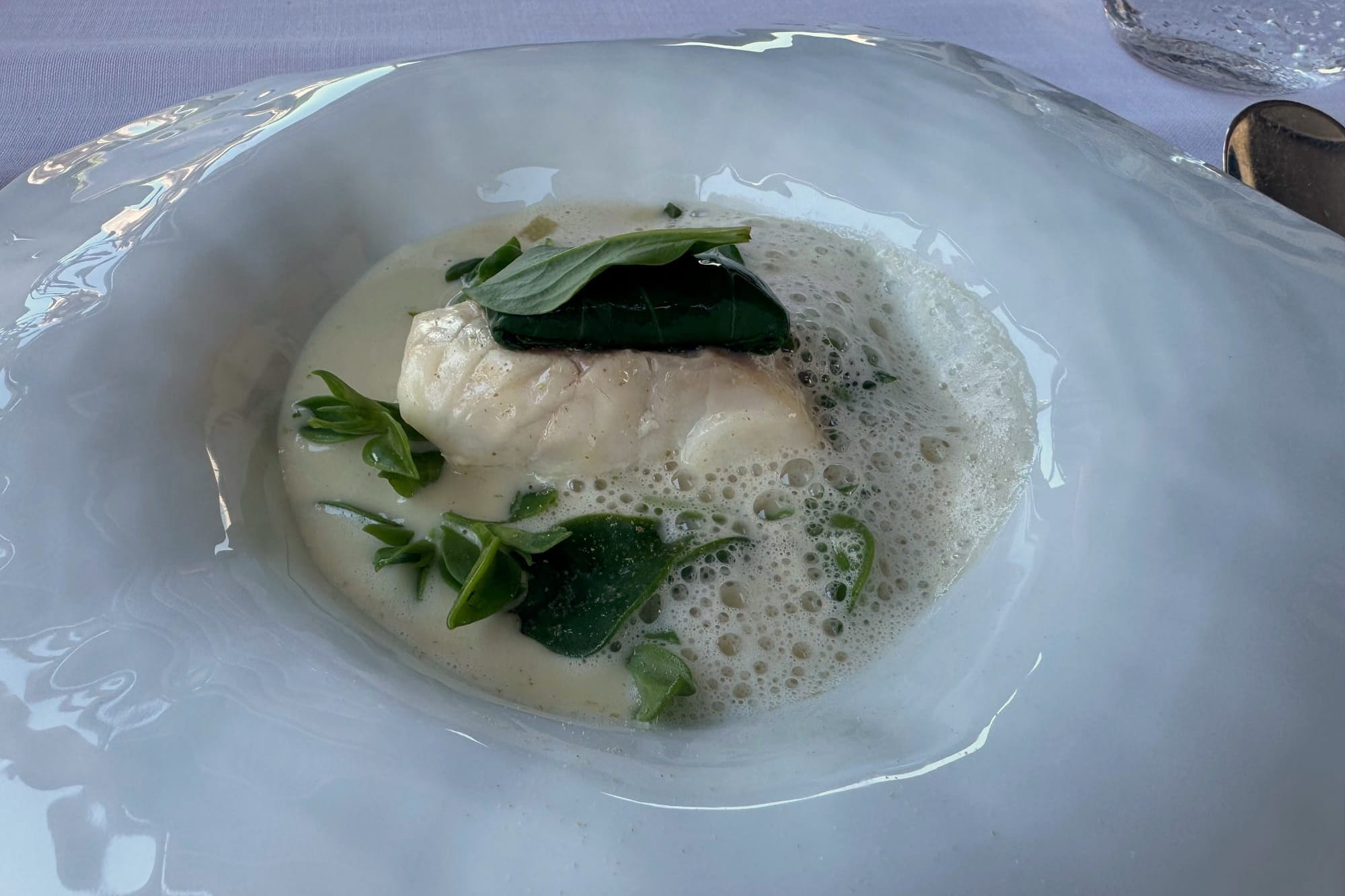
Lou dreligni. Sea bass under an iodine foam scented with combava, and an oyster from Pascal Migliore, named on the card as a friend of the house. The bass still had structure under the fork. The foam was salt and lime leaf. The leaf greens carried more iodine than the oyster did, which I had not run into before.
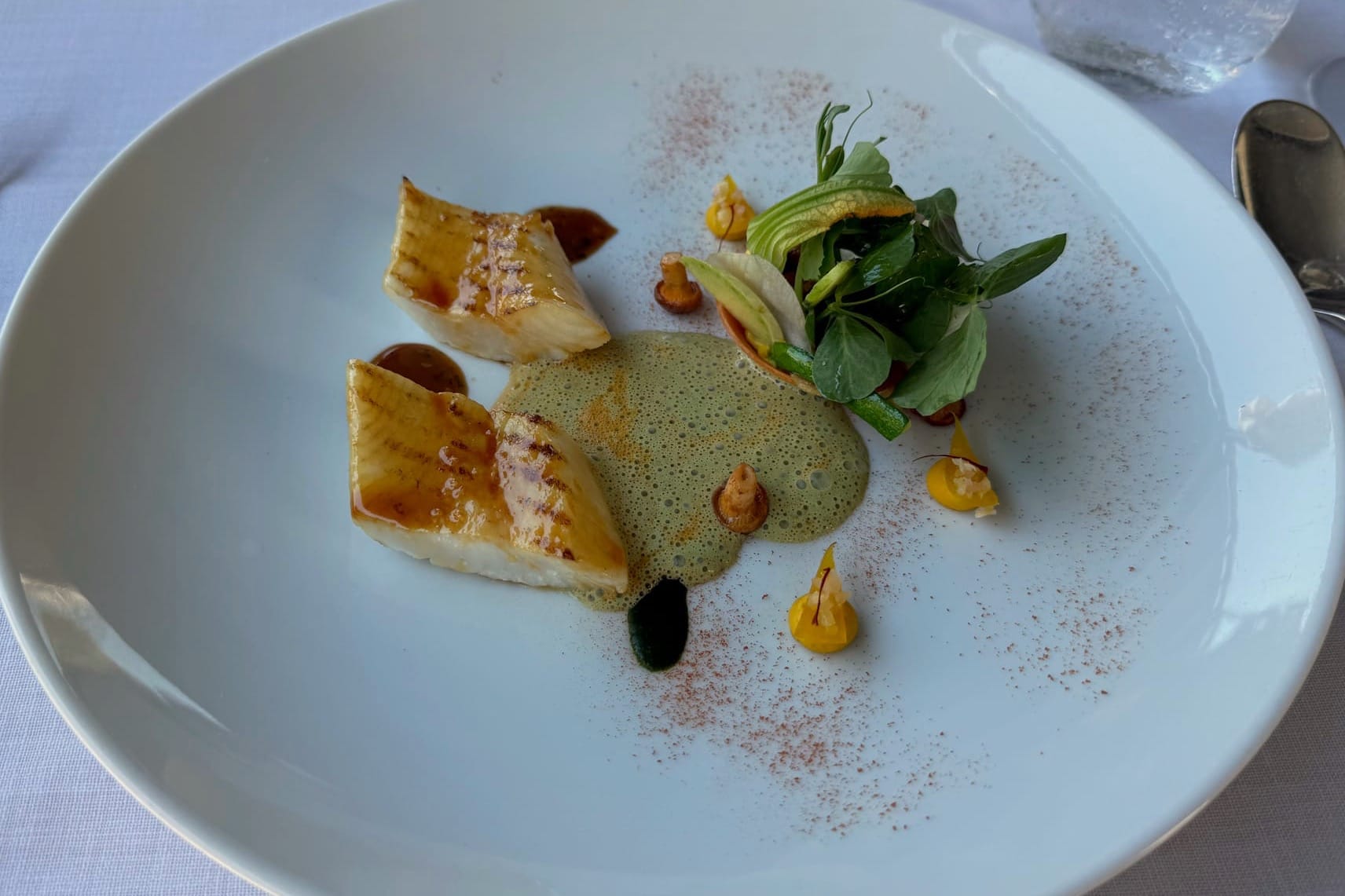
Lou Saint-Pierre. John Dory, grilled and lacquered with tomato, with girolles and local courgettes. I remember the lacquer, dark and savoury against the skin. Beyond that the detail has gone. I wrote three words about it at the time and all three were praise, which tells you I was eating and not writing.
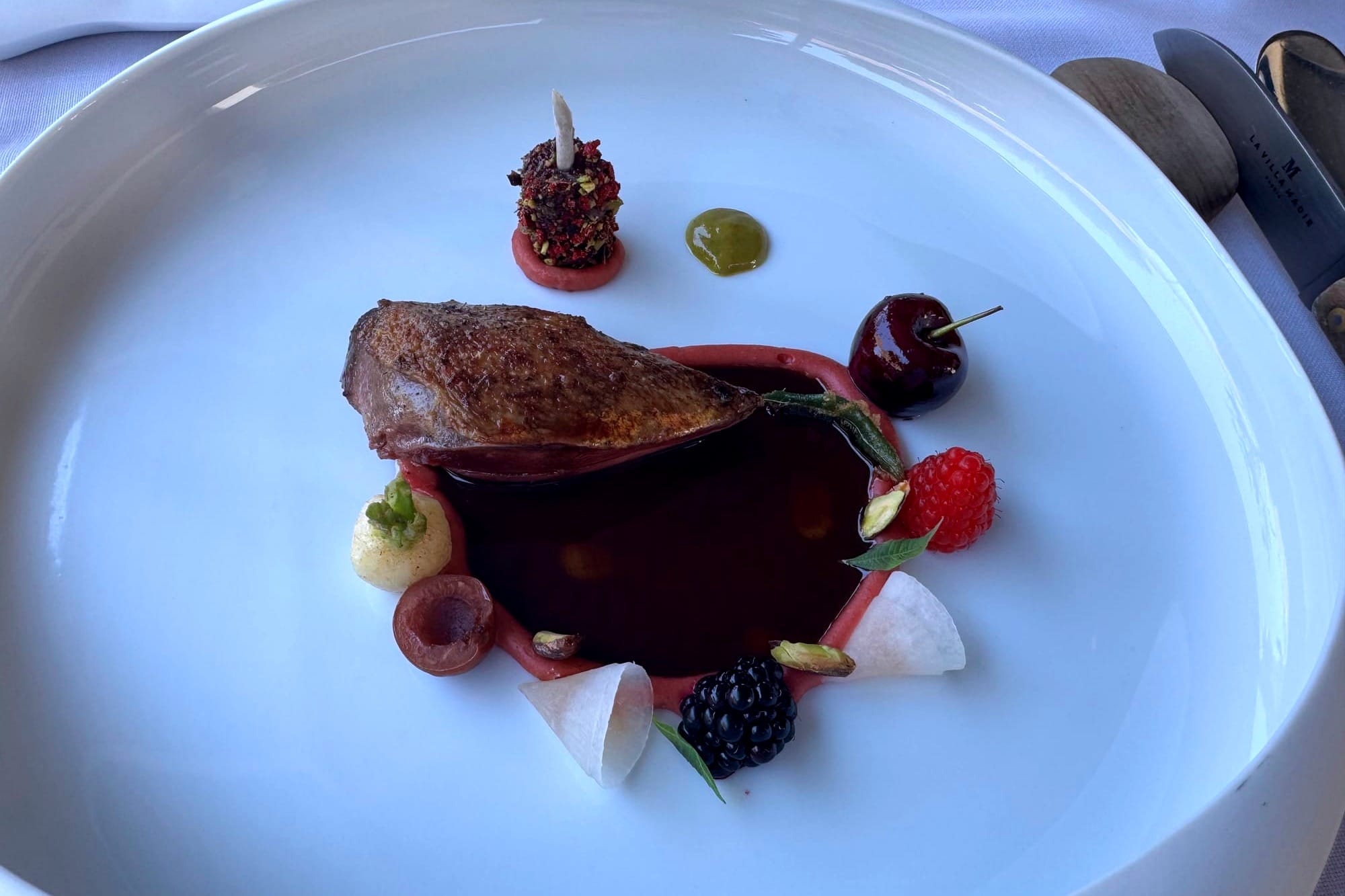
Lou pijoun. Pigeon breast, massaged with sweet spices, with sakura cherry. The cherry ran through the dish and dominated it, in season and used like it, with blackberry and raspberry around the edges. One cherry arrived warm and stuffed, set beside the breast like a small separate course. The meat was even and pink from edge to edge, and the fruit came in sharp under the spice.
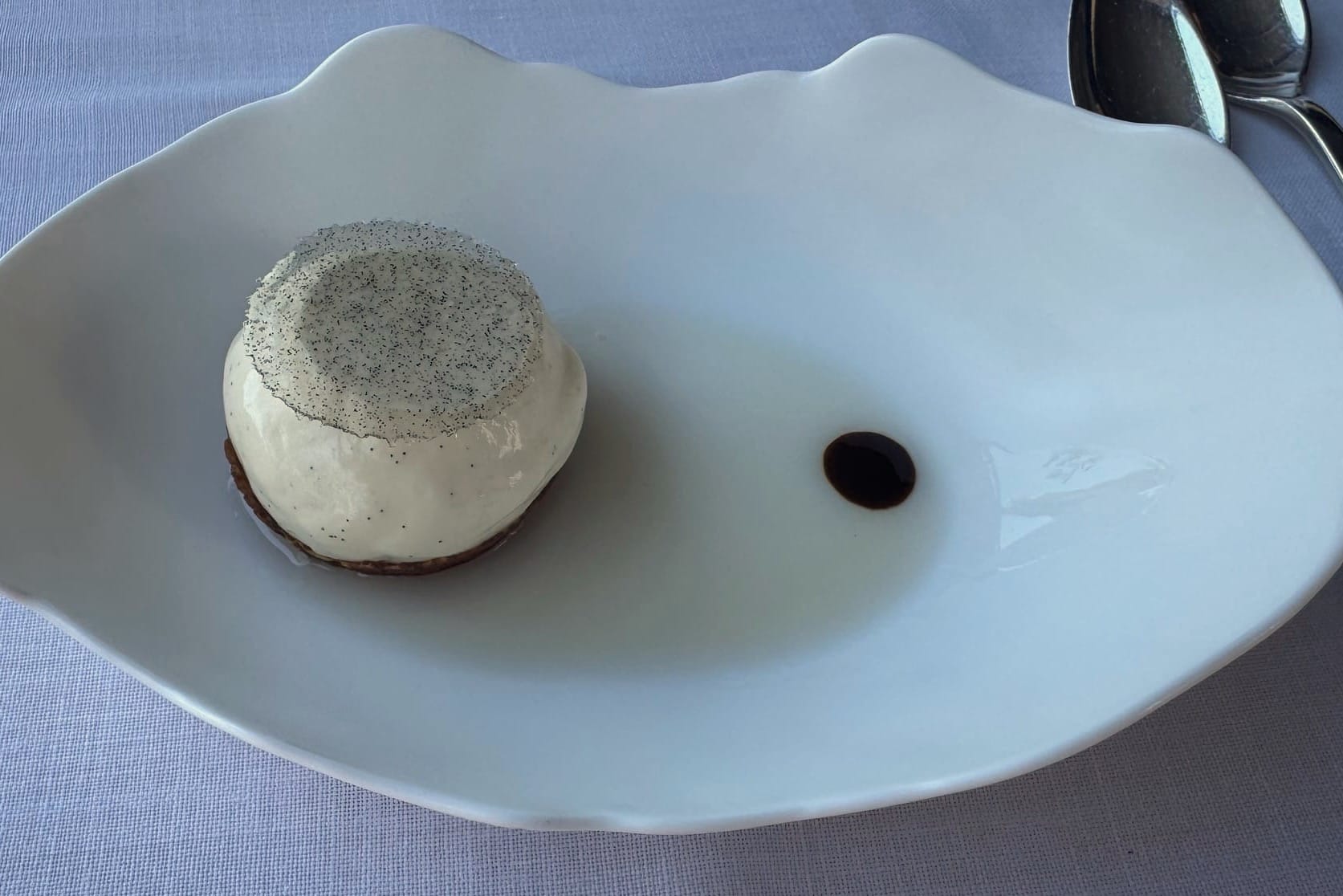
Two desserts. Madagascan vanilla with praliné, revived with rum from Maison Ferroni, cold and gone in a minute.
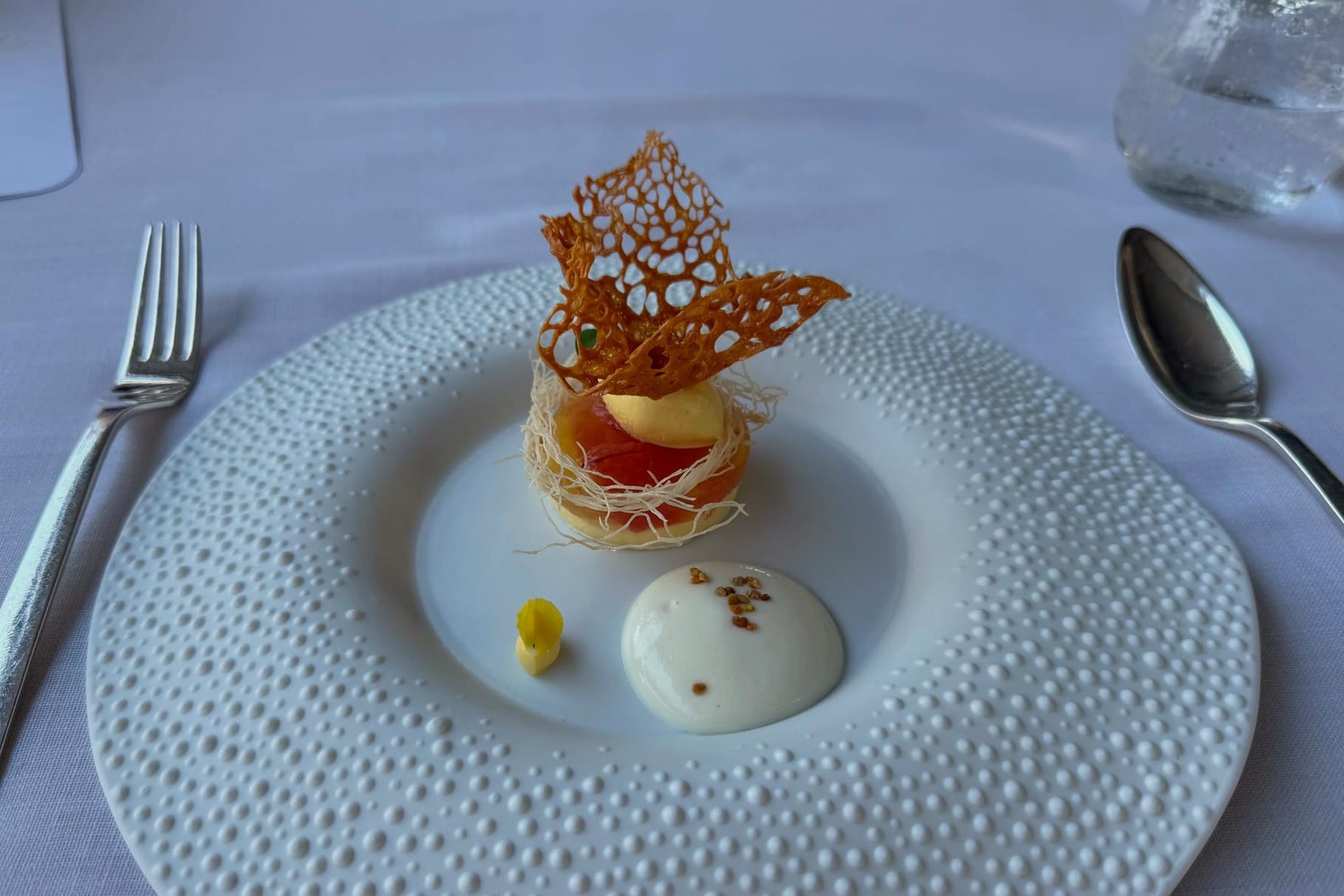
Then honey from the calanques with saffron from Roquevaire, lifted with grapefruit to keep it off the ground. Mignardises after. A brioche at the door, baked in the house, handed over as a leaving present. It came with us down the coast.
Wine
I was driving and this was lunch, so there is little to report. One glass. Synthèse, a Cassis 2022 bottled with the Clos d'Albizzi for the house. It held its own against the crab and again against the bass. There is a serious list and a chef sommelier, David Piquet, with a reputation, and on a menu like this the pairing is the part I did not get to.
Cooking Toward the Water
The urchin foam, the cold crab broth, the iodine sitting on a leaf, the oyster from a man they name on the card: each one pointed out of the window at the water I was looking at while I ate. That is the through-line of the meal, the setting turned into an ingredient. Droisneau has spent a decade building his food out of what sits twenty metres below the terrace.
Then the pigeon. It was the one course on the ninth of July that turned away from the water, and it was cooked with everything the kitchen has: the even breast, the cherry in season, the warm stuffed fruit alongside. On a terrace at thirty degrees, over the sea, at two in the afternoon, it arrived like a plate from a different restaurant in a different month. Very good autumn food, landing in July, on a terrace, at two in the afternoon.
Six acts in a house built on the sea, and act four goes inland for a bird. A menu of that length is built to carry a meat course, and Droisneau gives it one. I understand why the pigeon is there. But I sat with a cherry in my mouth and the water twenty metres below me, wondering what six fish courses would have done on that terrace, in that heat.
Verdict
Sensationally cooked. The crab is a candidate for the best single course of my year, and I ate it in a house that did not exist for me until I opened a map. Droisneau has a signature and the nerve to keep it narrow. The nine is about the cooking.
Two things keep it there. The pigeon, a very good dish that did not belong on a summer terrace over the water, a matter of editing rather than technique. And the house sells the same six acts at the same €295 into a Tuesday night in November, when half of what makes them work is the daylight and the sea outside the glass. The booking page says nothing about it, and I got my Thursday in July by luck.
Go at lunch, in the season when the terrace is open, and get the fish and the water in front of you at the same time. On a dark November evening you pay the full €295 for a component that never arrives. If you are driving, the menu is six courses and, sensibly, one glass. And if that kitchen ever puts a straight fish menu on the terrace in July, I will book it on purpose.
Location: Cassis, France
Chef: Dimitri Droisneau
Michelin rating: ★★★
Visited: July 2026
Menu: L'Espassado Cap Canaille, six courses, €295
Disclosure: Booked and paid for as a regular guest.
Three days before Cassis and seventy minutes up the road, I ate at L'Oustau de Baumanière: the same region, the same star count, and a very different relationship between a kitchen and its landscape.
For three-star cooking with no landscape to lean on, see my three-star restaurants in Paris.