
FDJ Score: 9.0/10 (World-class Three-Star Level)
Review
Mirazur had been on my mind for years, not out of urgency but out of a quiet, persistent curiosity. Its third Michelin star, awarded in 2019, and its position at the top of The World’s 50 Best Restaurants in the same year had long since settled into the collective consciousness of fine dining. What drew me now was something more specific.
For its twentieth anniversary, Mauro Colagreco had conceived a commemorative menu in collaboration with Ferran Adrià. That alone would have justified the journey. Yet there was also the sense that Mirazur was entering a new phase, not consolidating its past but actively rethinking its future. I arrived with a group of good friends, all attentive diners, aware that this would not be a retrospective evening but something more unsettled, perhaps even experimental.
20 Years Mirazur was the reason for the trip, but not its entirety. We extended the journey along the coast, adding a dinner at Le Louis XV – Alain Ducasse à l’Hôtel de Paris and a lunch at La Chèvre d’Or. Each offered a different perspective on the region, yet it was Mirazur that set the direction, shaping the anticipation that carried through the days that surrounded it.
Location & Atmosphere
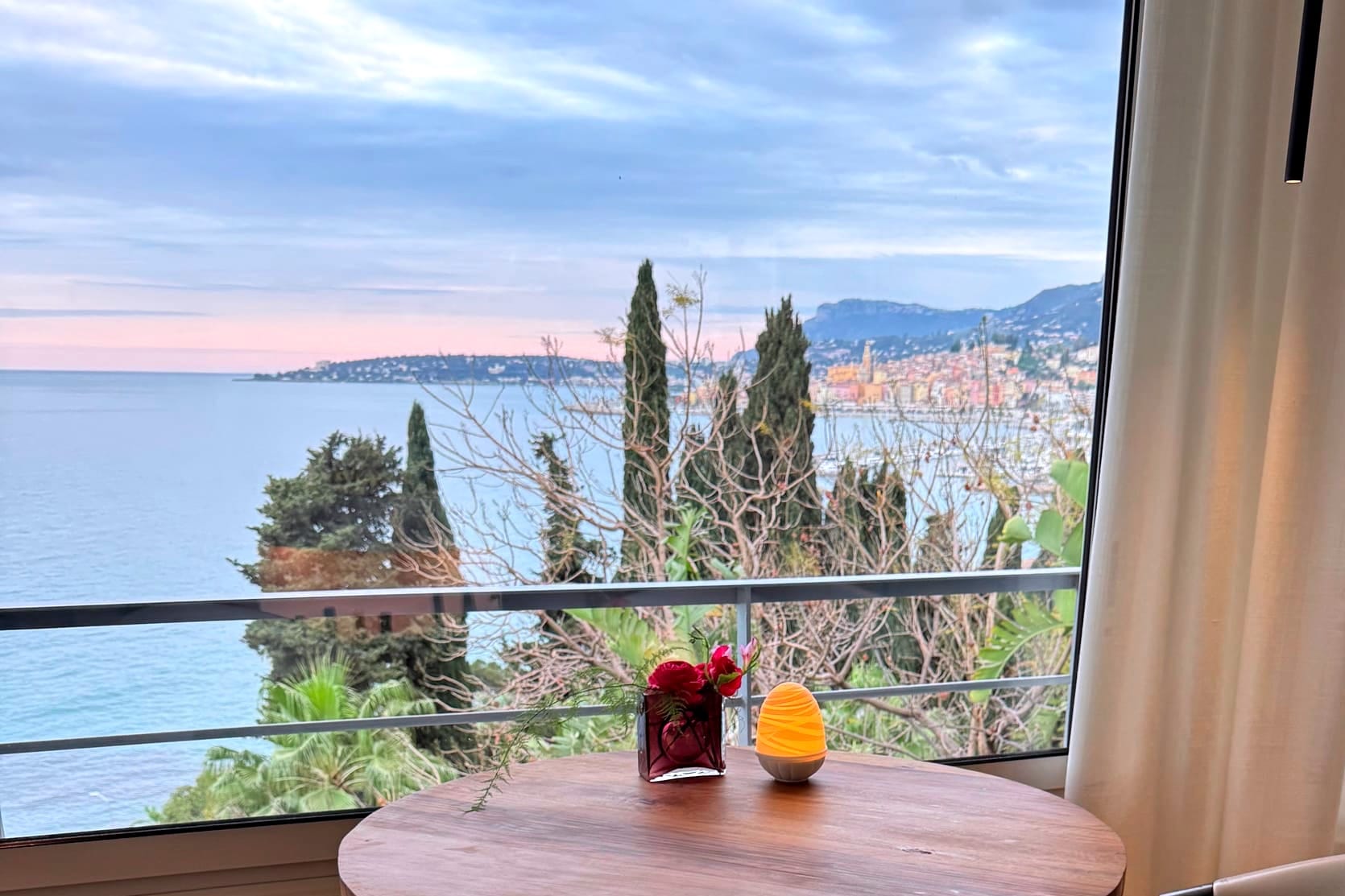
We reached Menton while there was still light. This mattered. The restaurant’s name reveals itself only in daylight, when the view opens across the Mediterranean in a way that feels almost deliberate, as if framed rather than found.
Inside, the room felt composed, almost quiet, but the welcome immediately set a different tone. We were told this would be a special evening, and it did not feel rehearsed. There was a genuine sense of being expected.
Before taking our table, we were invited into the kitchen, where Mauro Colagreco greeted us personally. A few words were exchanged, informal and direct. It was a small moment, but it established a connection early on.
Before we continued an olive sphere was served, delicate in structure, releasing a liquid olive essence in a single bite, finished with a light spray of gin and tonic. The dish traces back to Adrià’s work at elBulli, where spherification became one of the defining techniques of contemporary cuisine. Here, it appeared almost as a reference point, quietly placed within the flow of the evening.
From there, we walked through the garden into a modest exhibition space. Over the previous six months, the team had been working on a project to rethink the experience at Mirazur. We understood this had been developed with input from Ferran Adrià, with the intention not to stand still, but to keep the restaurant evolving.
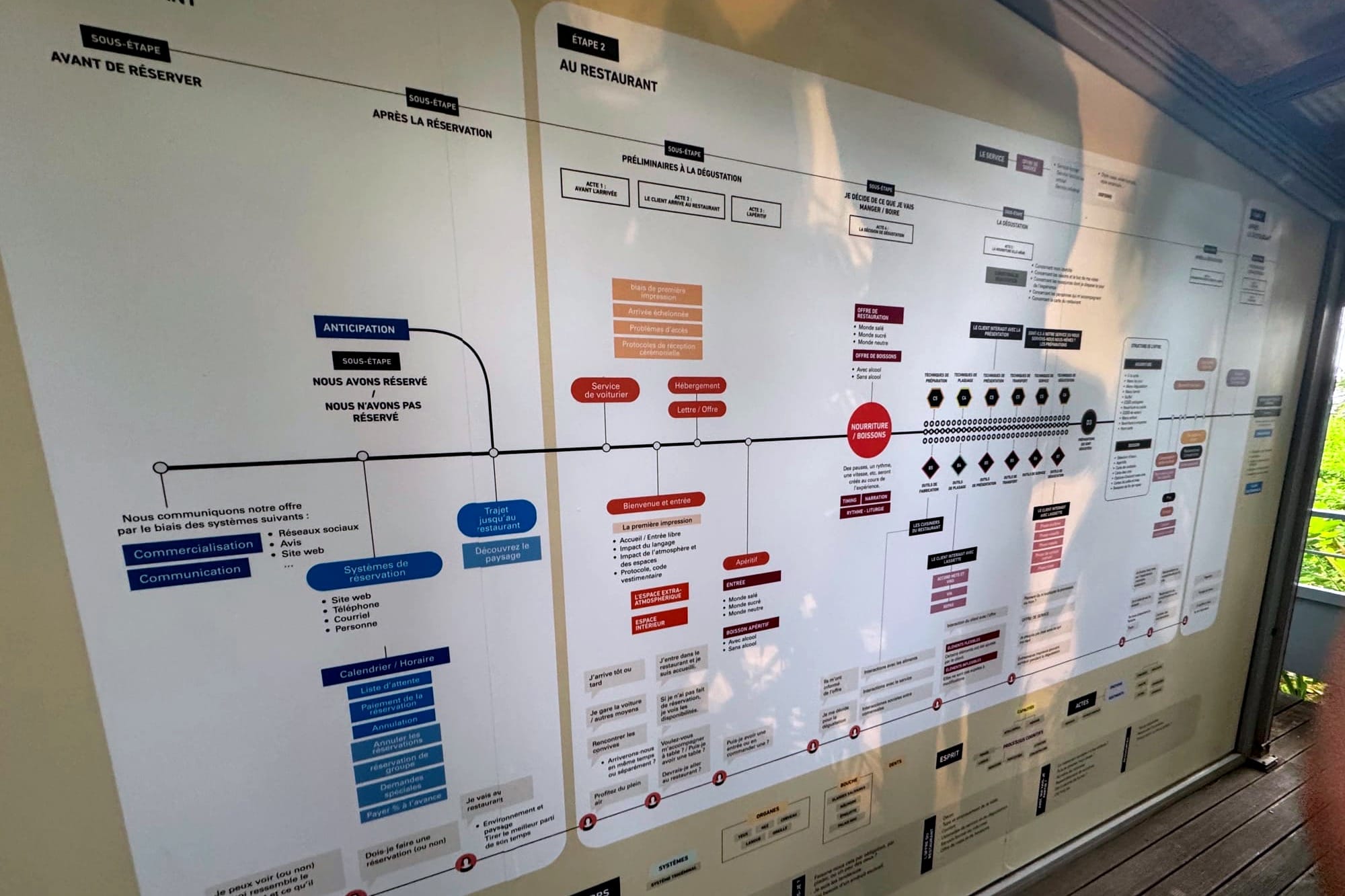
What stood out was the openness. They showed us sketches, charts, and conceptual work. Not a polished narrative, but the thinking behind it. It is rare to see this level of transparency in a restaurant of this stature.
During the evening, Diego Masciaga was highly present in the dining room. Having spent three decades as General Manager at Waterside Inn, he is widely regarded as one of the leading figures in front of house. His presence was calm but precise, shaping the flow of the meal without drawing attention to it. In conversation, it became clear that he is not permanently based here, but involved in a specific project. His involvement suggests that Mirazur is actively working on its next phase rather than relying on its past.
We also learned that the restaurant is expanding to include guest rooms, allowing visitors to remain within its orbit beyond the meal. It feels like a natural progression. Not a hotel in the traditional sense, but an extension of the experience.
Culinary Style or Distinctive Character
Colagreco’s cuisine has always resisted easy classification. It draws from the Mediterranean, certainly, but also from a more abstract understanding of seasonality, often guided by lunar cycles.
This anniversary menu was conceived jointly by Mauro Colagreco and Ferran Adrià, and that dual authorship was clearly perceptible throughout the meal. Certain dishes felt closely aligned with Colagreco’s natural, garden-driven sensibility, while others carried Adrià’s more conceptual, almost abstract approach.
Rather than blending into a single unified style, the menu allowed these perspectives to stand alongside each other. The contrast was intentional. At times, even pronounced. It created a quiet tension, not something to be resolved, but something the meal moved through and explored.
There was also a notable shift toward narrative structure. The menu moved through themes rather than courses. Flowers, nature, Japan, the Mediterranean, citrus, celebration. Each chapter carried its own internal logic.
Menu / The Dishes
The opening sequence, Flowers, set a tone that was both delicate and slightly disorienting.
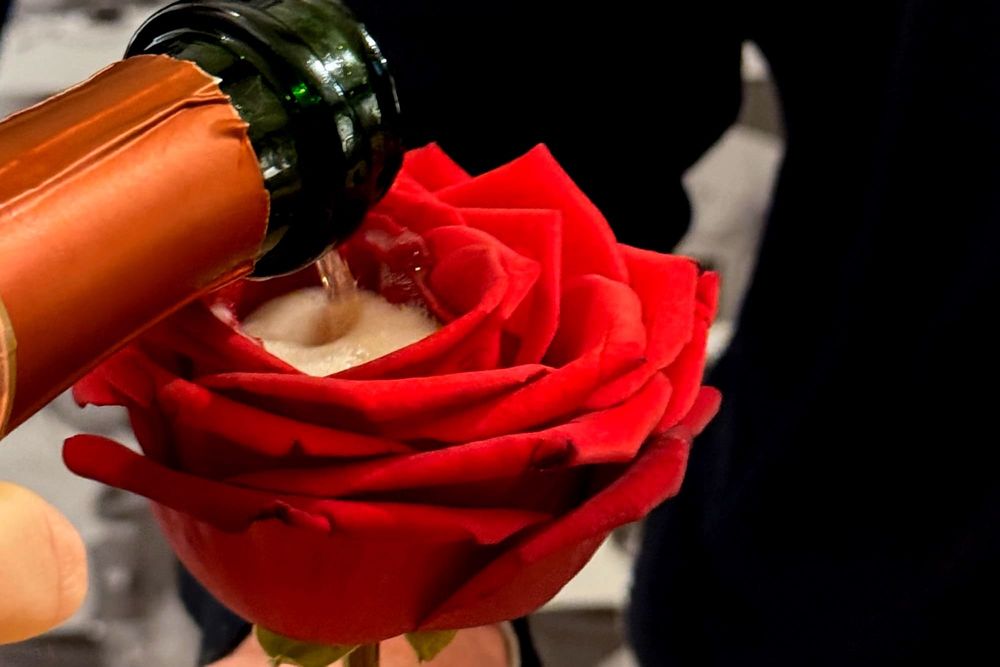
A sip of Laurent-Perrier rosé was served within an actual rose. It was fragrant, almost intimate.
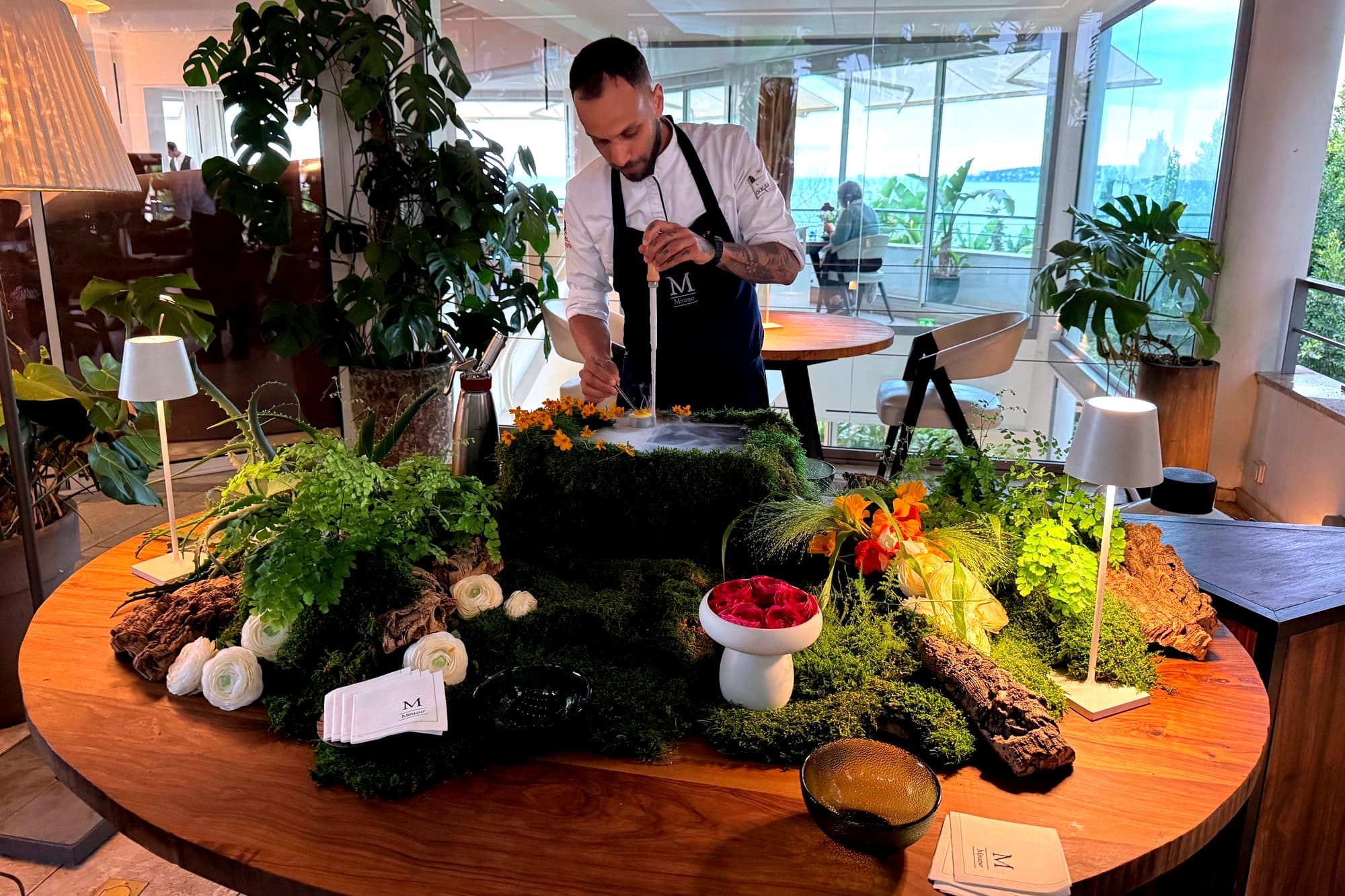
A solid génépi cocktail followed, frozen and precise, accompanied by a flower that blurred the boundary between garnish and ingredient.
The salted meringue and white caviar from Rova introduced contrast, while the ephemeral violet dissolved almost as soon as it was perceived.
Ode to Nature grounded the experience.
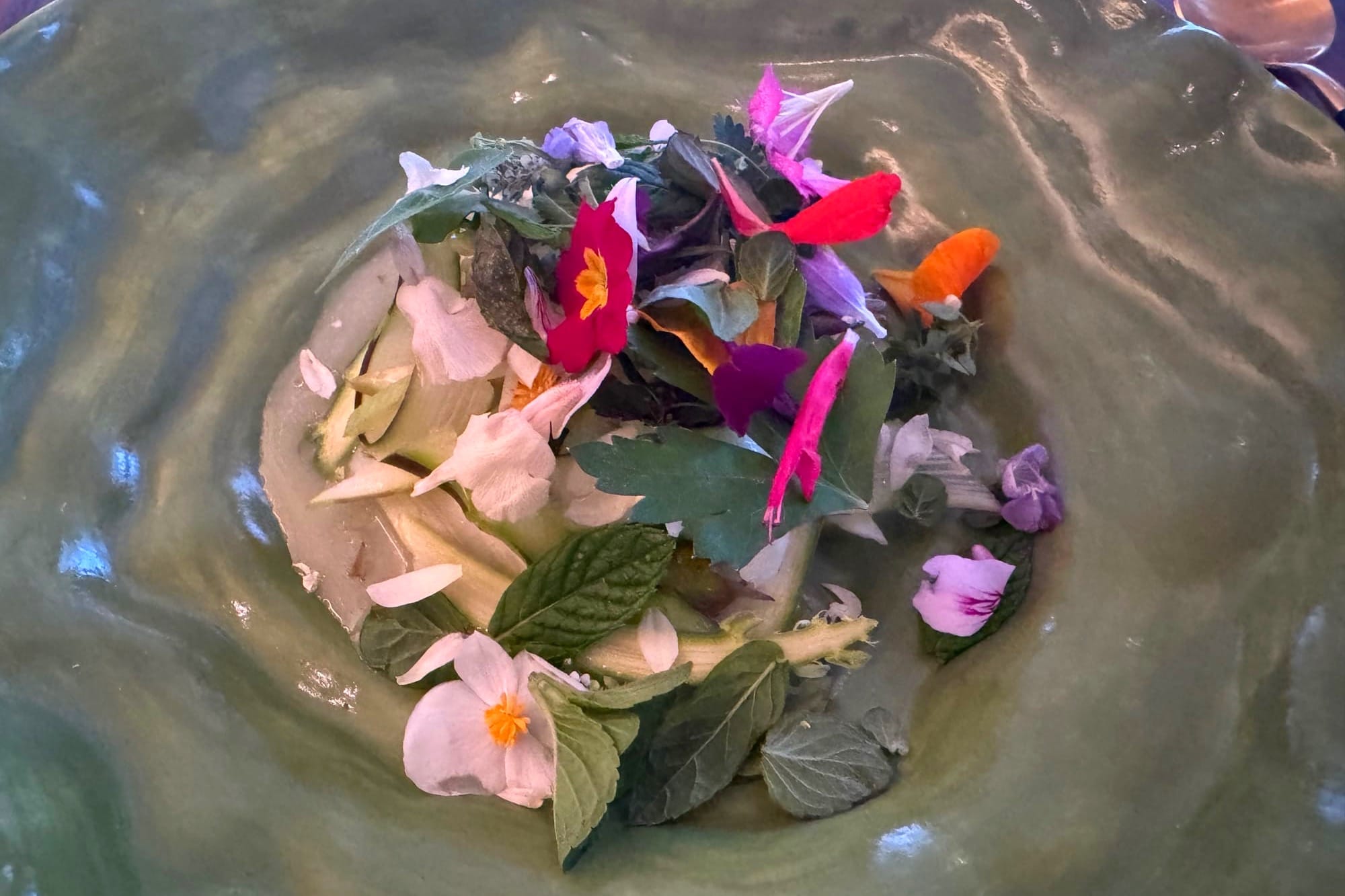
The asparagus salad, composed of raw spears, garden leaves, and flowers, was deceptively simple. It tasted of immediacy. The beetroot with caviar, however, was something else entirely.
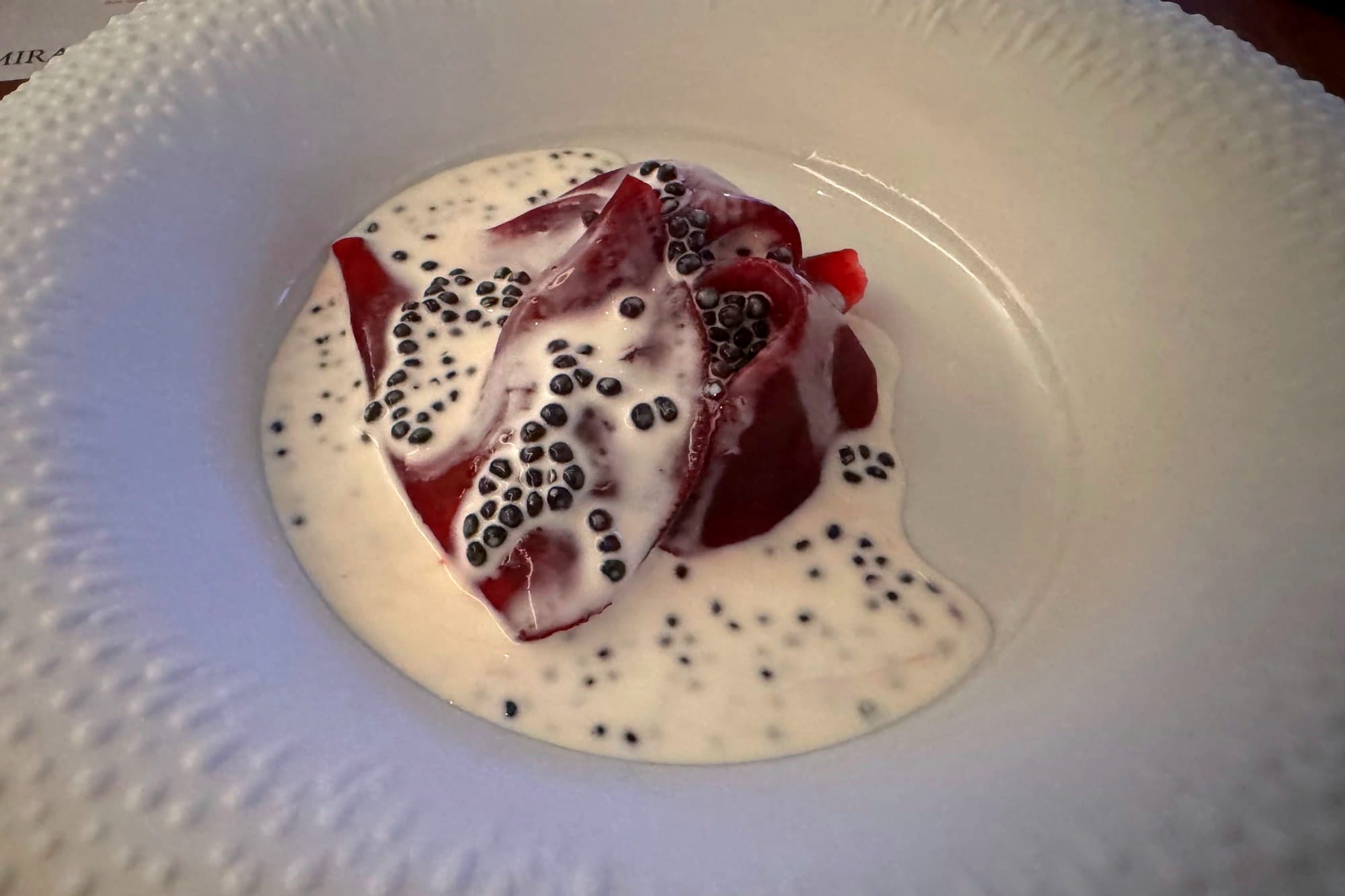
A three-year-old beetroot, slow-grown and deeply concentrated, served with cream and caviar. The texture was dense yet yielding, the sweetness profound but controlled. It remains one of the most complete expressions of beetroot I have encountered.
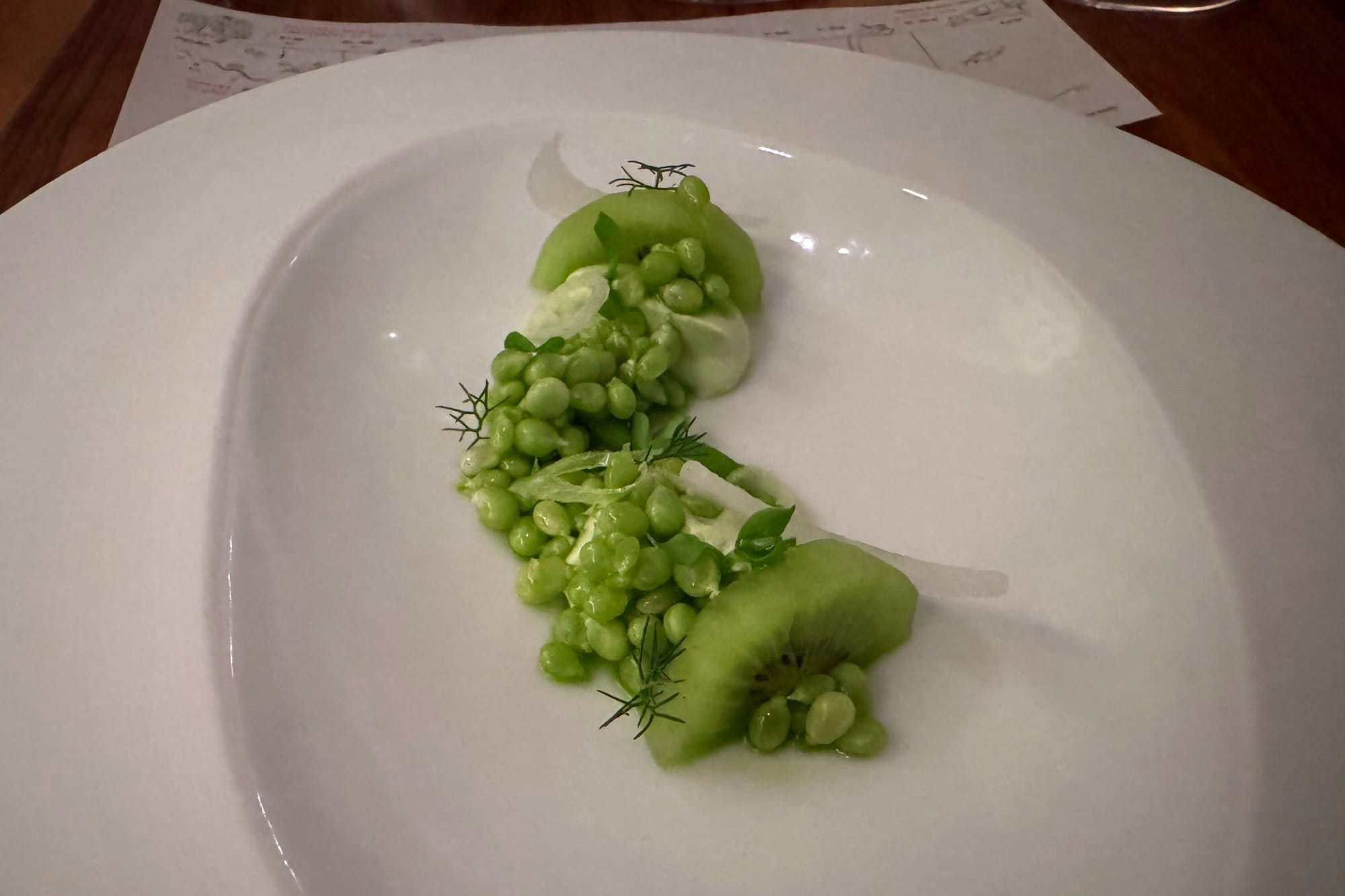
Peas appeared three times. First with kiwi, an unexpected pairing that worked through shared acidity. Then with vanilla, presented in a form that invited direct interaction. The peas were aligned along a vanilla pod and eaten almost like corn, releasing a gentle, aromatic perfume. It was subtle, but unmistakable. Finally, they returned in a warmer expression, a grilled pod filled with tender tear peas, their sweetness deepened by the light char.
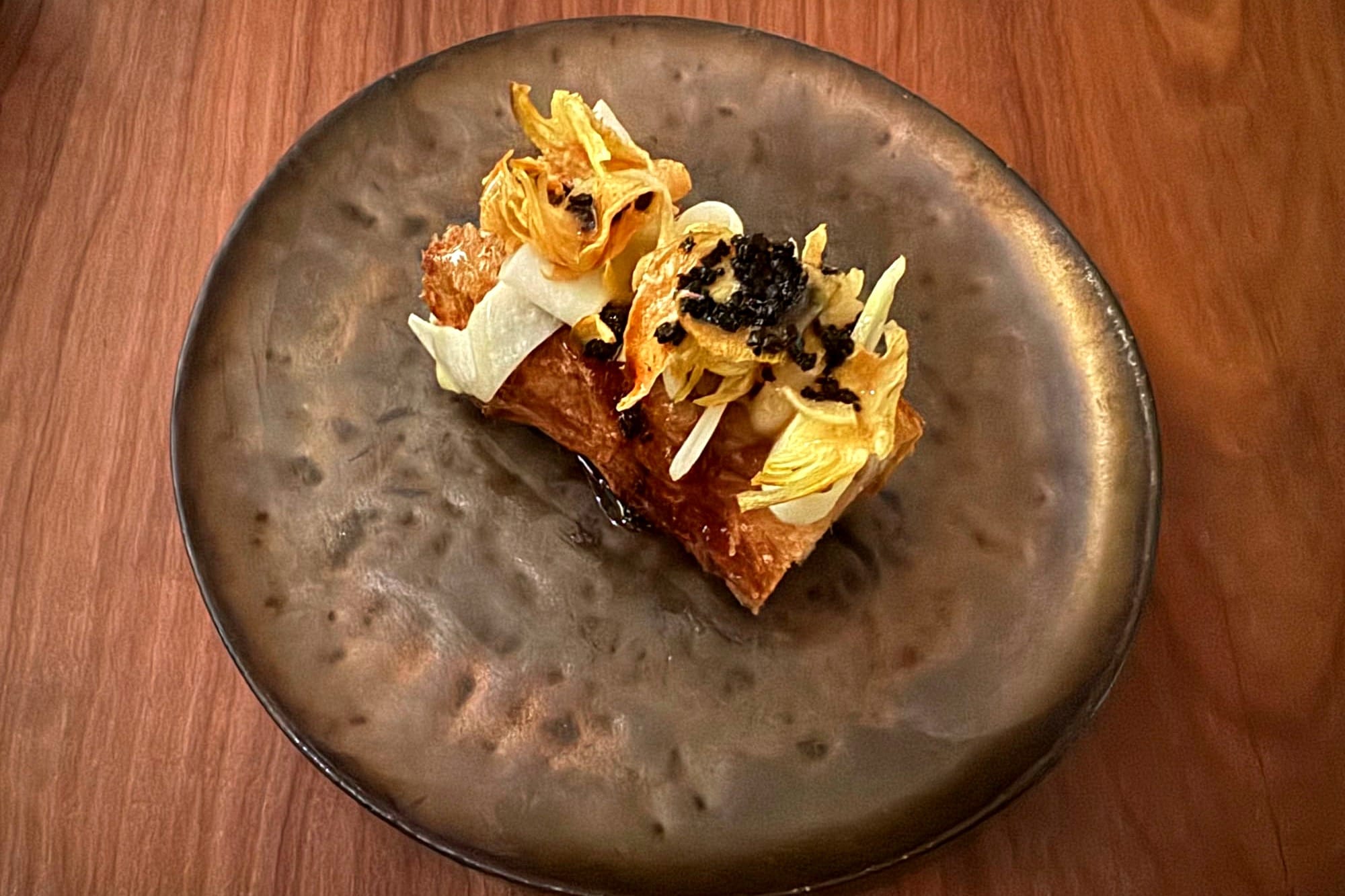
An artichoke tarte concluded the section with quiet confidence.
The Japan chapter shifted tone.
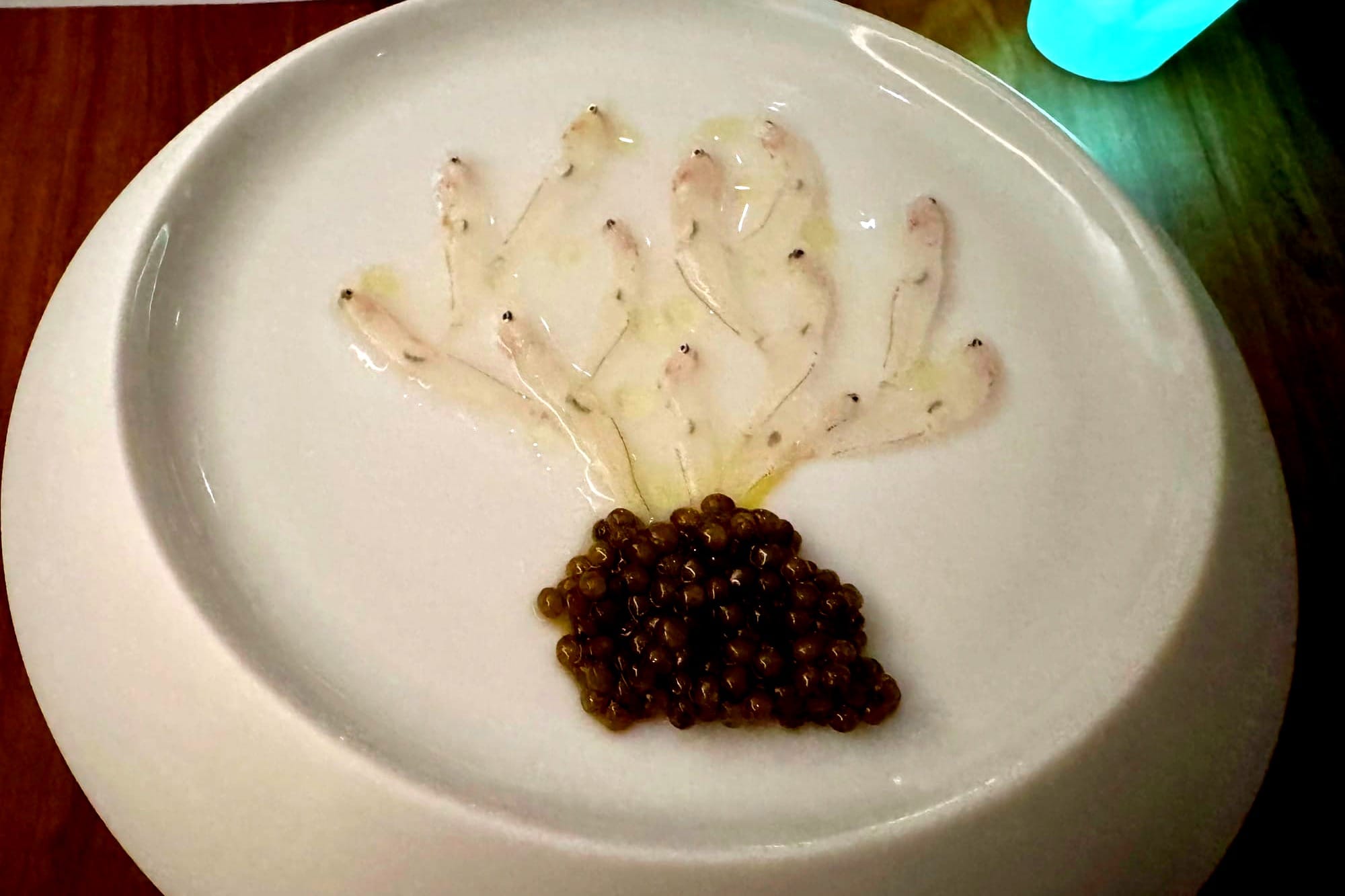
Poutine with caviar reinterpreted the familiar through precision. Whitebait arranged with caviar, accompanied by a delicate cracker.
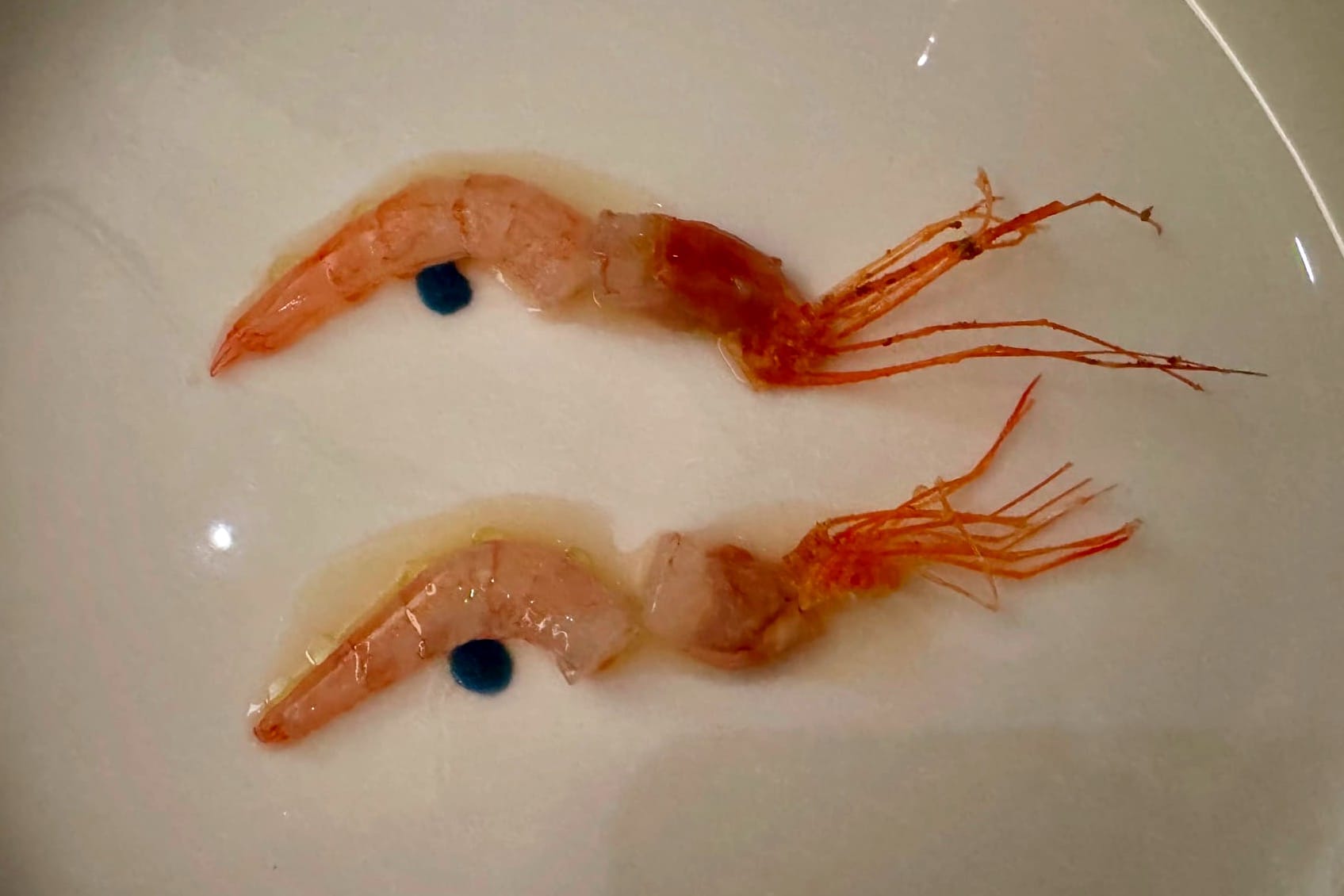
The quisquillas, served raw, were remarkable in their sweetness and texture, almost creamy, while the head was fried separately to a crisp, adding a contrasting depth and intensity.
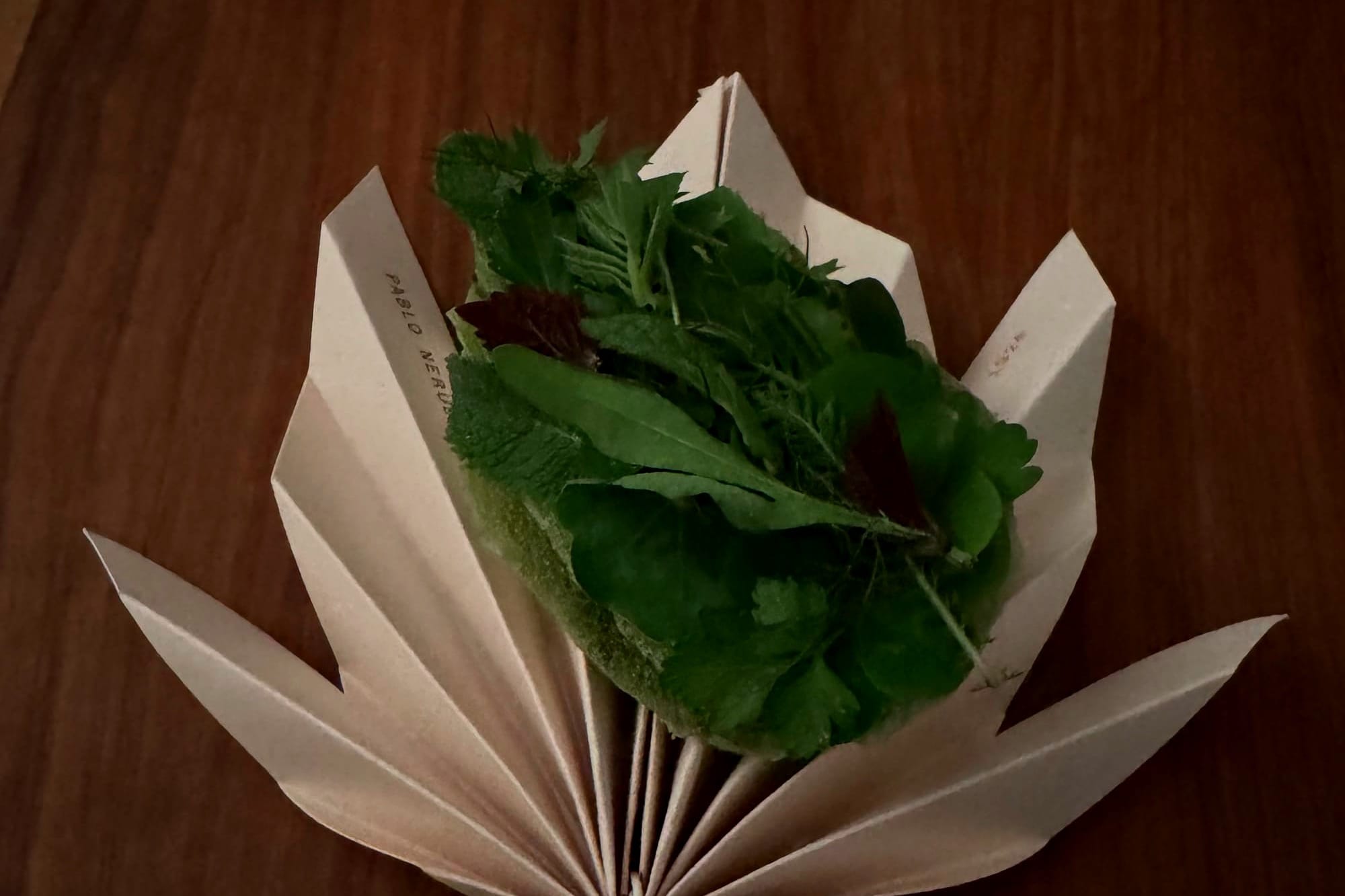
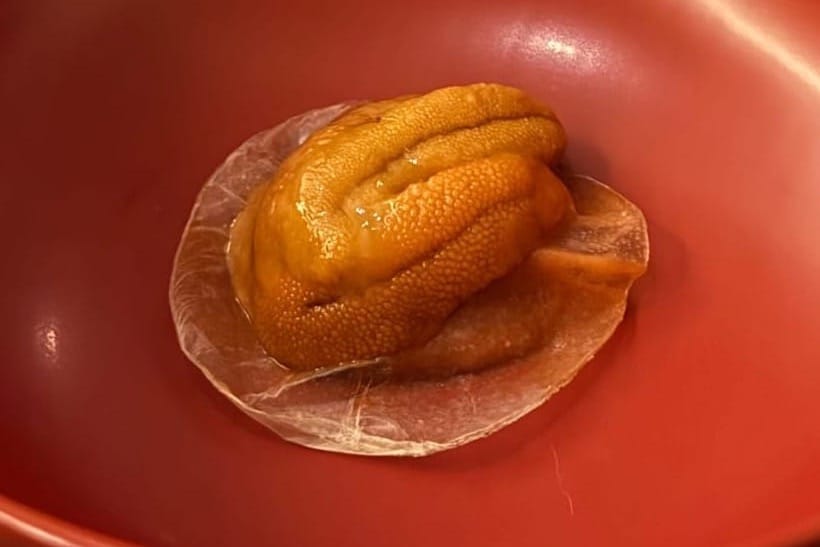
Shiokara and squid fossil introduced fermentation and depth. Then came Nanakusa-no-sekku, presented as a single leaf topped with delicate herbs, served on folded origami. The reference to the Japanese tradition of the seven herbs of early spring was subtle but clear, a moment of lightness and renewal within the menu. It prepared the palate before the sequence culminated in a sea urchin ravioli that balanced richness with clarity.
A brief moment stayed with me here. Diego Masciaga was frequently at the table, guiding the experience with a quiet presence. At one point, he began to explain how certain dishes traced back to Mauro Colagreco, while others reflected the thinking of Ferran Adrià. It was not presented as a contrast, but as a way of reading the menu. That small insight shifted the perspective. The meal became easier to follow, its structure more apparent, without losing its sense of discovery.
The Mediterranean sequence returned to a more familiar landscape, though interpreted with precision.
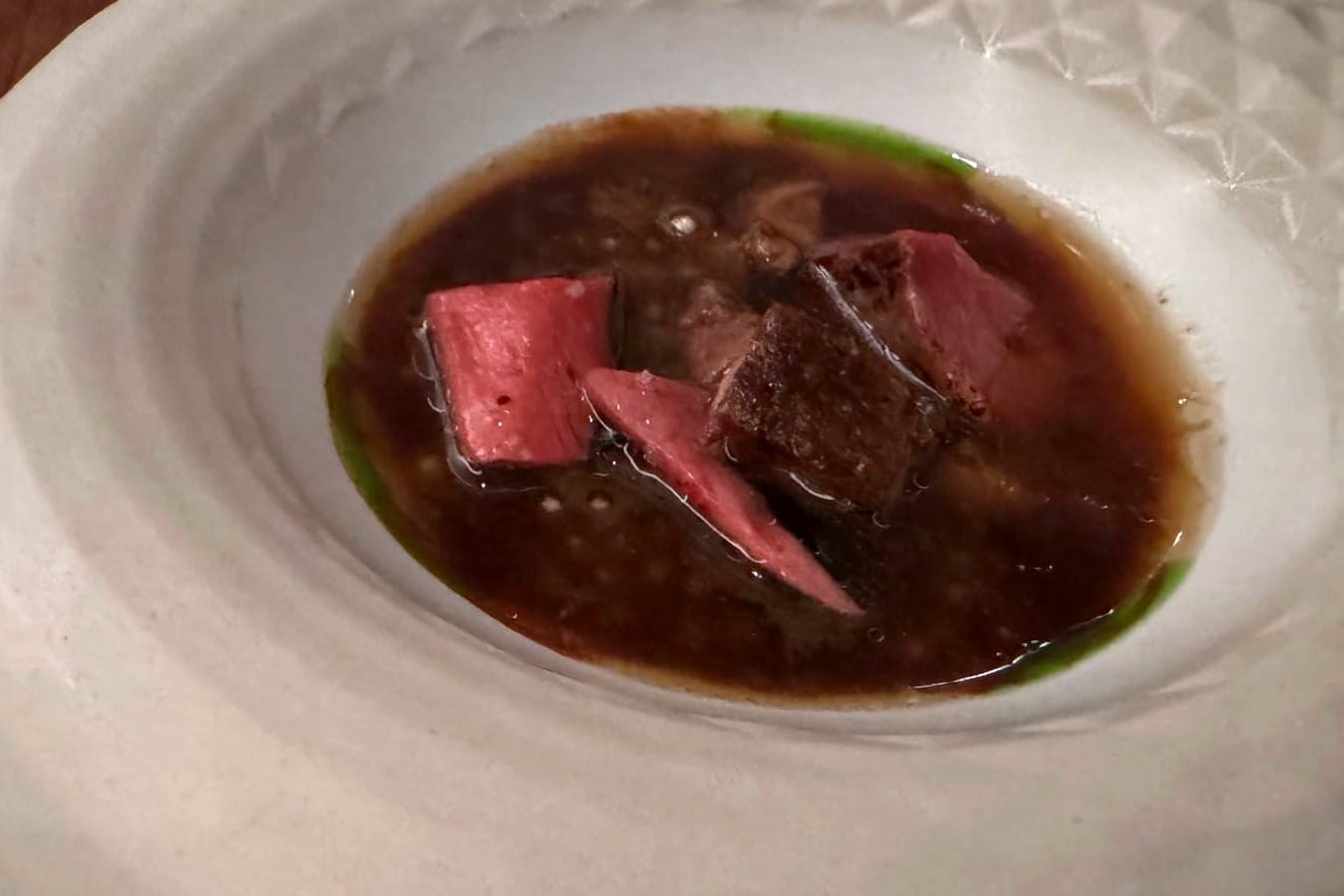
Foie gras was served as a course on its own, followed by a pine chawanmushi, and then pigeon paired with sea cucumber.
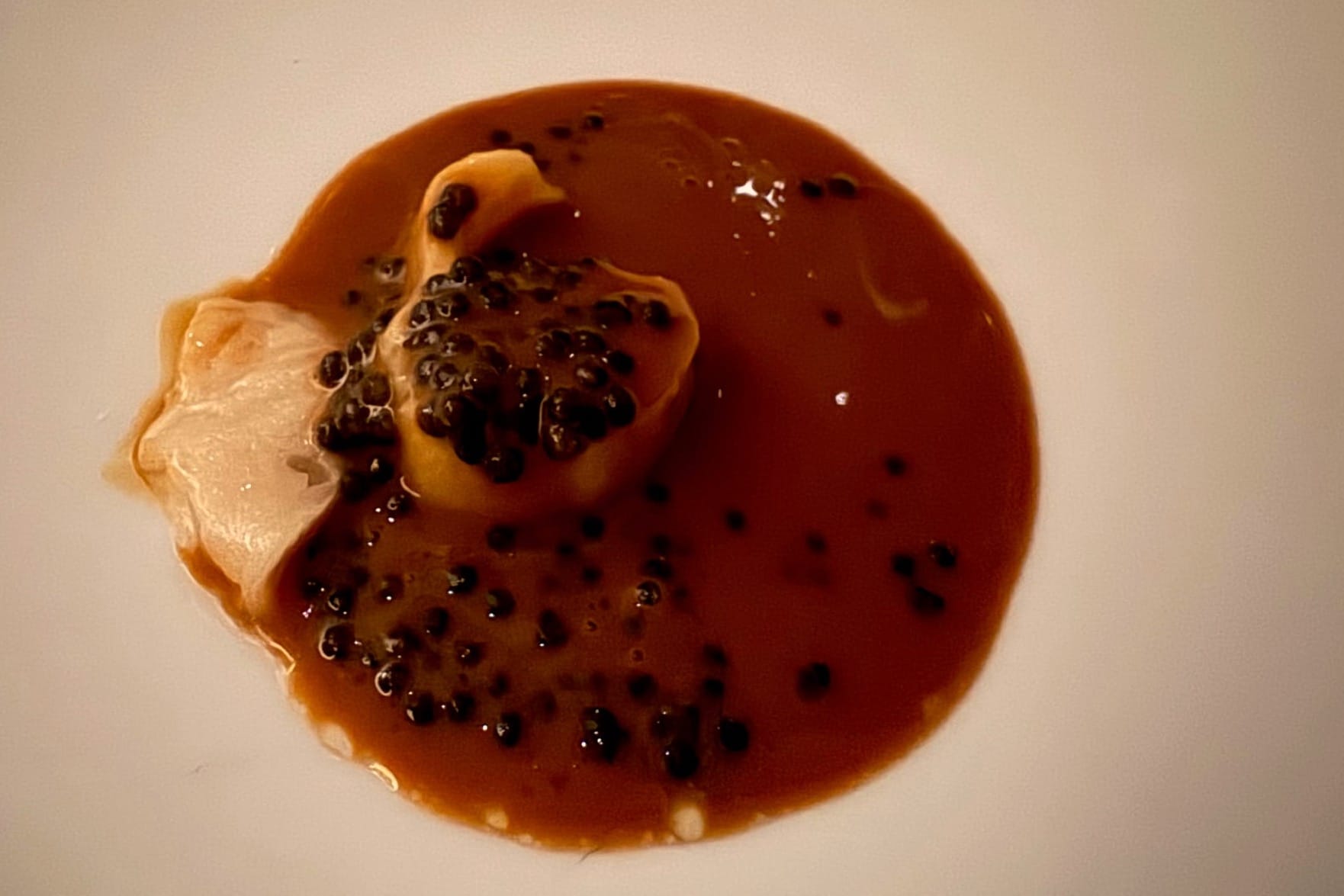
Tuétano, bone marrow topped with caviar, followed, extending the dialogue between land and sea in a way that felt considered rather than provocative.
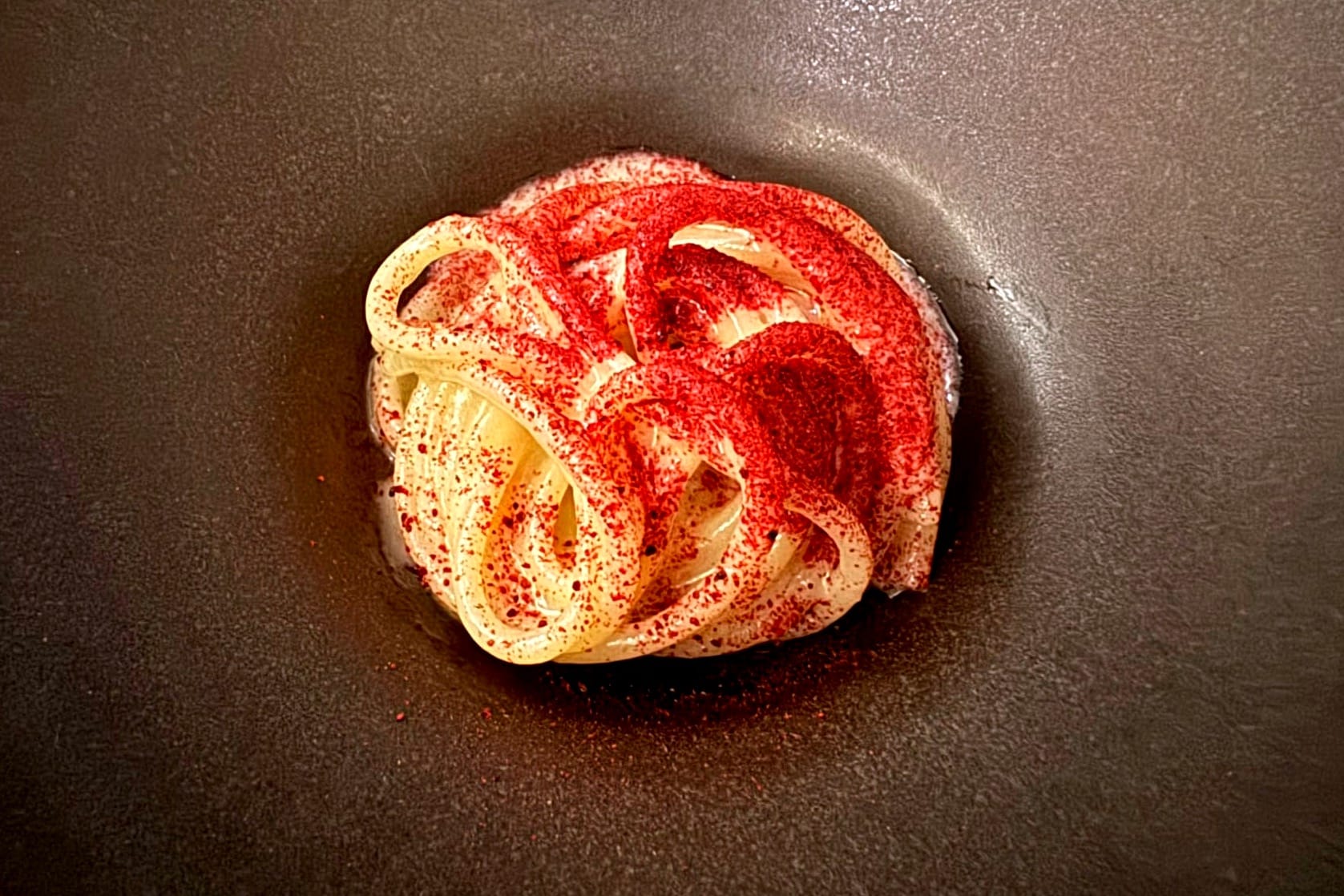
The eucalyptus spaghetti introduced an aromatic dimension that lingered gently. Being only a few meters from the Italian border, a pasta dish here feels almost essential, a quiet nod to the geography that shapes the restaurant’s identity.
Dessert moved into Citrus, a natural conclusion in Menton.
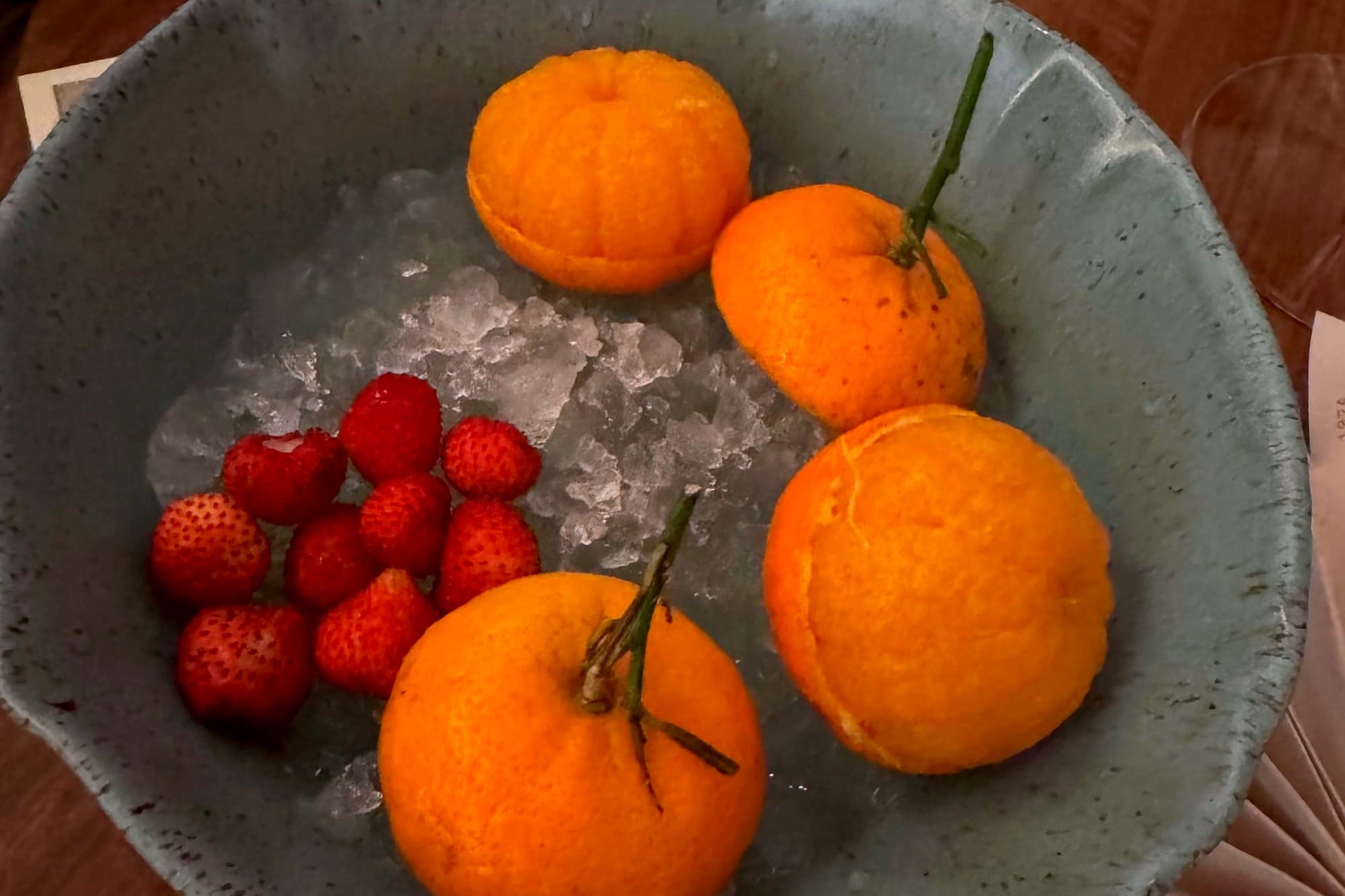
A tray of sweets served in real seashells felt playful without excess. Naranjo en Flor and the yuzu cloud were light, almost dissolving, carrying acidity into sweetness.
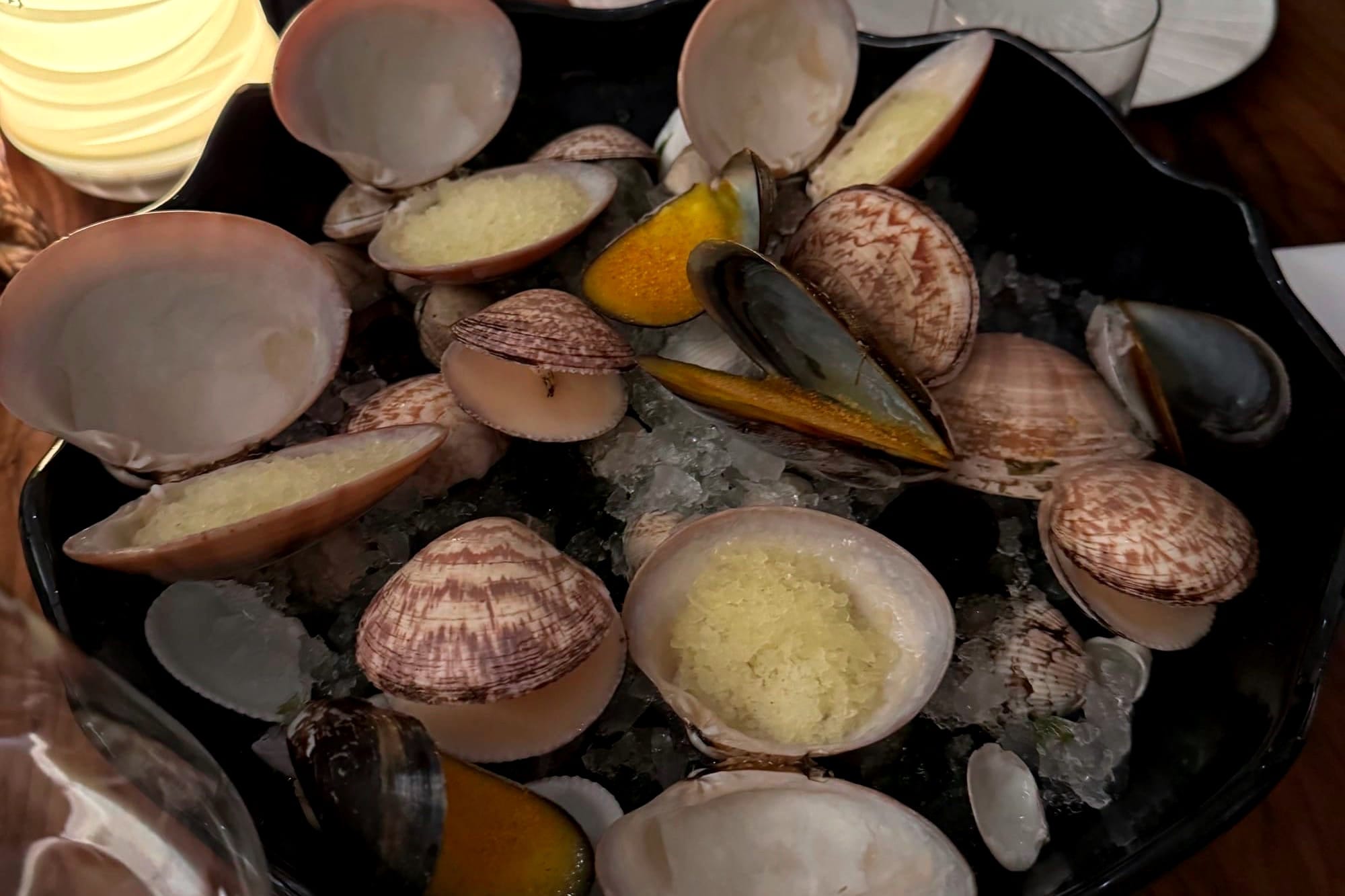
The final Celebration brought the evening to a quiet close. Chocolates were followed by a birthday cake, marking the twentieth anniversary without ceremony, but with a sense of completion that felt both simple and precise.
Wine
The wine selection was generous and thoughtfully paced. One of my friends, a deeply knowledgeable wine expert, worked with the sommelier to curate the selection for the evening, shaping a progression that felt both personal and precise.
Two Champagnes from Ulysse Collin opened the evening. Les Maillons and Les Pierrières, blanc de noir and blanc de blancs, respectively, offered contrast in structure and minerality.
An Austrian Grüner Veltliner from Nikolaihof brought clarity and tension, particularly alongside the vegetable-driven dishes.
From Rioja, Bodega Lanzaga’s Las Beatas showed elegance and restraint. A rare wine of smooth depth.
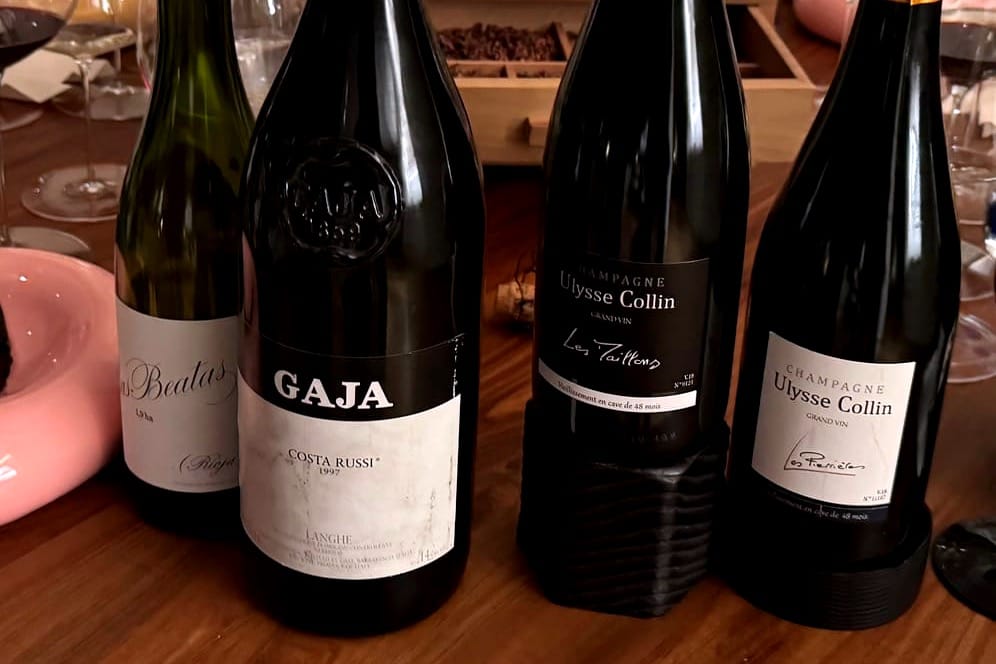
The highlight, however, was Gaja’s Costa Russi 1997. Mature, composed, and deeply expressive. The tannins had softened into silk, the fruit resolved into something more contemplative. It did not demand attention. It held it.
We ended with a Marc de Bourgogne from Domaine de la Romanée-Conti. A digestif of remarkable purity, carrying the essence of its origin into a long, measured finish.
Verdict
Mirazur at twenty is not a restaurant looking backward. It feels, in the most considered sense, carefully constructed. Every element of the evening appeared deliberate, shaped and placed with intention rather than left to chance.
What made the experience compelling was not the food alone, but what it suggested. The involvement of Ferran Adrià and Diego Masciaga points to a restaurant that is not settling into its position, but preparing its next phase. There is a sense of movement and reinvention.
The question is no longer whether Mirazur deserves its place. That has been established. What remains is where it chooses to go from here.
Based on this evening, it is a direction worth following. Returning in a year feels less like a plan than a natural continuation.
• Location: Menton, France
• Chef: Mauro Colagreco
• Michelin rating: ★★★
• Visited: April 2026
A different expression of this ongoing pursuit can be found at Clos des Sens, where the relationship between nature, place, and cuisine is explored with a more introspective, alpine clarity.
For another restaurant where storytelling, landscape, and cuisine become inseparable, read my review of Aponiente 2026.