
FDJ Score: 9.5/10 (Three-Star Level, upper range)
Review
My visit to Aponiente at the end of April 2026 was my nineteenth meal at the restaurant. I first came here in 2014, when it still held one Michelin star, and have returned every year since. For the longer arc of that development, I have written separately about those first eighteen visits: Aponiente Ángel León’s Three-Star Marine Revolution.
This latest dinner felt like a clear step forward. Aponiente has changed several times over the years: from its smaller restaurant in the centre of El Puerto de Santa María, to the old tide mill, and later with the addition of the pavilion at the entrance. Each move brought the restaurant closer to the landscape that defines Ángel León’s cooking.
In 2026, that relationship became more immediate. Part of the meal is now served in the marshes themselves. Walkways lead through the salt marsh, opening onto platforms above the water, with tables and a kitchen set directly into the estero landscape. Fish and seafood are taken from the surrounding waters and served in the open air, as the sun sets, the sky changes colour, and the moon rises over the marshes.
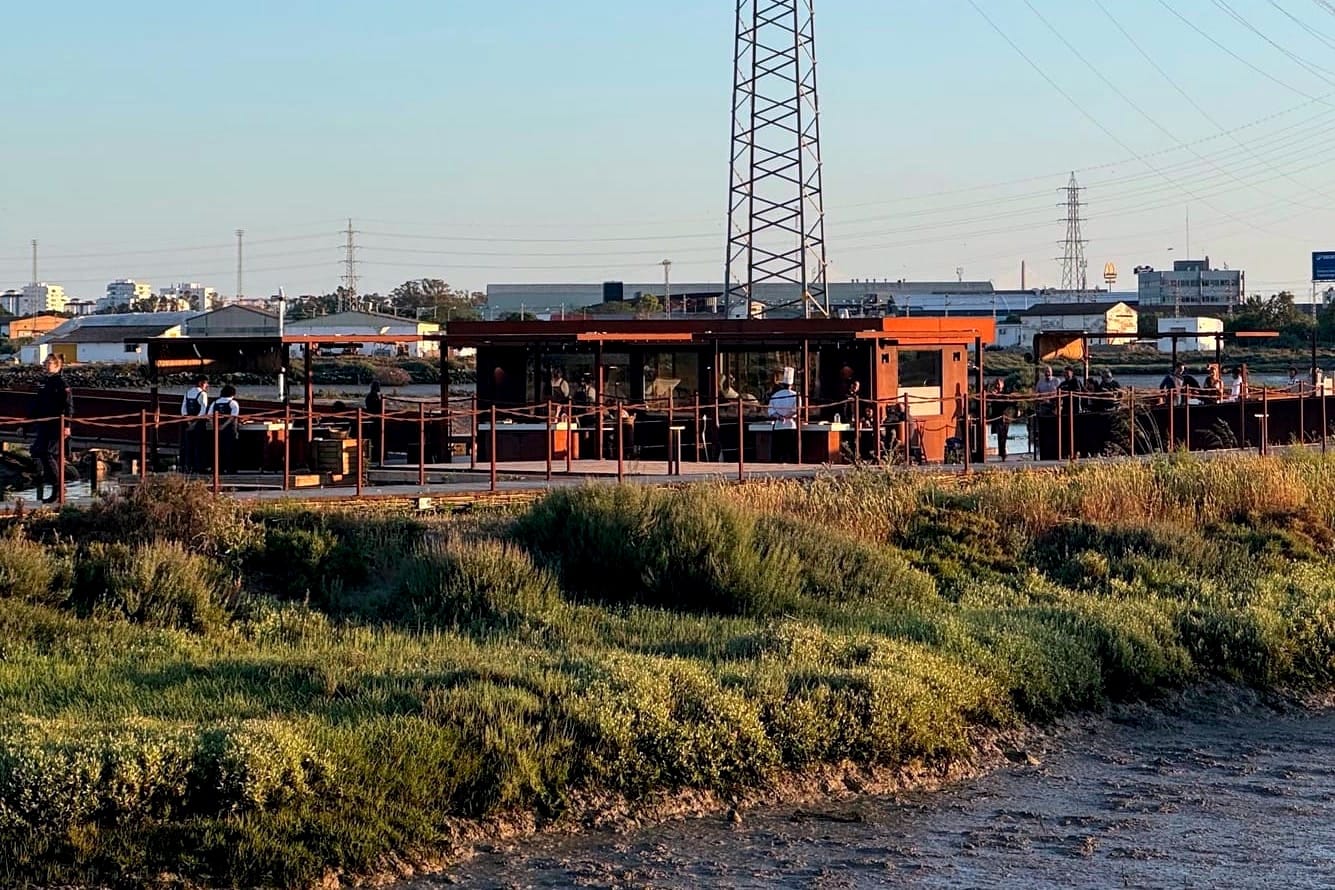
It is not scenery added to the meal. It is the meal finding its proper stage. The marsh is no longer only subject, pantry, metaphor, or landscape. It has become dining room.
Location & Atmosphere
We stayed at Hotel Duques de Medinaceli, an eighteenth-century palace once home to the Terry family, the sherry dynasty behind Bodegas Terry in El Puerto de Santa María. Its quiet gardens give the building a sheltered, almost private atmosphere. From there, Aponiente is only a short walk away.
The restaurant occupies an old tide mill on the Guadalete river, a building whose history matters because it never feels like a neutral container for luxury. The tide mill gives the evening a particular weight: stone, water, and the memory of work before gastronomy enters the room.
The evening began outside the mill with a welcome drink in the pavilion, before moving into the marshlands for the first sequence of dishes. Narrow walkways led through the landscape to platforms above the water, where tables had been placed with unusual care. A kitchen station stood close enough to the estero to make the relationship between product and place almost immediate.
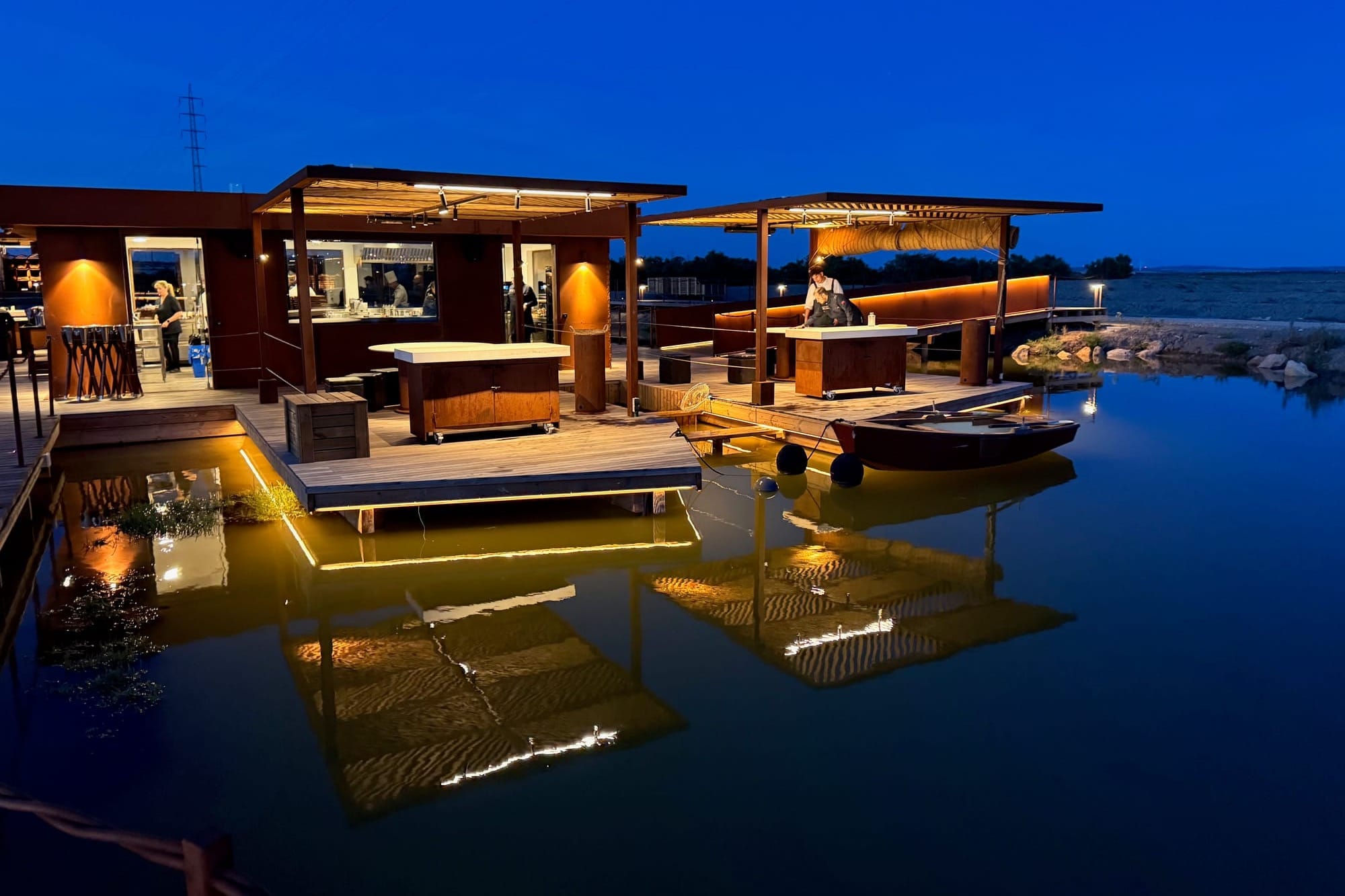
There was a sense of choreography, but also of exposure. The light, the wind, the vegetation, the sound of the marsh, and the gestures of the team moving between stations all became part of the meal. As the sun went down, the temperature changed almost imperceptibly at first, then more clearly. The warmth of the day withdrew from the marsh, and the air became cooler, cleaner, more saline. The sky moved through dramatic colours, from gold and copper into deeper shades of rose, violet, and blue. Then the moon rose, the light softened, and the platforms above the water seemed to become more isolated from the world around them. Nothing felt forced. The drama came from the setting itself.
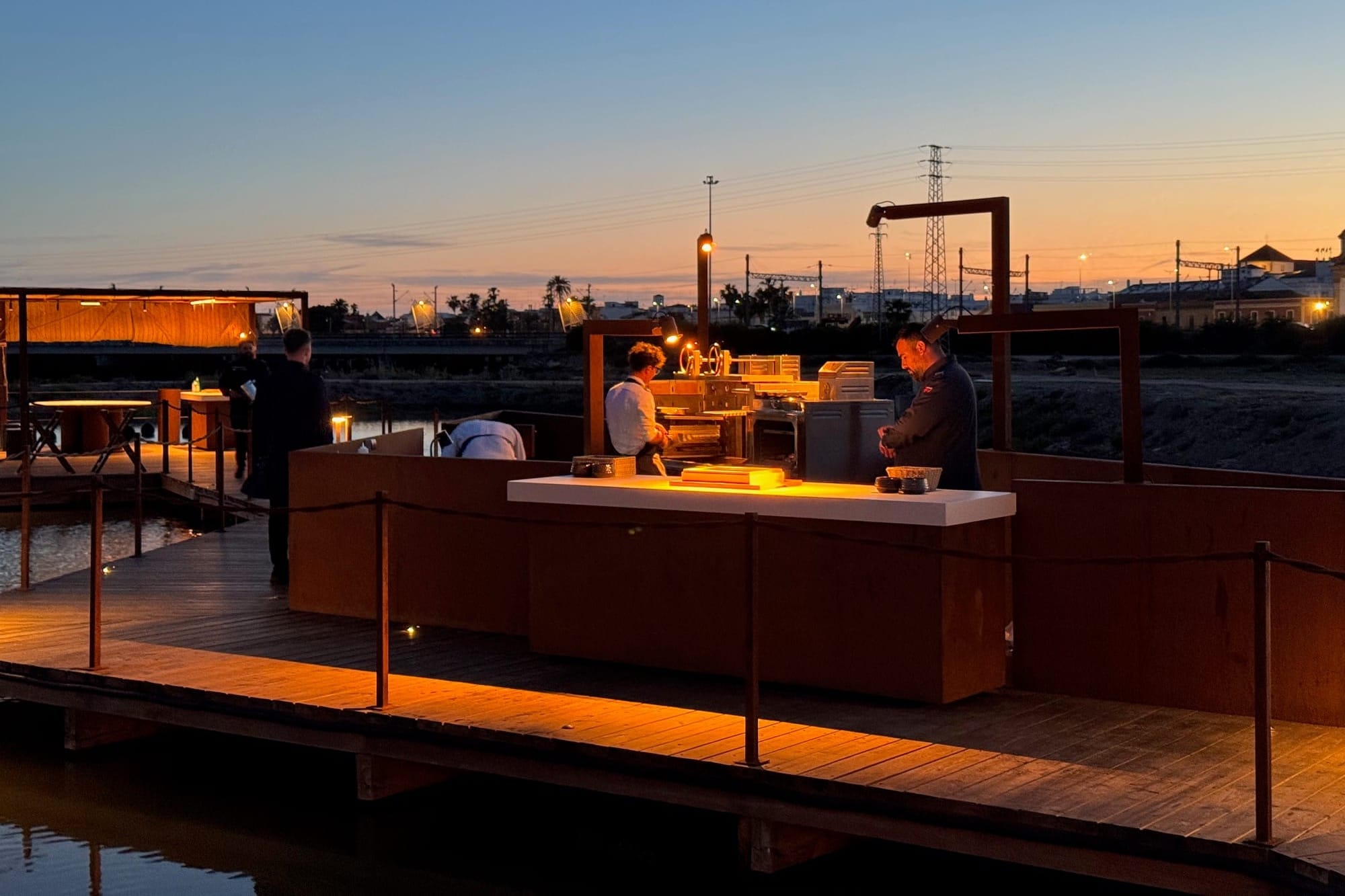
Aponiente has always been strong in storytelling, yet this outdoor sequence gives the story a physical setting. When the team speaks about the marshes, the esteros, the fish, and the Japanese method of killing and handling fish, the explanation becomes more than information. It becomes context.
Culinary Style or Distinctive Character
Ángel León remains one of the rare chefs whose work is both radically inventive and deeply local. Aponiente is a three Michelin star restaurant in El Puerto de Santa María, and León’s work is defined by a long commitment to the ocean as both pantry and responsibility.
What makes the restaurant exceptional is that it operates at a world-class level without ever becoming detached from its place. There is technique, certainly, and sometimes very advanced technique. But the meal never becomes a demonstration of novelty. It remains rooted in Cádiz, in the Sherry triangle, in the salt marshes, in the esteros, and in the working culture of fishermen, biologists, cooks, and producers. Aponiente could not exist in this form anywhere else. Its ambition is international, but its language is profoundly local.
This 2026 menu (400 €) made that grounding more visible than ever before. The outdoor sequence did not simply precede the meal. It changed the way the rest of the dinner was understood. One saw more clearly why Aponiente has spent so many years investigating marine plants, plankton, fish offal, shellfish, algae, and overlooked species.
The cooking is not only about extracting flavour from the sea. It is about expanding the idea of what marine cuisine can be. Seeing the esteros, walking above the water, hearing how the fish live there and how they are killed with precision, then tasting them moments later, gave the meal a rare coherence. Aponiente does not ask the diner merely to admire technique. It asks the diner to understand a landscape.
The result was, for me, probably the best visit so far.
Menu / The Dishes
Salt Marsh
The first sequence, titled Salt Marsh, was served outside in carefully prepared areas within the marshland.
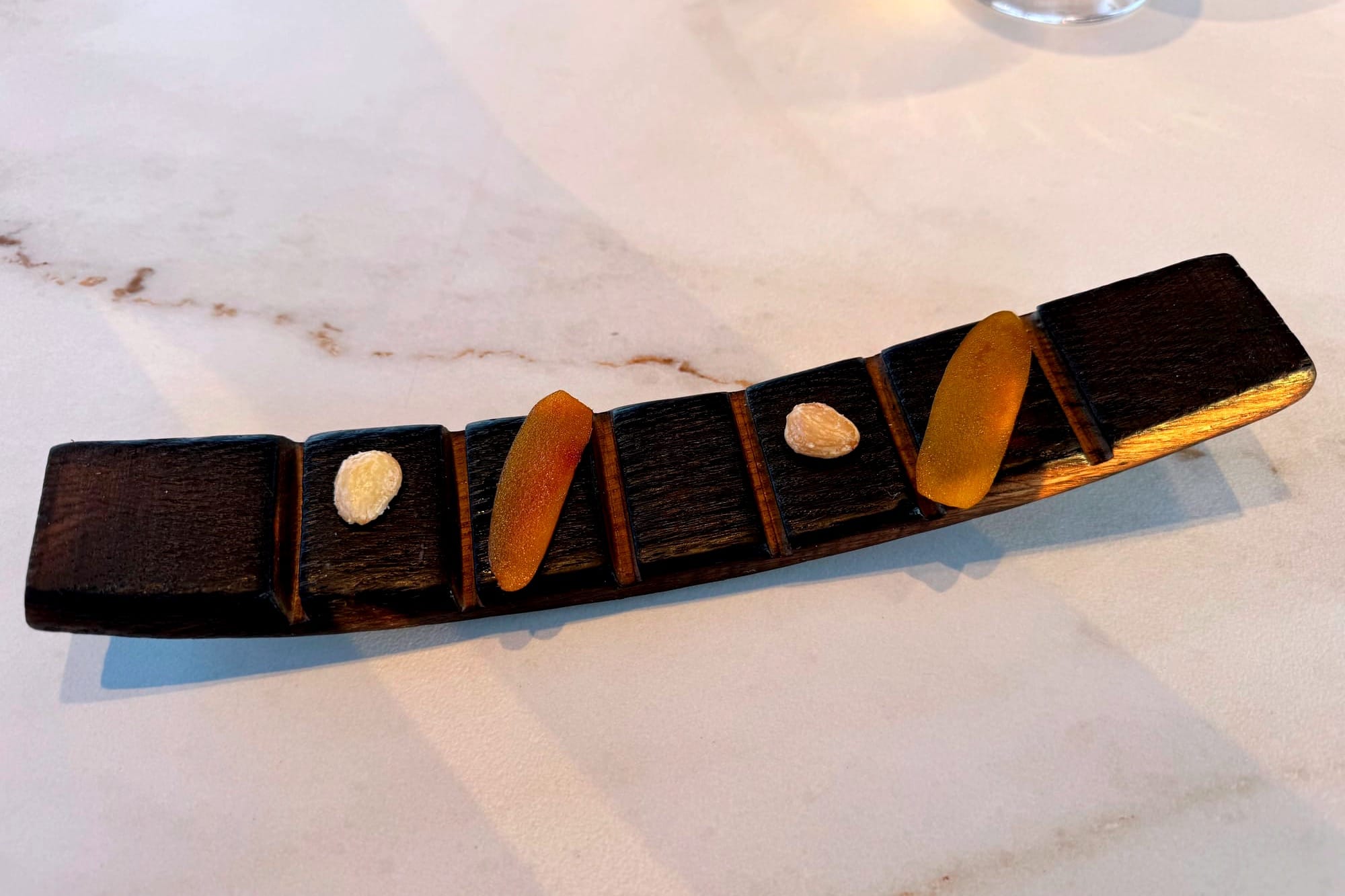
It began with grey mullet roe or bottarga, served in two expressions: one lightly cured and pure, the other cured in sherry wine. The gesture was concise, almost austere. The flavour moved between salinity, density, and a faint oxidative echo from the wine cure.
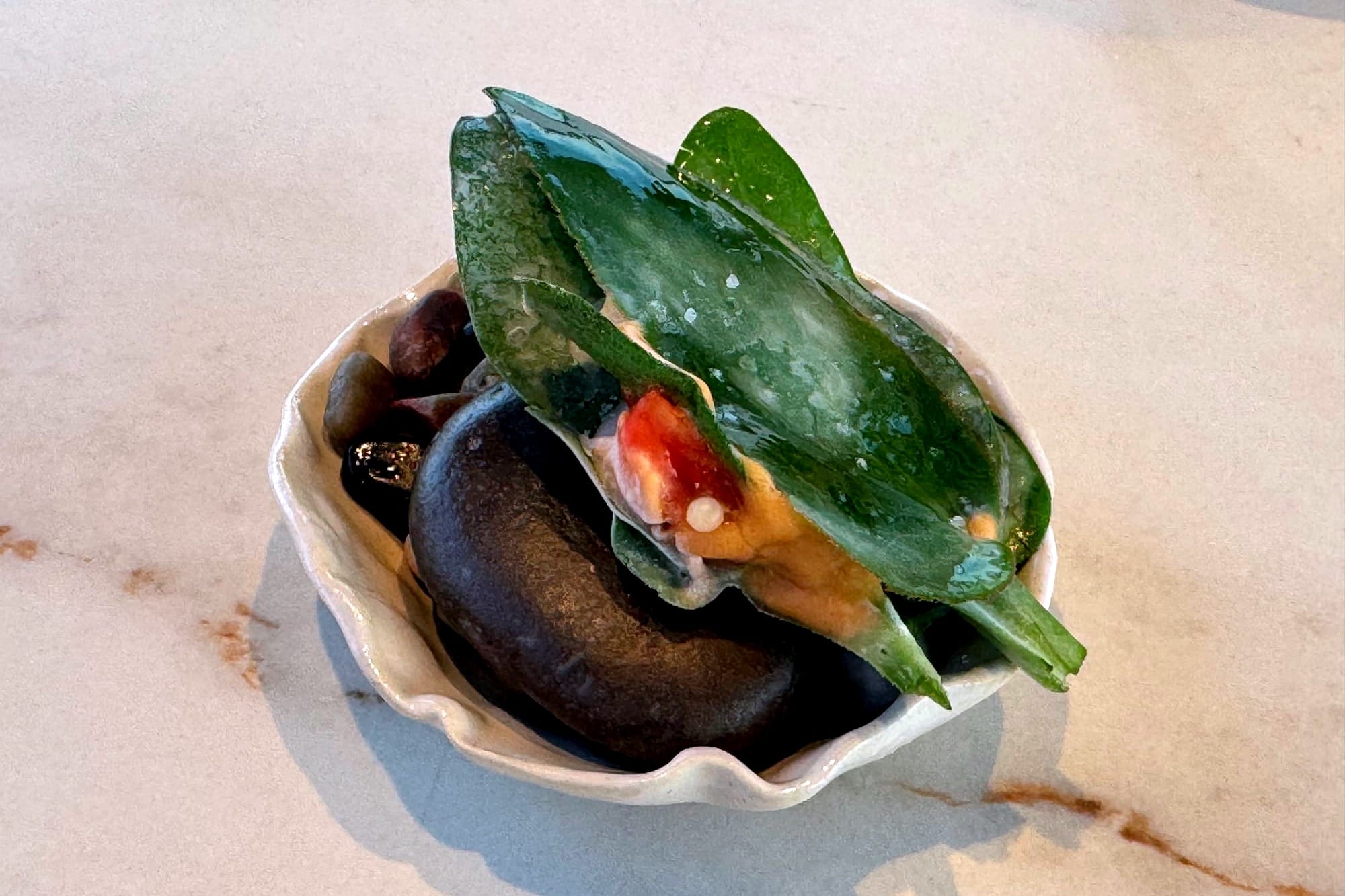
Halophytes and sea urchin followed in a form that felt like a frozen sandwich, set with liquid nitrogen. It was cold, immediate, and intensely marine. The sea urchin gave sweetness and iodine, while the halophytes brought a green saltiness that seemed to belong entirely to the place.
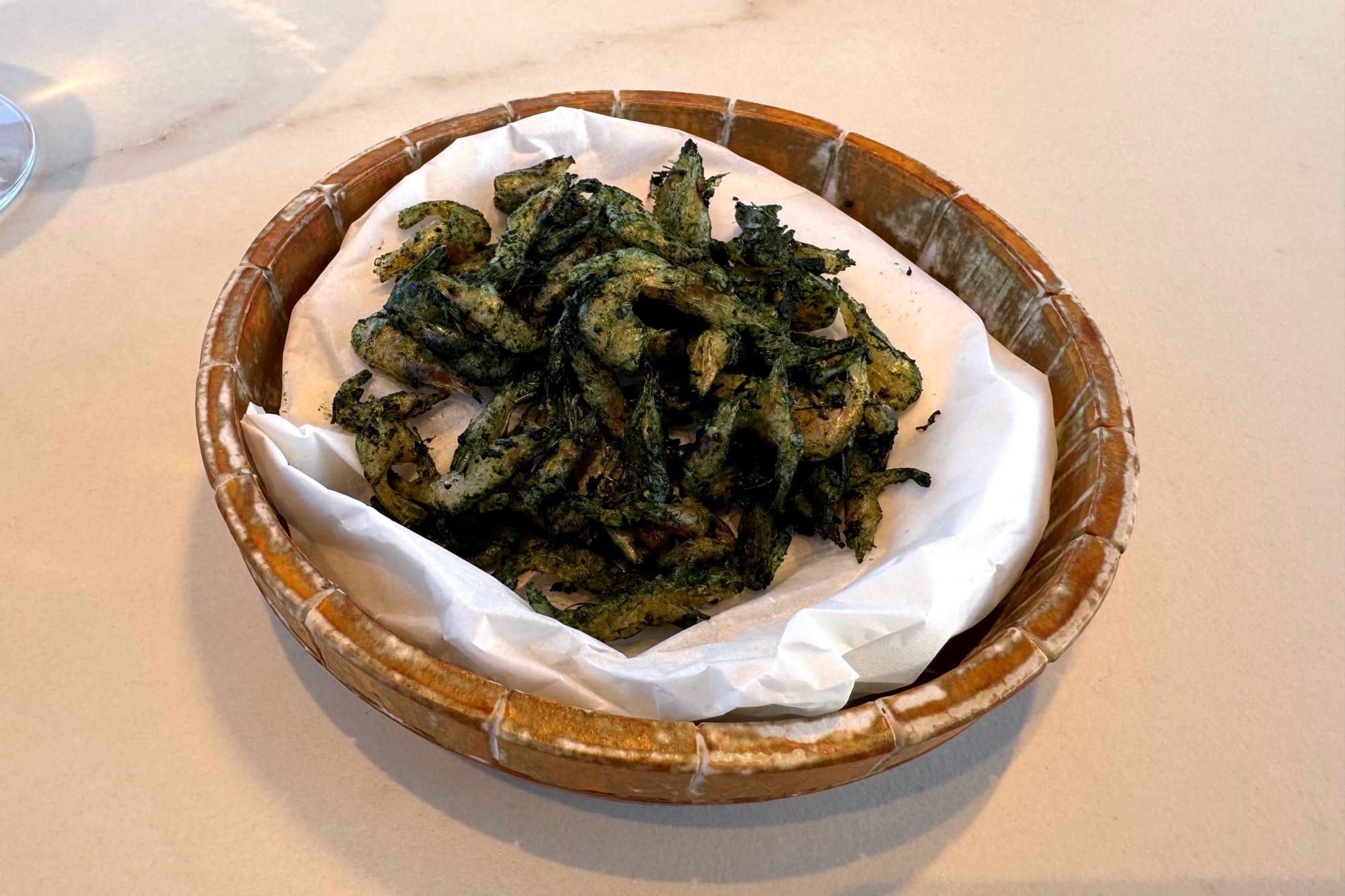
The shrimp and sea lettuce were camarones, fried and coated with plankton. They had the pleasure of something crisp and direct, yet with the darker, greener register that plankton brings to Aponiente’s cooking. These were served like as a snack on the side.
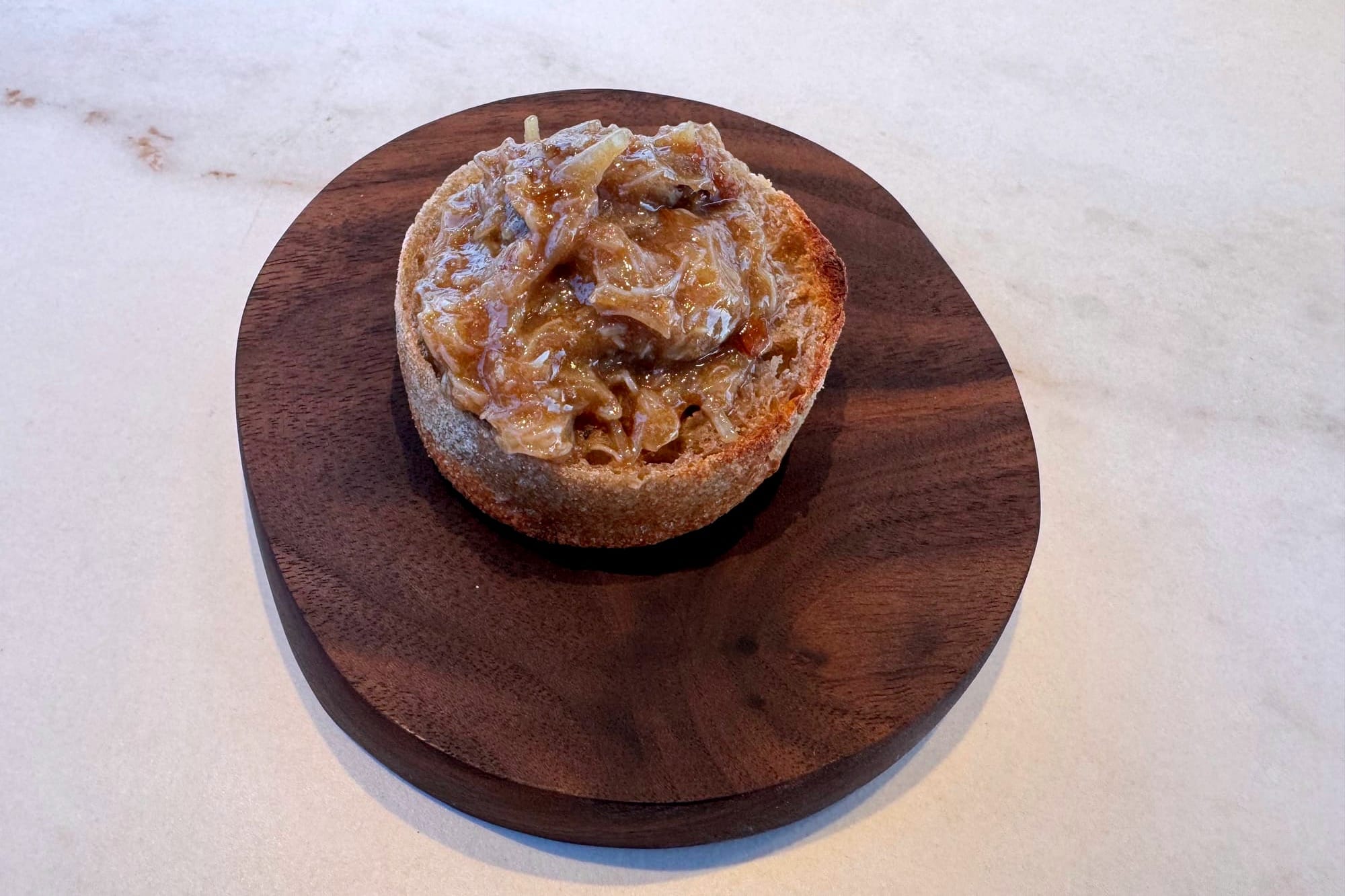
The blue crab with fish lard was one of the most meaningful dishes in the sequence. Blue crab, Callinectes sapidus, is an invasive species that has become a growing concern in parts of European and Mediterranean waters. One response has been culinary: encouraging its capture and use in kitchens as a way of reducing pressure on native ecosystems. At Aponiente, this was not presented as a lecture. It was simply delicious: crab meat mixed with fish lard on bread. Rich, saline, soft, and almost rustic in construction, it carried the logic of eating as a form of attention.
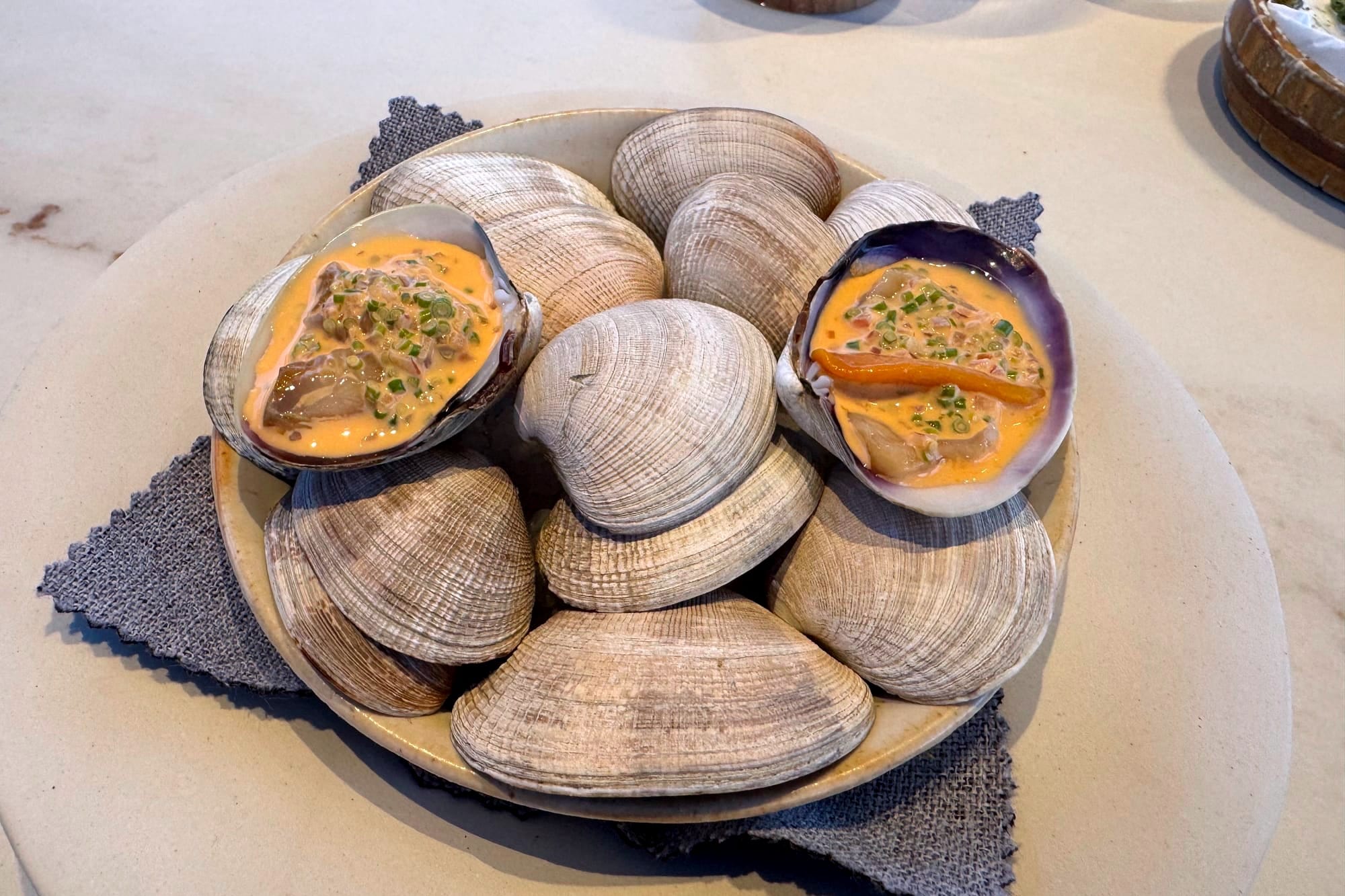
Then came almeja fina with marinera sauce. The clam was raw, clean, and beautifully held by the marinera sauce. It was one of those moments where the simplicity of the preparation made the quality of the product more exposed, and more convincing.
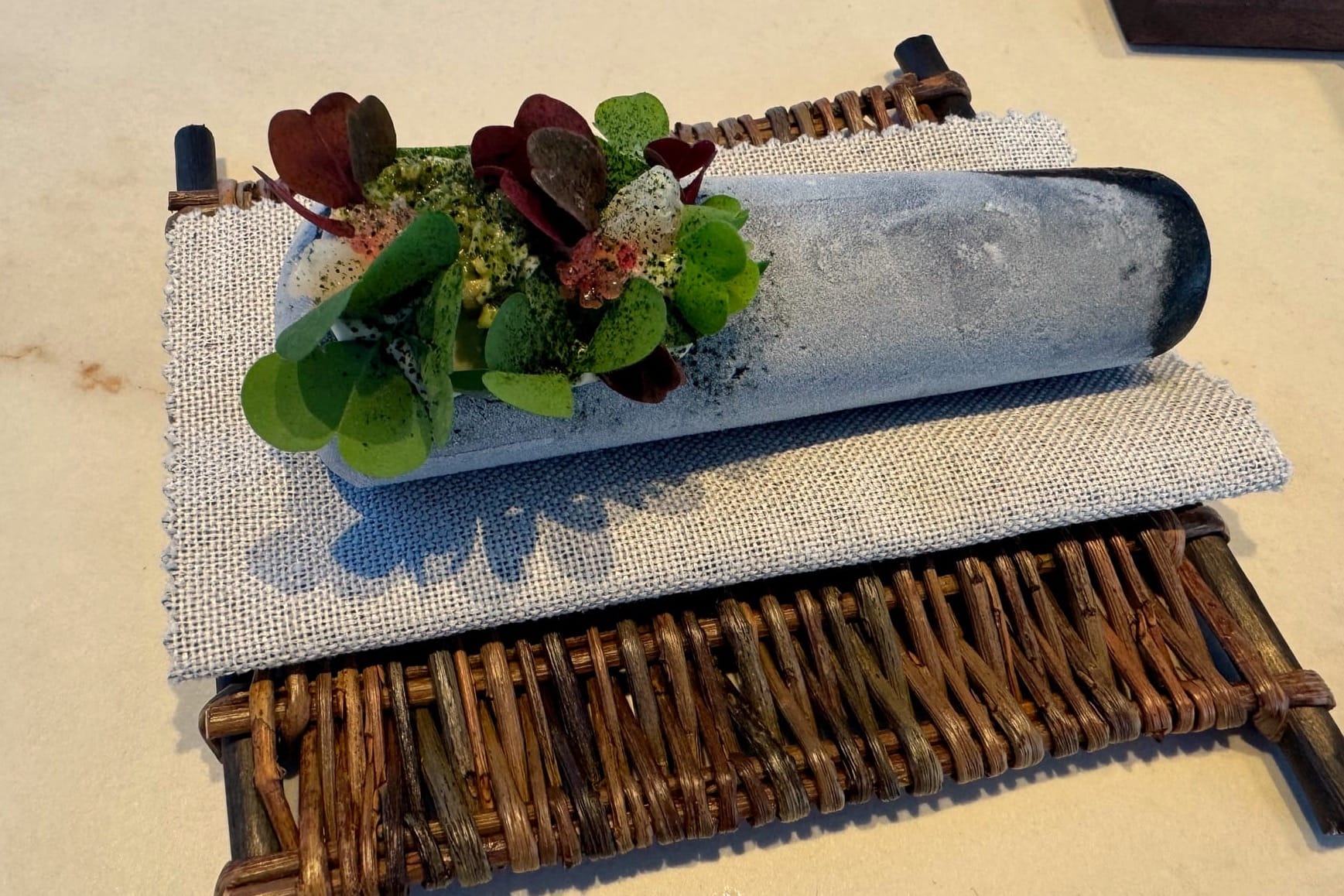
The oyster with olives and salt marsh flowers arrived in two movements. First came the oyster water with sour clover, bright and vegetal.
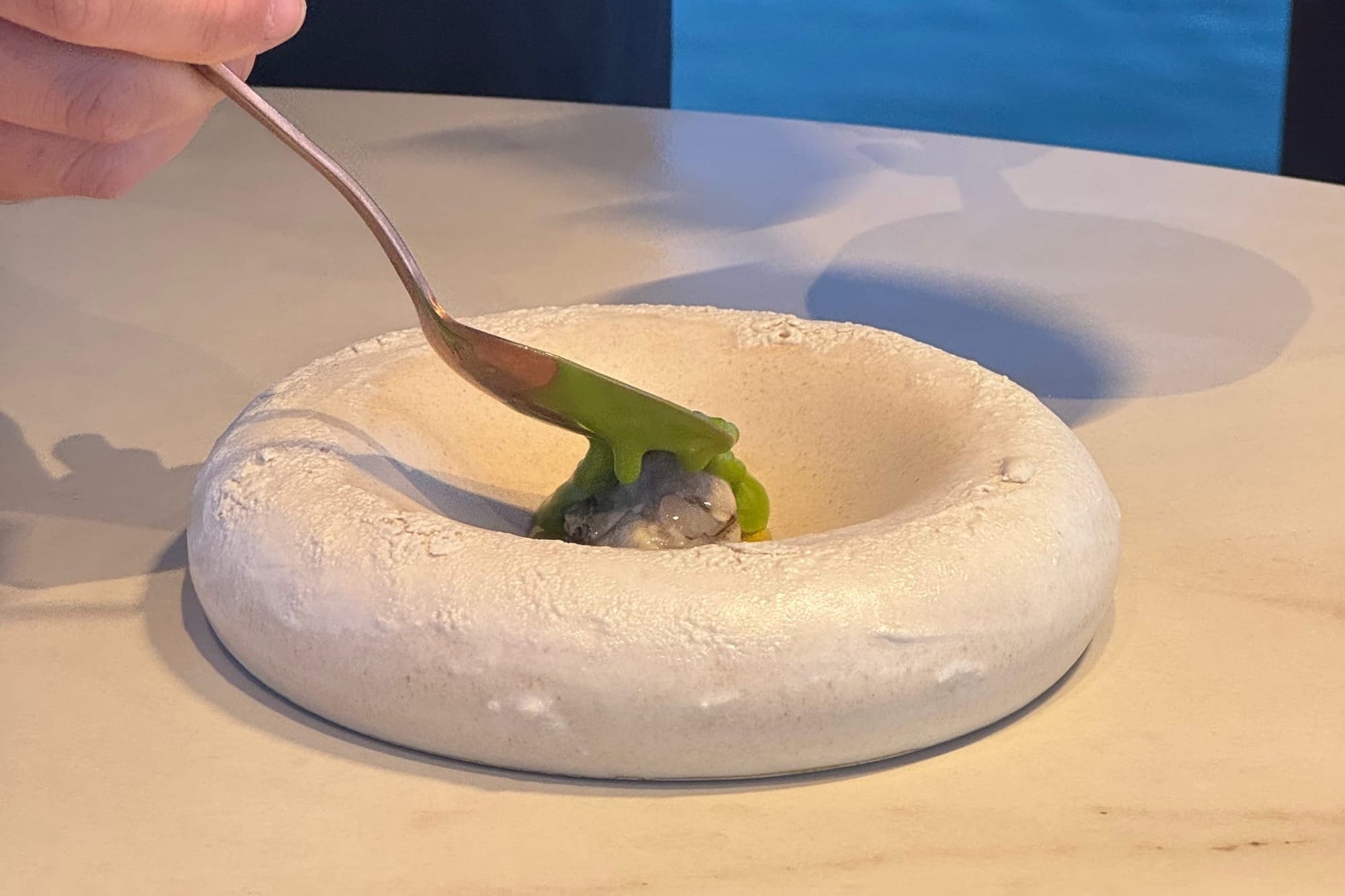
Then the oyster itself, in a green sauce made from salt marsh flowers. It was not a dish about oyster luxury in the conventional sense. It was about the oyster returned to its botanical and saline surroundings.
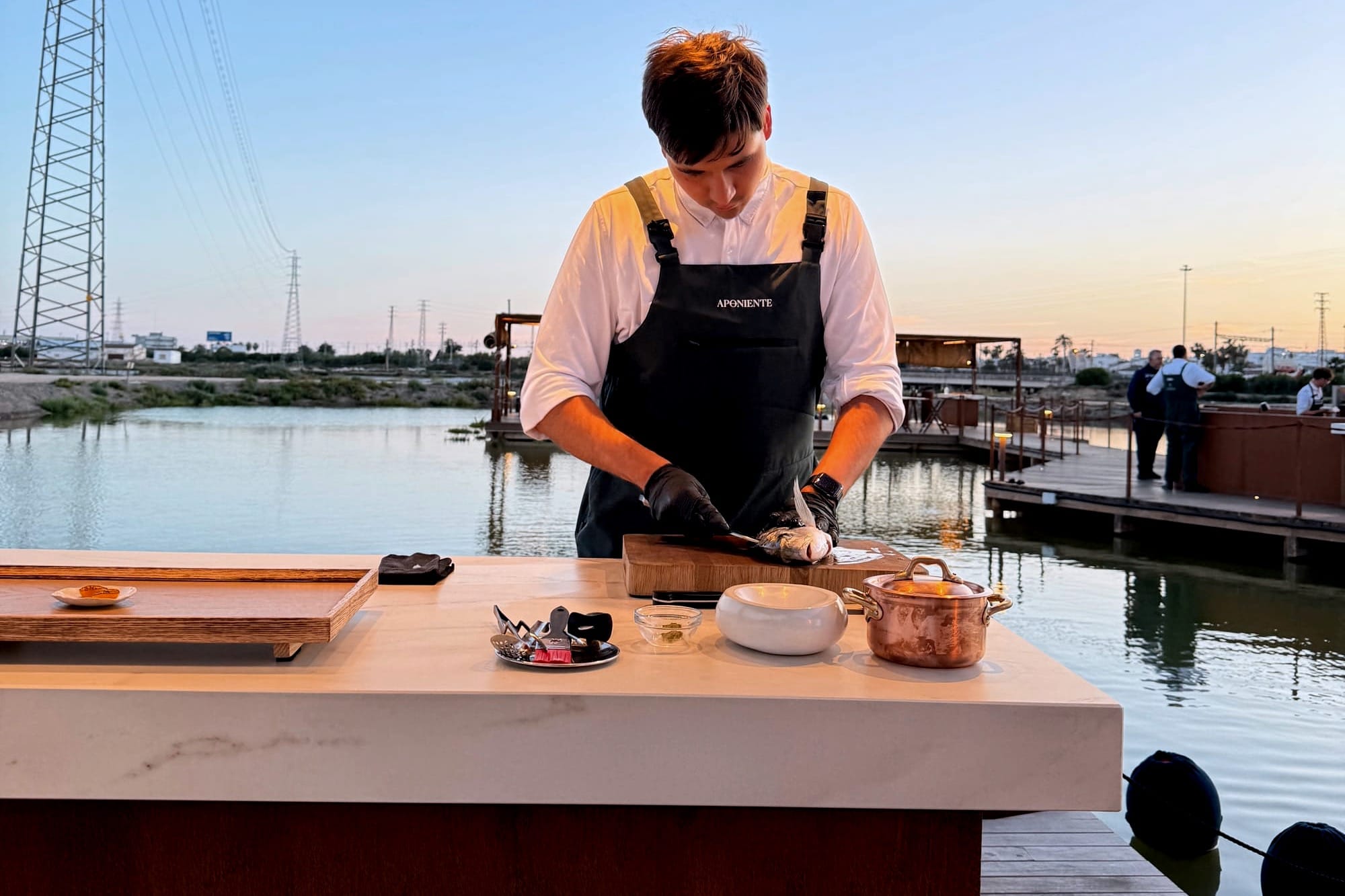
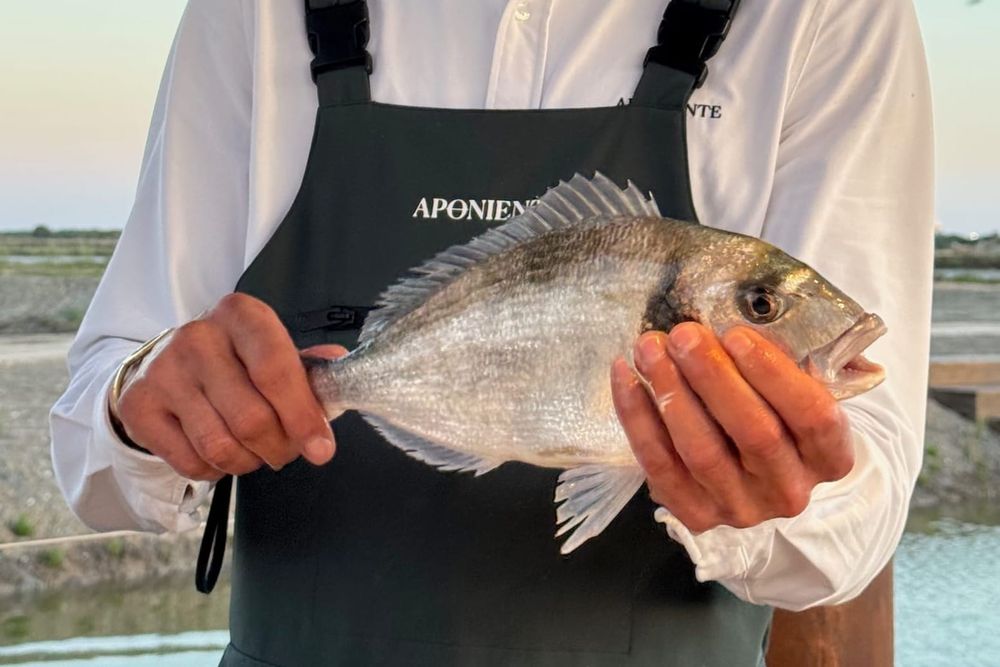
The estero sea bream was particularly important to the narrative of the evening. The fish, around three years old, had been caught alive and killed using the Japanese method known as ikejime, a technique designed to preserve texture, flavour, and ageing potential through a quick and precise kill. The esteros of Cádiz are traditional salt marsh ponds where species such as sea bream and sea bass can be raised in close relation to the surrounding marsh ecology. Water, algae, small crustaceans, and the rhythm of the landscape all shape the character of the fish.
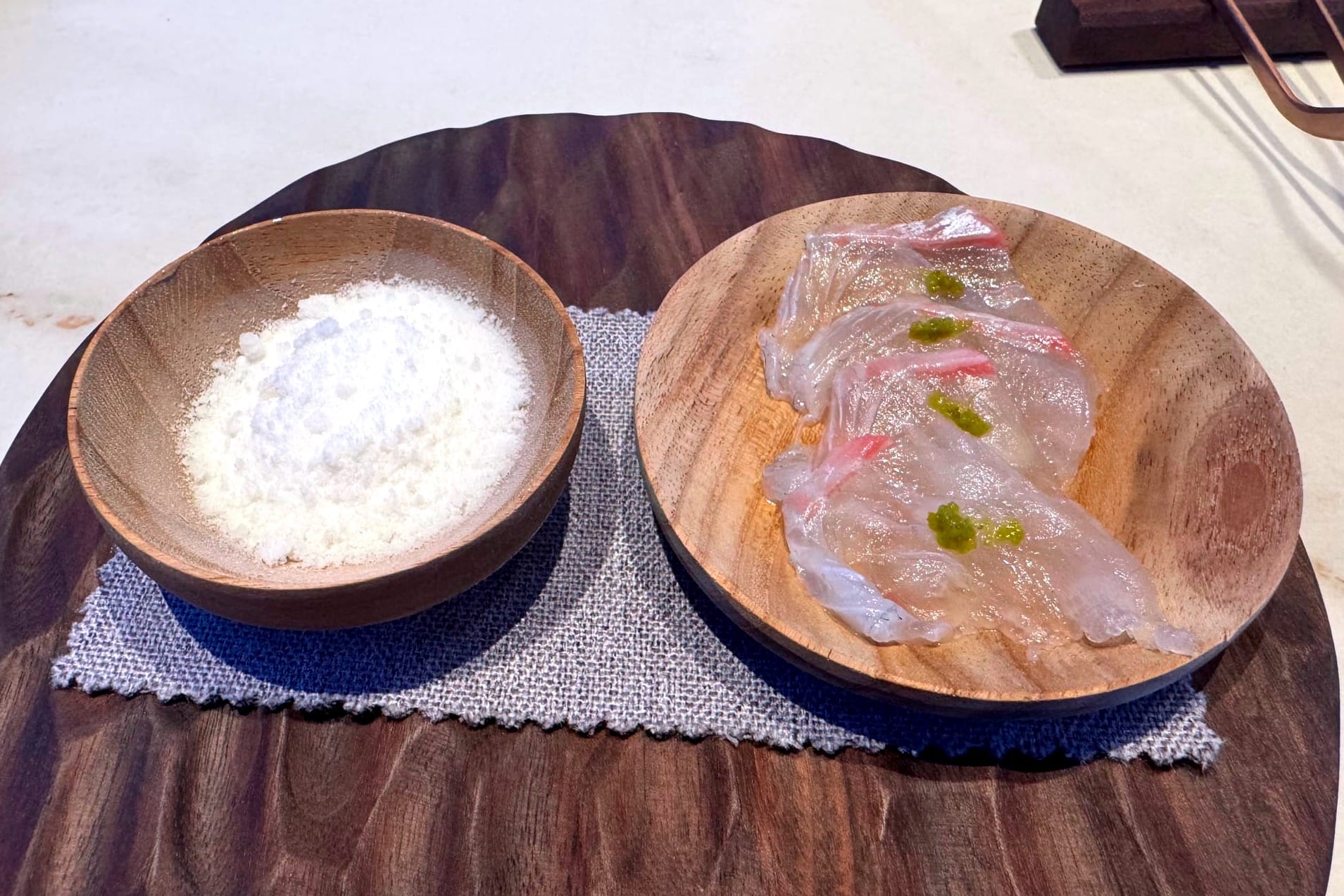
Served as sashimi, the sea bream was not showy. It was firm, clear, and precise. The story of its life and death made the dish more meaningful, but only because the eating itself justified the attention.
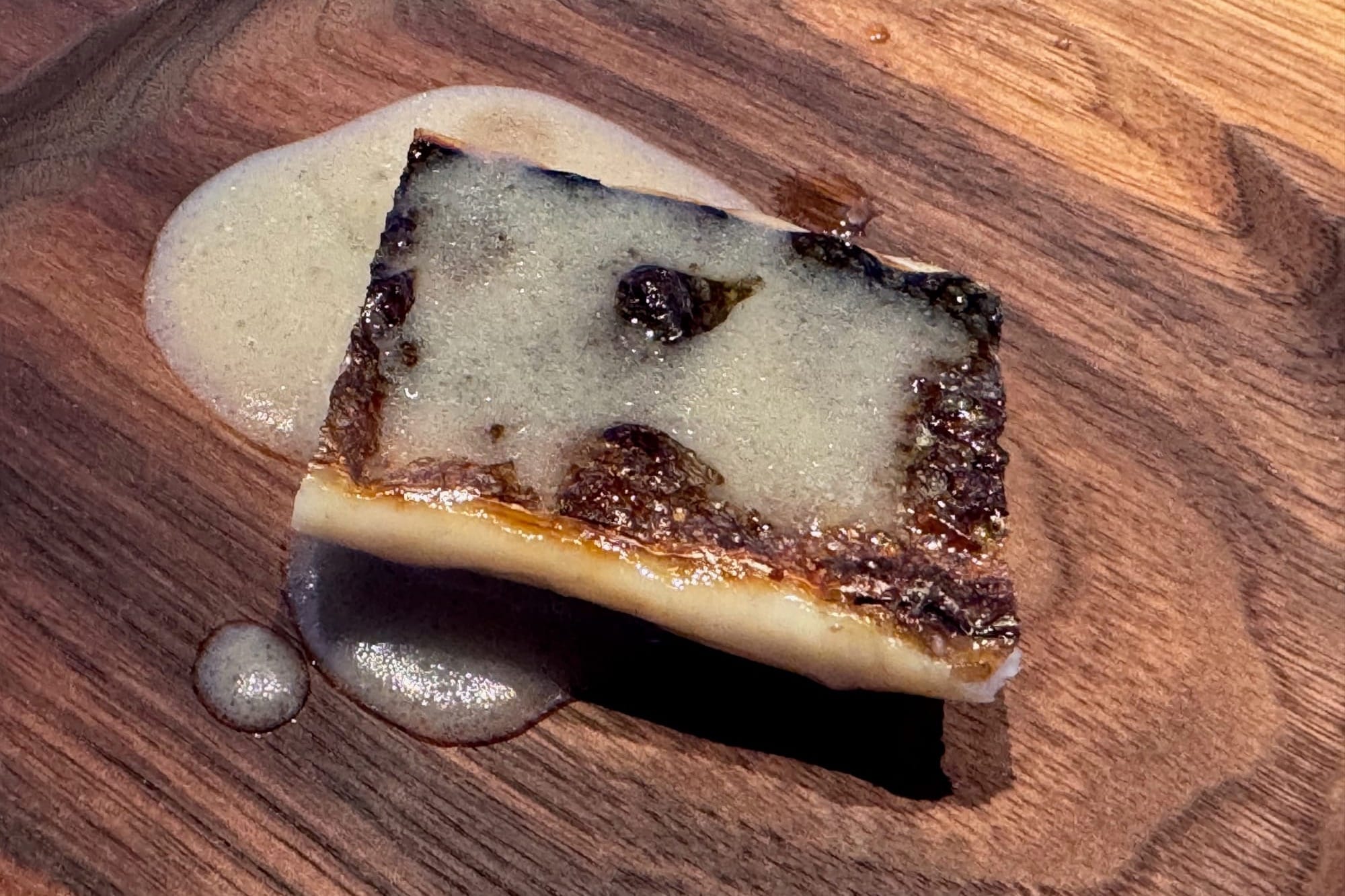
The sea bass with Manzanilla vinaigrette and charcoal was one of the best dishes of the evening. The estero sea bass had a skin of remarkable crispness, almost brittle, while the flesh beneath was cooked exactly to the point. The charcoal gave depth without heaviness. The Manzanilla vinaigrette lifted everything with acidity, salt, and the faintly coastal character of sherry country. It was a complete dish: technically sharp, regionally exact, and emotionally satisfying.
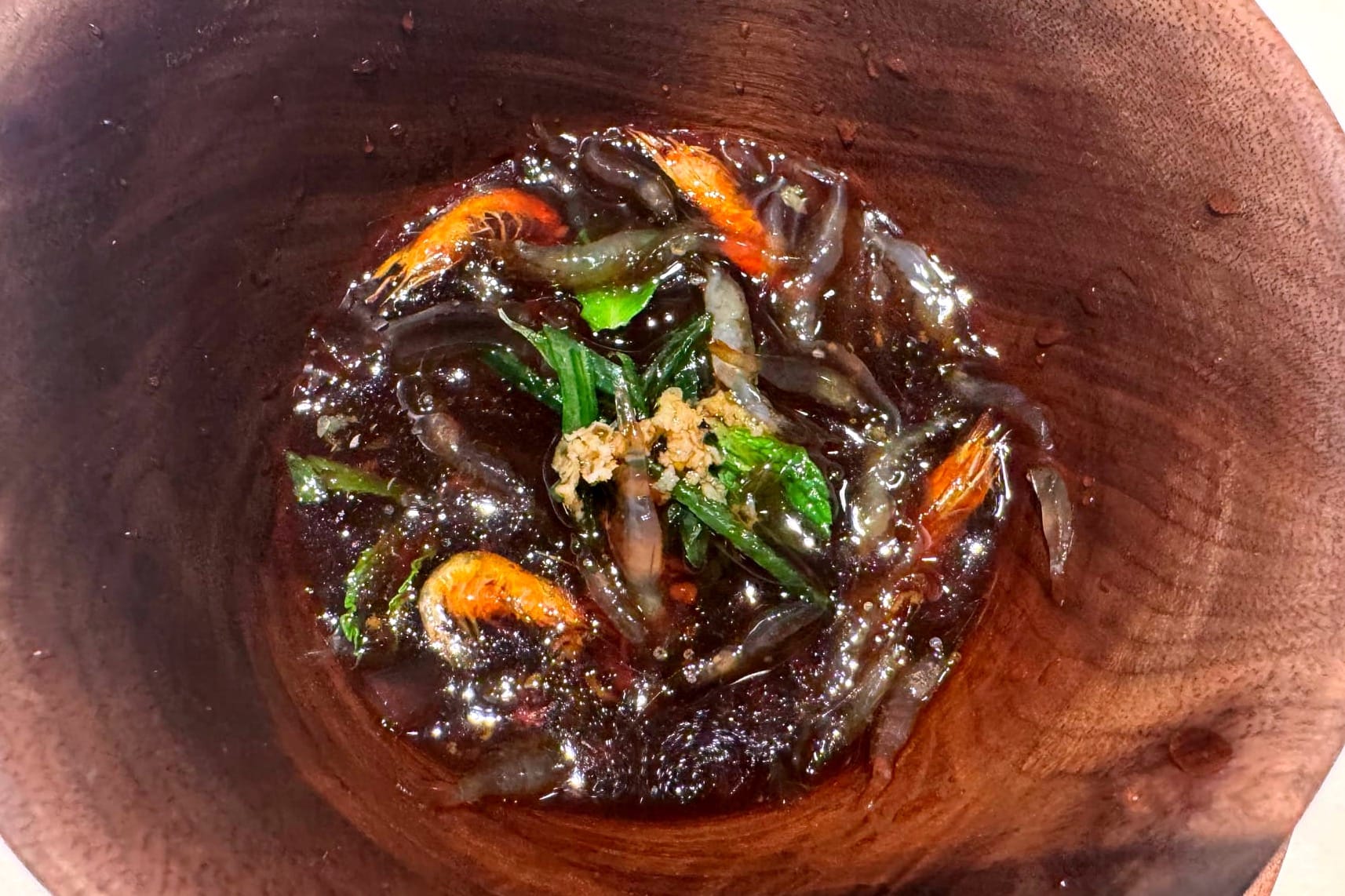
Then came shrimps in cold stew. The camarones (glass shrimp) were served alive, still moving in the bowl. The taste was precise and almost transparent: cold, immediate, and without the density that cooking brings. But the experience was not only about taste. Eating something still living is a different act from eating something dead, and the dish made no effort to hide that fact. It was one of the most challenging moments of the meal, not because the flavour was difficult, but because the freshness was so literal. Aponiente seemed to suggest, without saying it directly, that the discomfort itself was part of the information: about what freshness means, and about what we usually prefer not to consider.
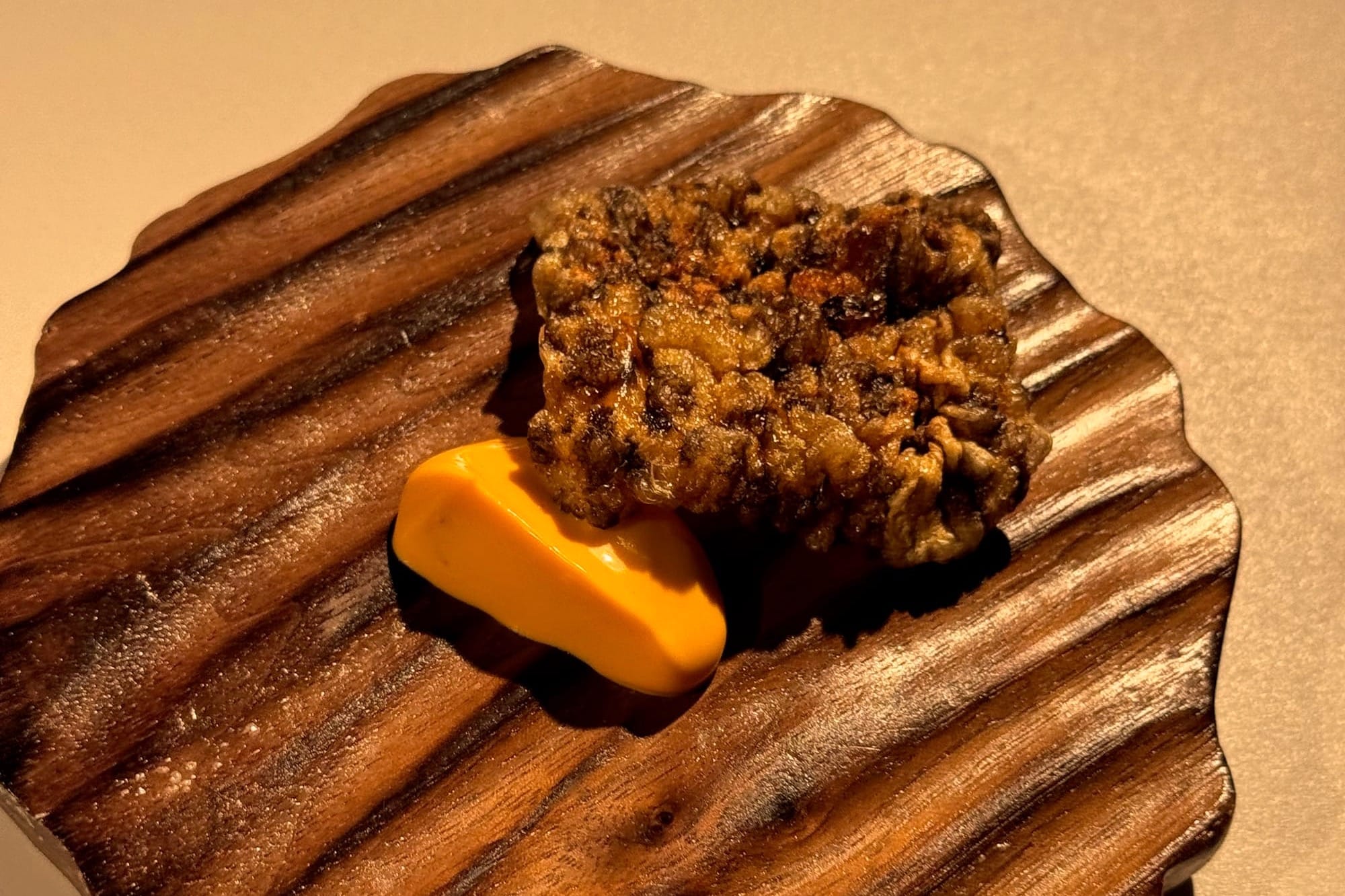
The final outdoor bite was moray eel with adobo. Only the crispy skin was served. Moray eel has a dangerous, almost primitive image, a snake-like fish with a powerful bite, yet here it appeared as texture and memory: crisp skin, adobo, acidity, spice, and the Andalusian language of preservation.
At this point we were invited to move inside, back into the tide mill.
Salty Cuisine
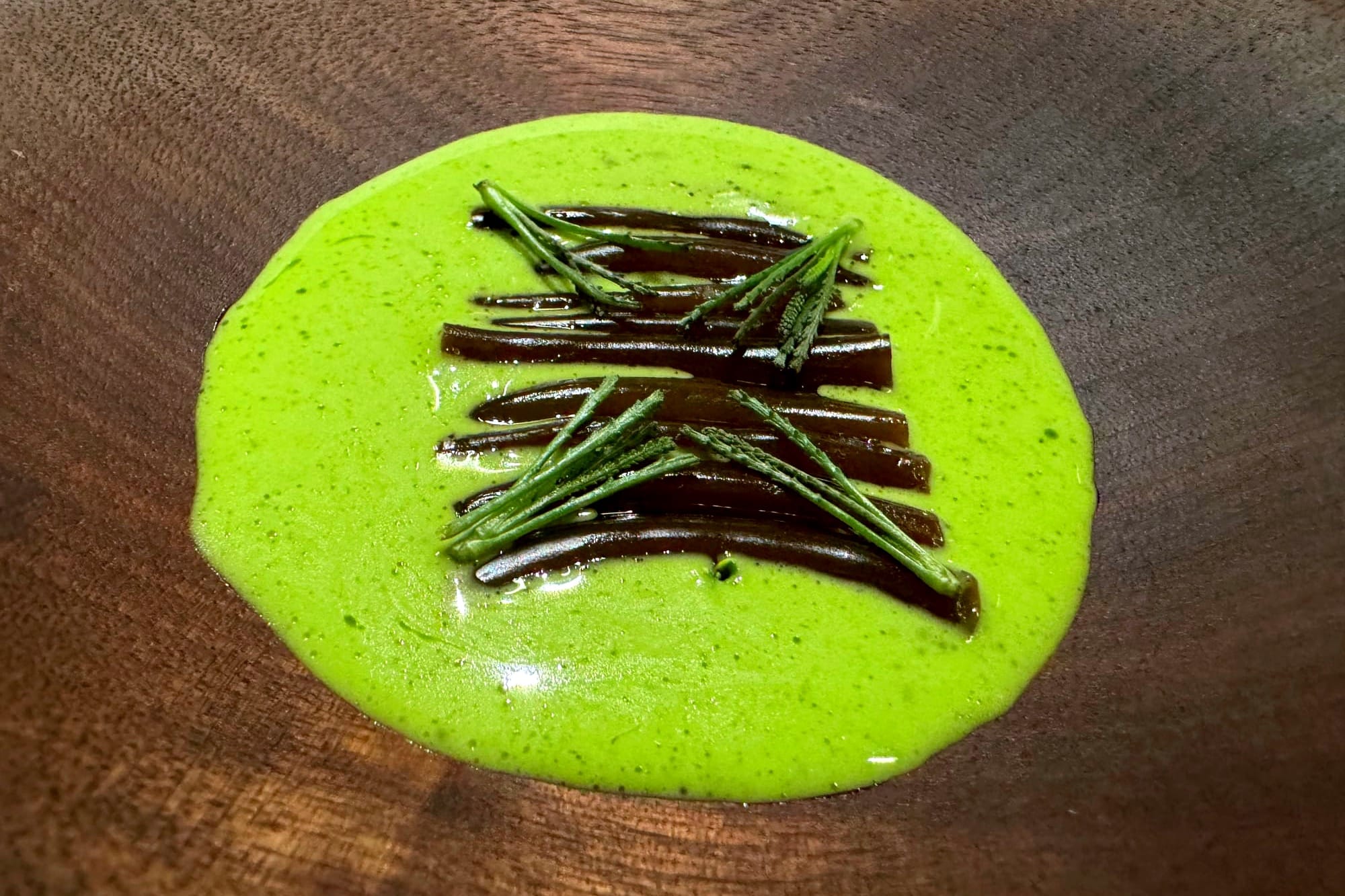
The indoor section, titled Salty Cuisine, began with sea green beans and fines herbes. Sea plants were served with a green sauce of marshland herbs. After the outdoor sequence, this dish felt like a continuation rather than a reset. The flavours remained vegetal, saline, and low to the ground.
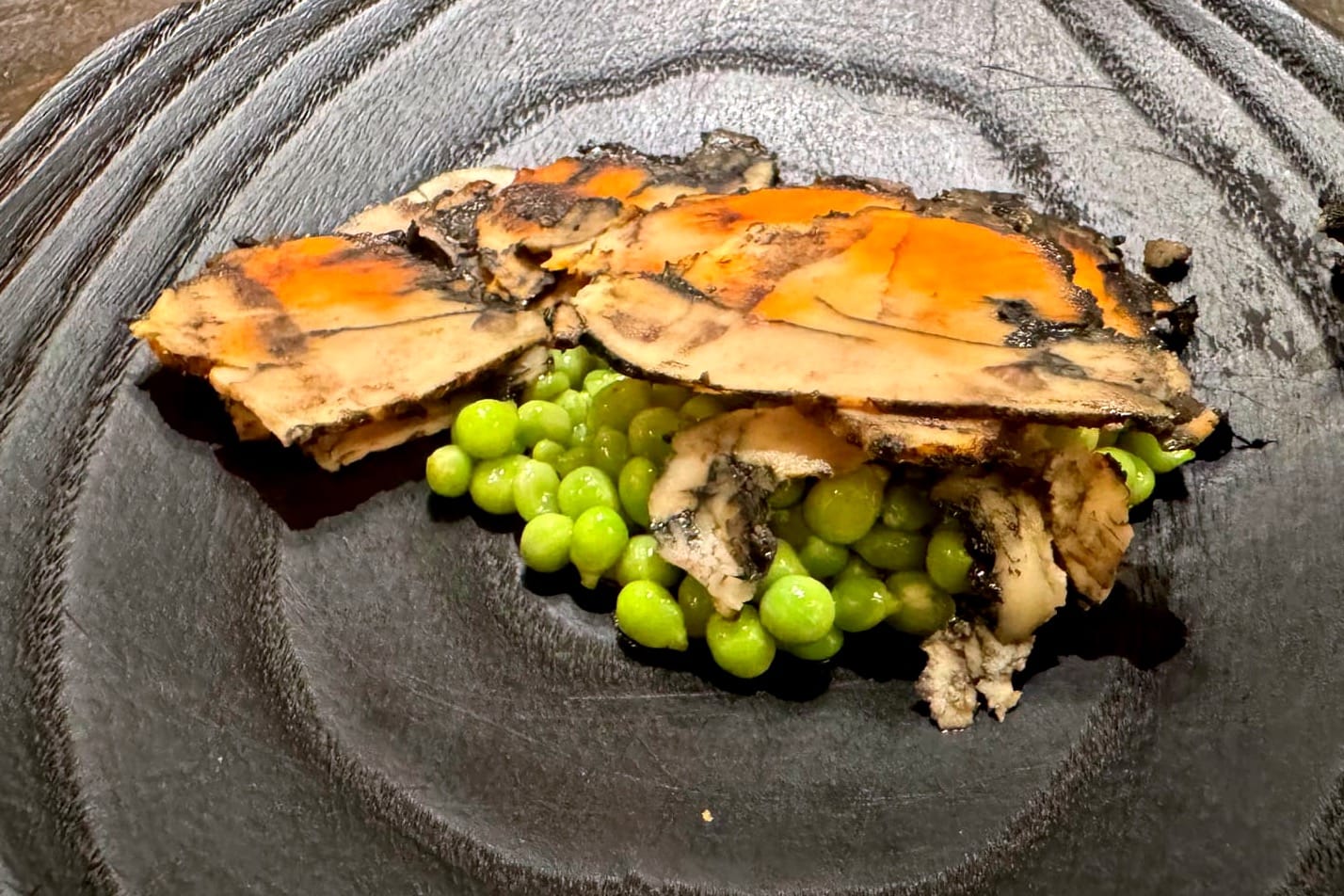
The monkfish liver with carob was outstanding. It had the temperature and texture of a cold foie gras, but with the unmistakable marine depth of monkfish liver. Tear peas brought delicacy and sweetness. The carob added a darker note, almost roasted, giving structure to what could otherwise have been too rich. It was a beautiful combination.
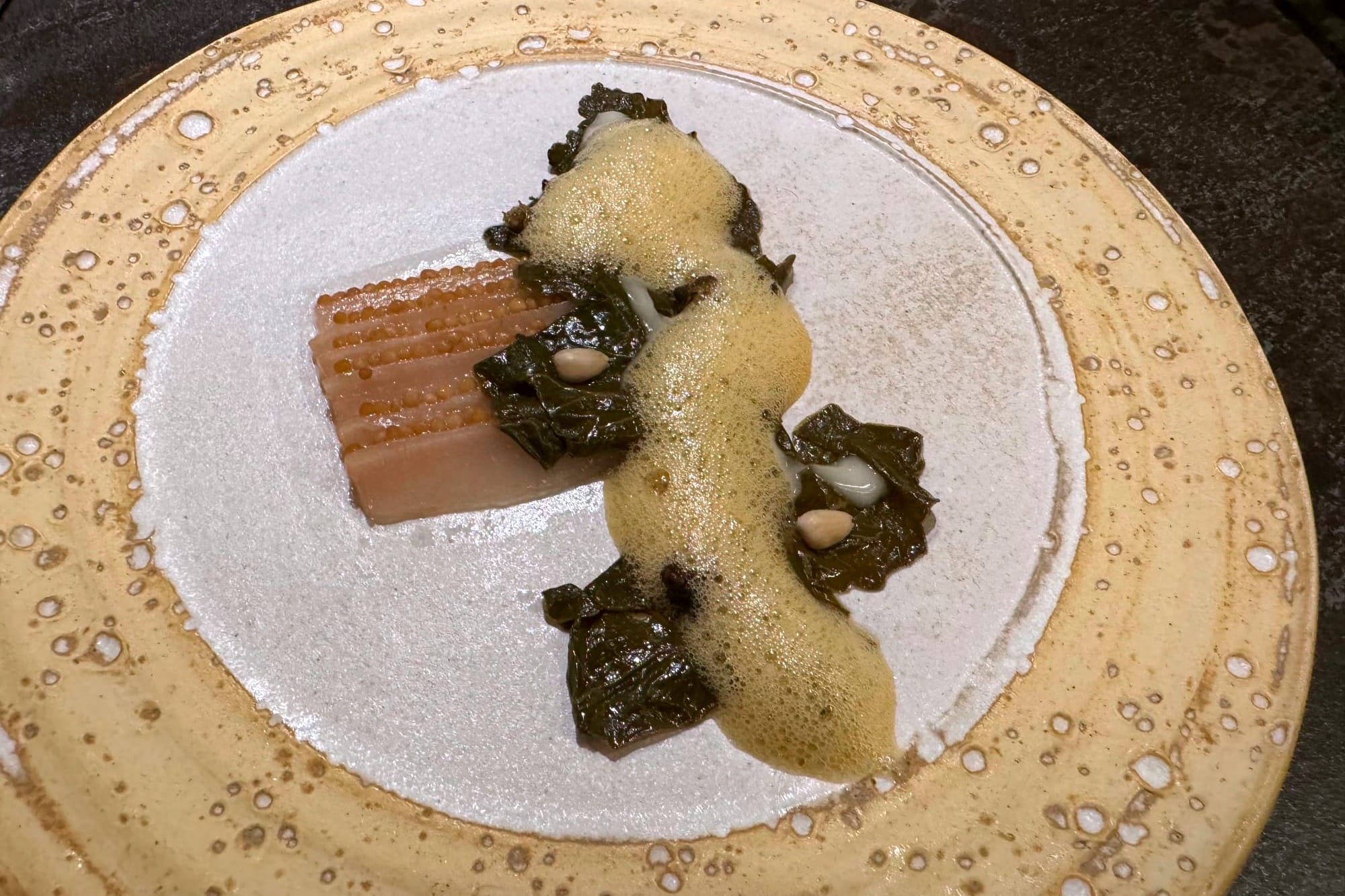
Marine cabbage with fish jowl followed, centred on tuna jowl from around the head of the fish. The dish had a generous, almost primal quality. Fish jowl is one of those cuts where gelatin, fat, and muscle meet. Here, it carried depth without losing clarity.
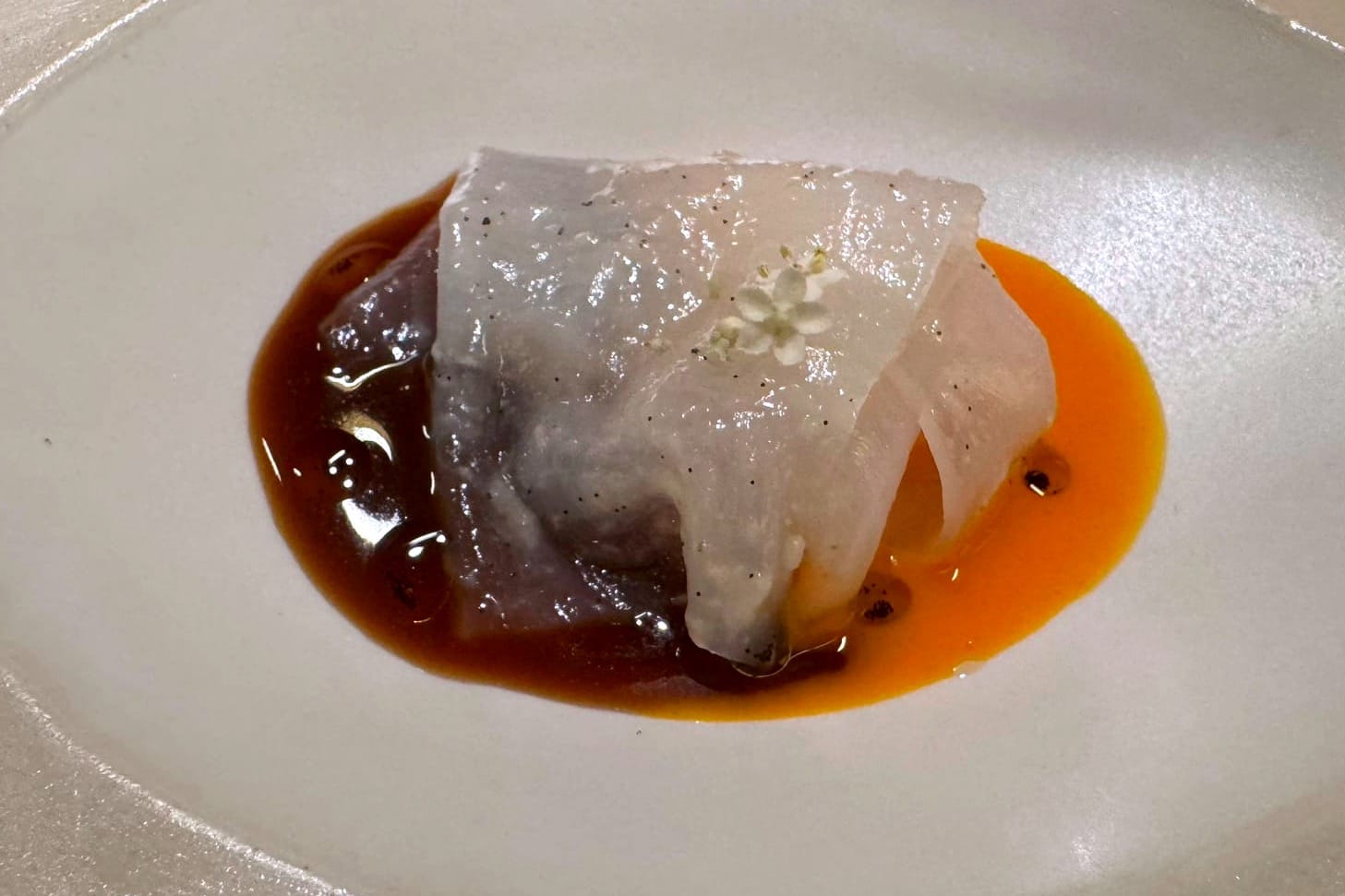
The squid with vanilla and pumpkin used raw potera squid. The pairing of squid and vanilla could easily have become mannered, but it did not. The pumpkin softened the structure, while the squid kept the dish cool and precise.
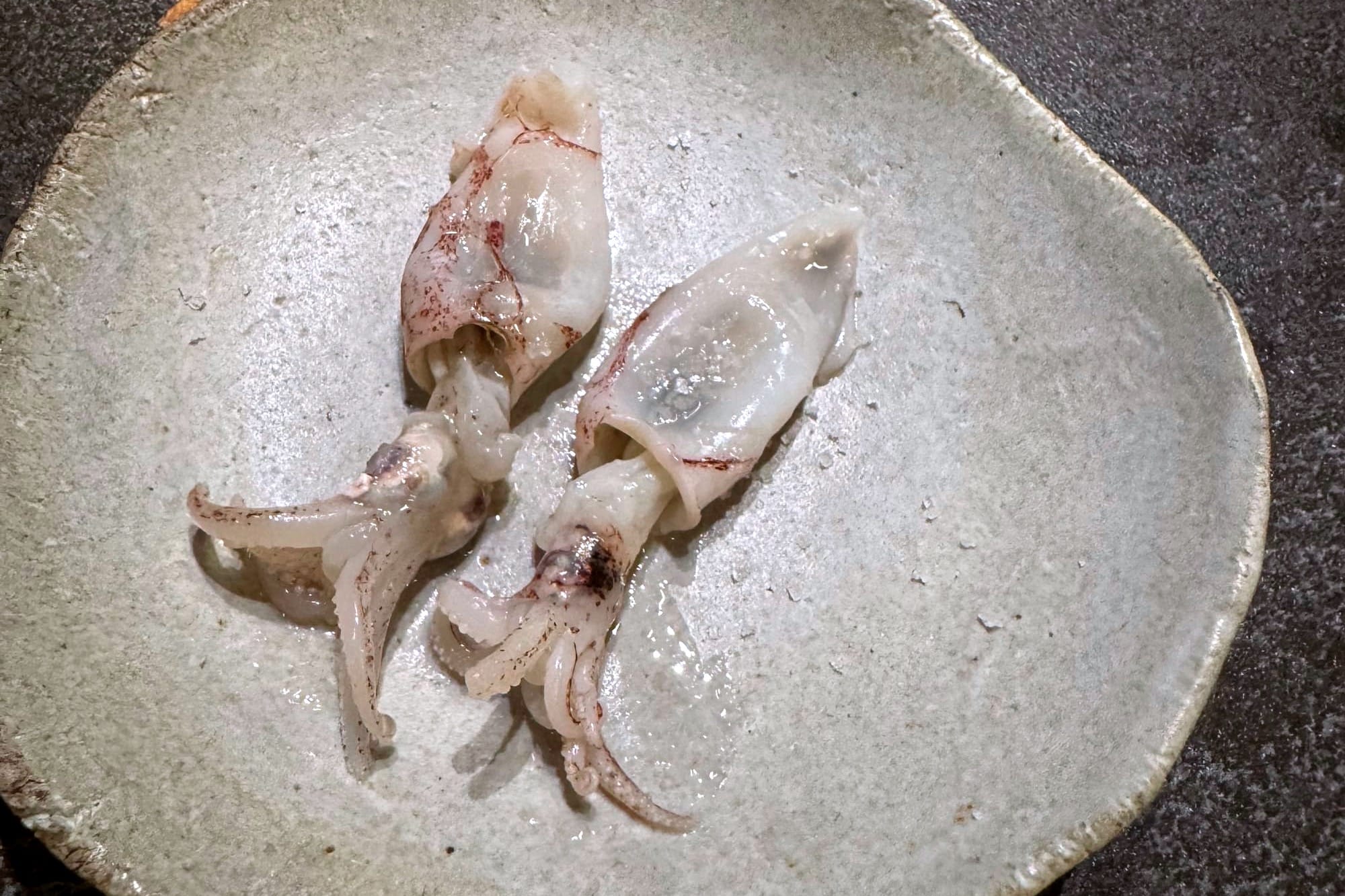
The baby squid with black ink sauce was lightly cooked by pouring hot oil over it. It was served with a black ink sauce that had something of a mole in its density and aromatic darkness. The dish stayed in the mouth for a long time, not through weight, but through resonance.
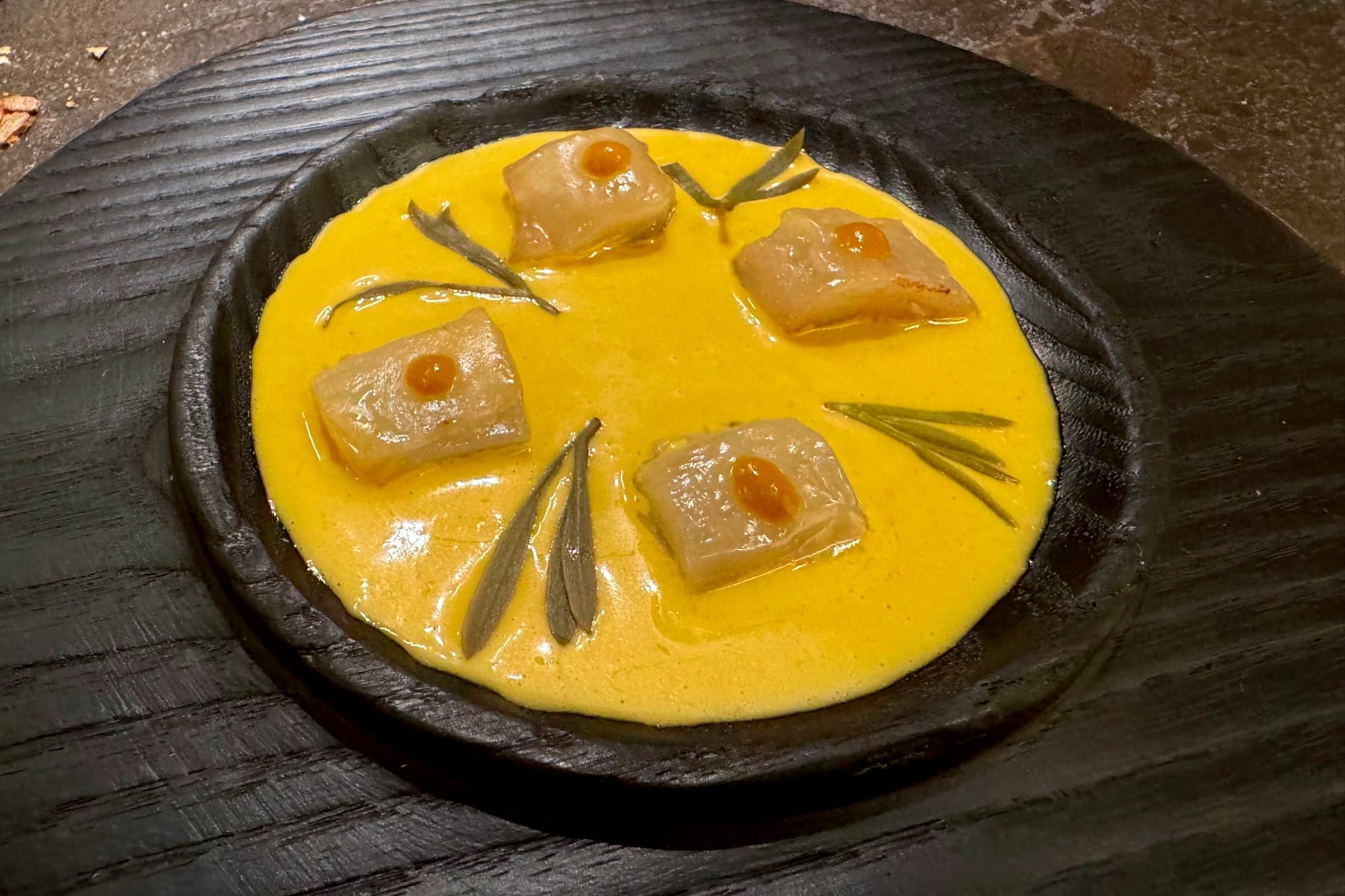
The Almadraba tendons with spices continued the restaurant’s long interest in the complete language of tuna. The Almadraba tradition is one of the defining marine cultures of this coast, and Aponiente has often found ways to treat tuna beyond the obvious luxury cuts. Here the tendons were served in an aromatic yellow sauce, with spice giving warmth and direction.
Sweet Cuisine
The sweet part of the menu did not abandon the sea. It rarely does at Aponiente.
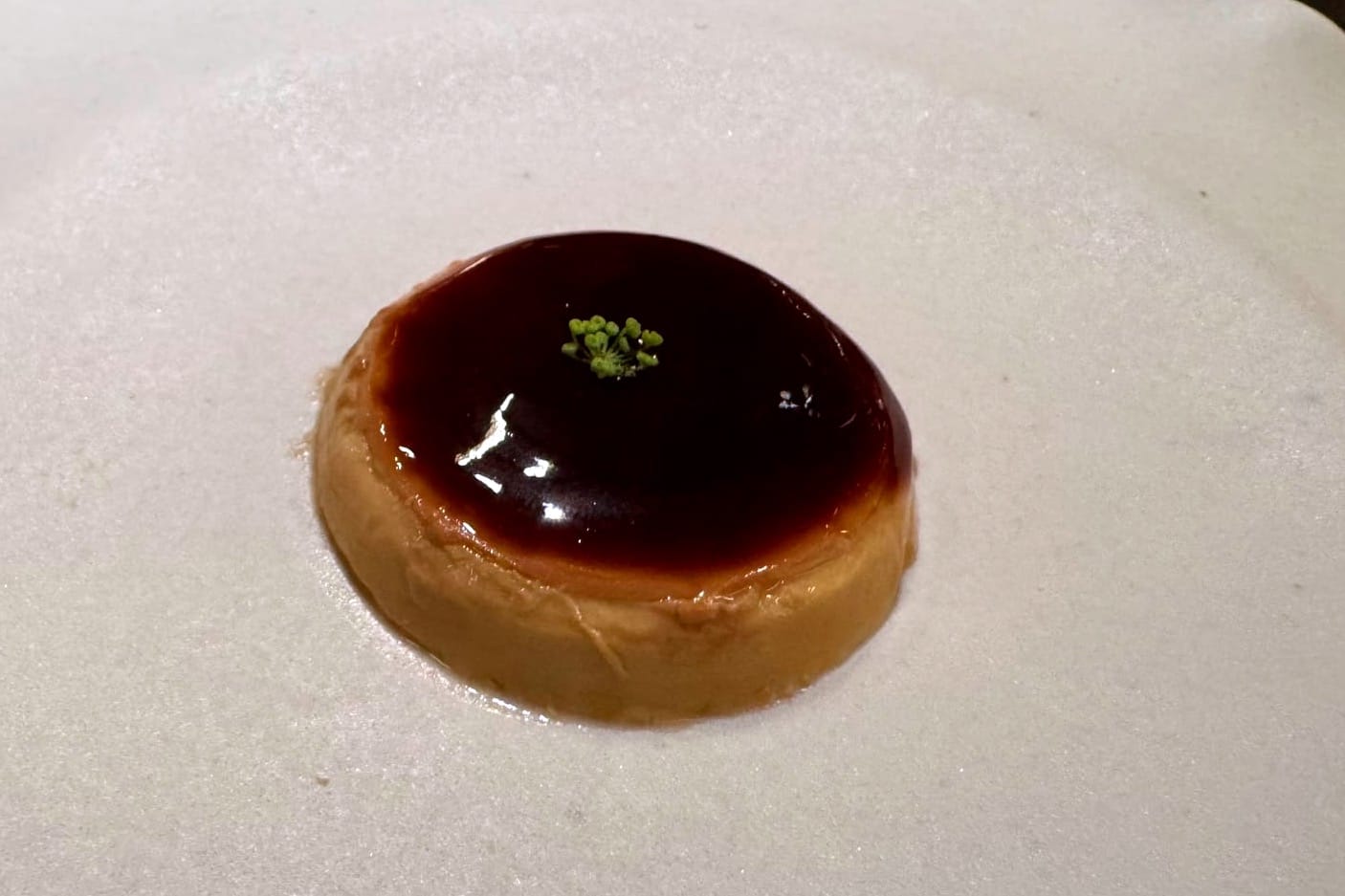
The fish roe flan with apple and fennel played with custard texture and marine salinity. Apple and fennel gave freshness, but the roe kept the dish from becoming conventionally sweet.
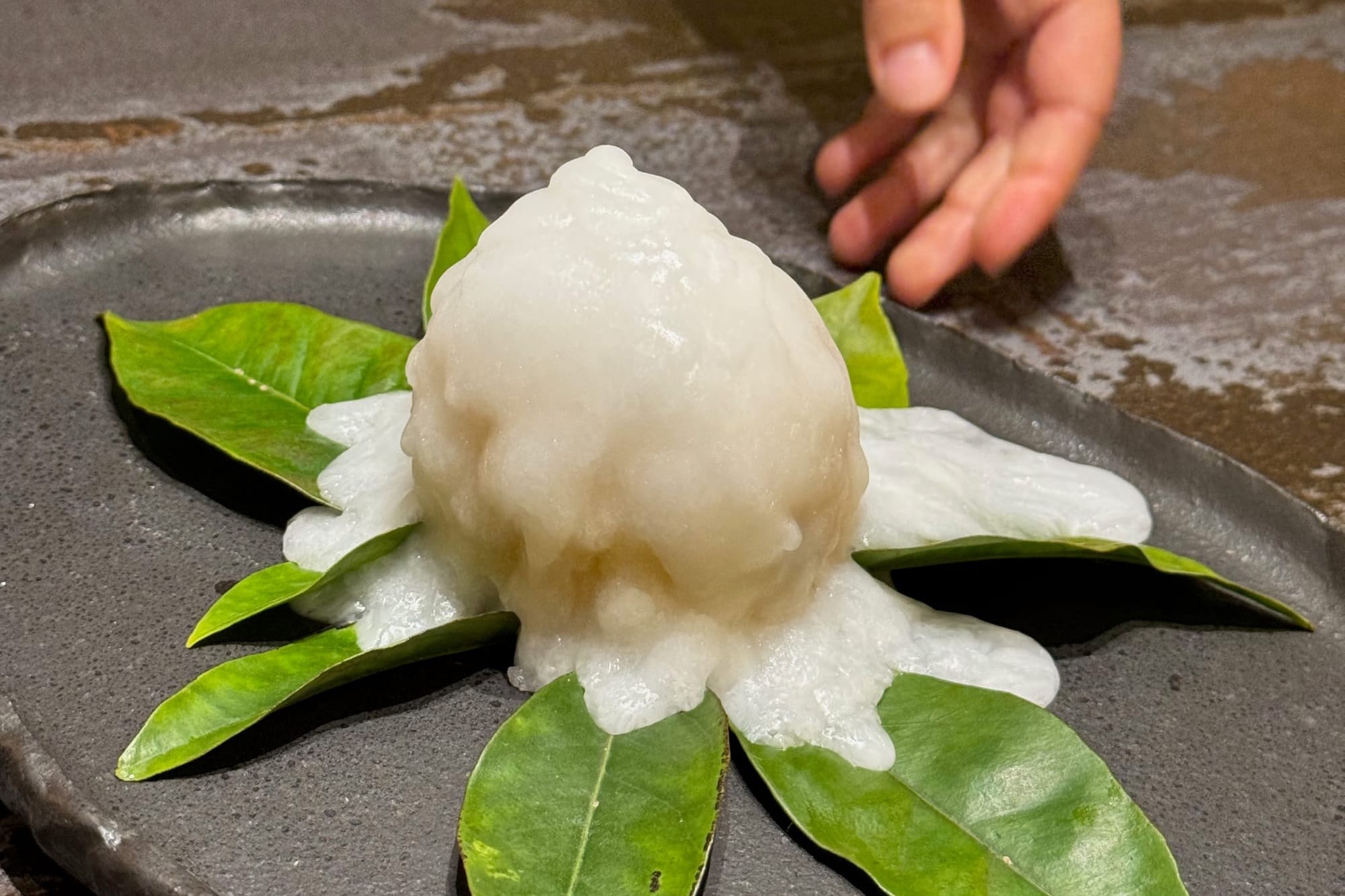
Lemon with living salt was more theatrical. A liquid was poured over cured lemon, causing it to solidify and become warm. The sensation mattered as much as the flavour: temperature changing at the table, citrus sharpened by salt, the boundary between dessert and experiment held just long enough.
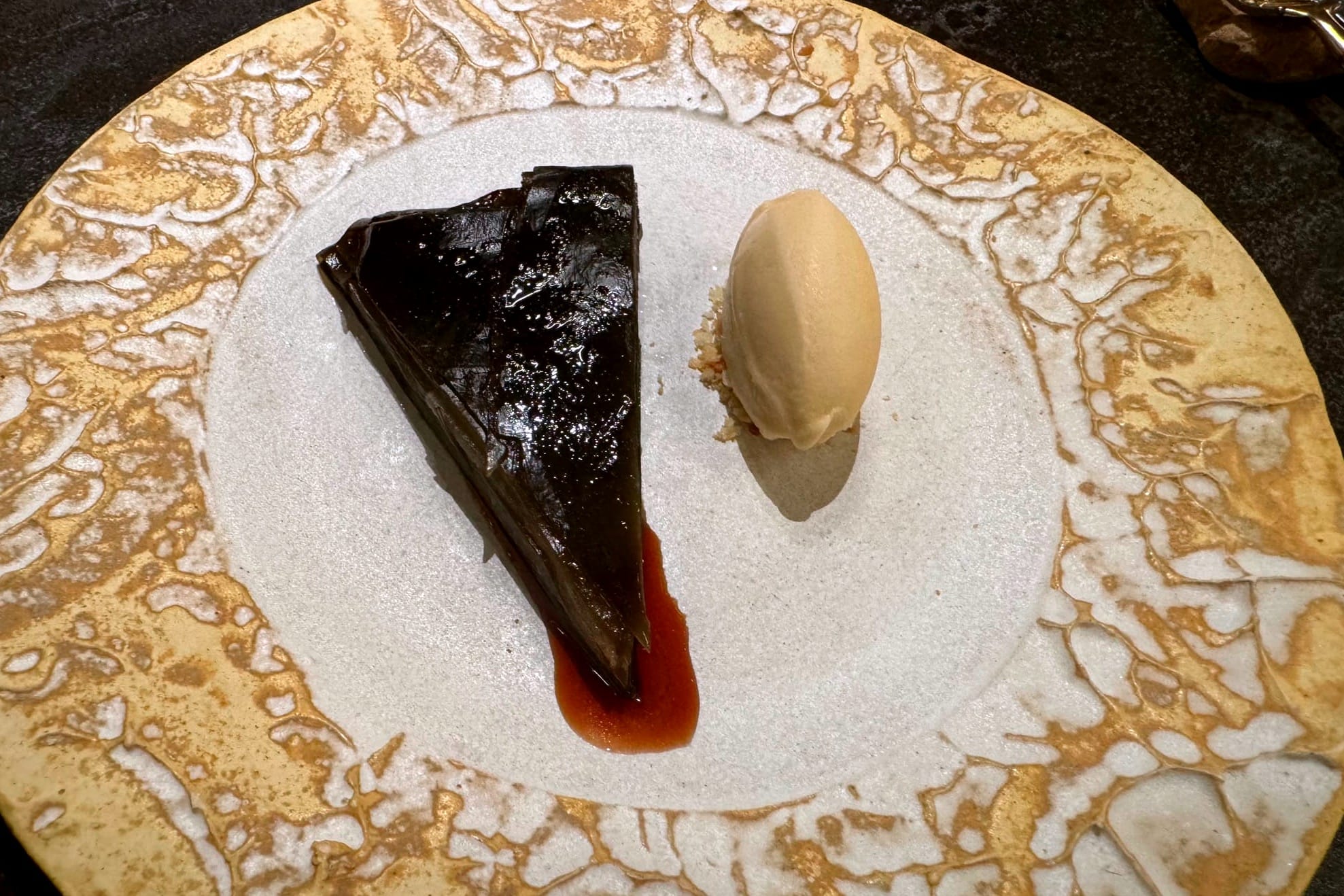
The seaweed tarte tatin was one of the cleverest sweet ideas of the menu. It recalled an apple tart, but used seaweed in place of dough. The result was not a gimmick, but a precise extension of the Aponiente vocabulary. Sweetness, caramelisation, iodine, and structure met in a way that felt entirely logical here and probably nowhere else.
The meal closed with Bazaar, a tribute to Morocco, a petite four sequence with Moroccan inspiration. Given Cádiz’s position, the gesture made cultural sense. It widened the horizon without leaving the south.
Wine
We were offered a choice between an international (350 €) and a local (220 €) wine pairing. We chose the local pairing, which felt the more meaningful option at Aponiente, given its place within the Sherry triangle.
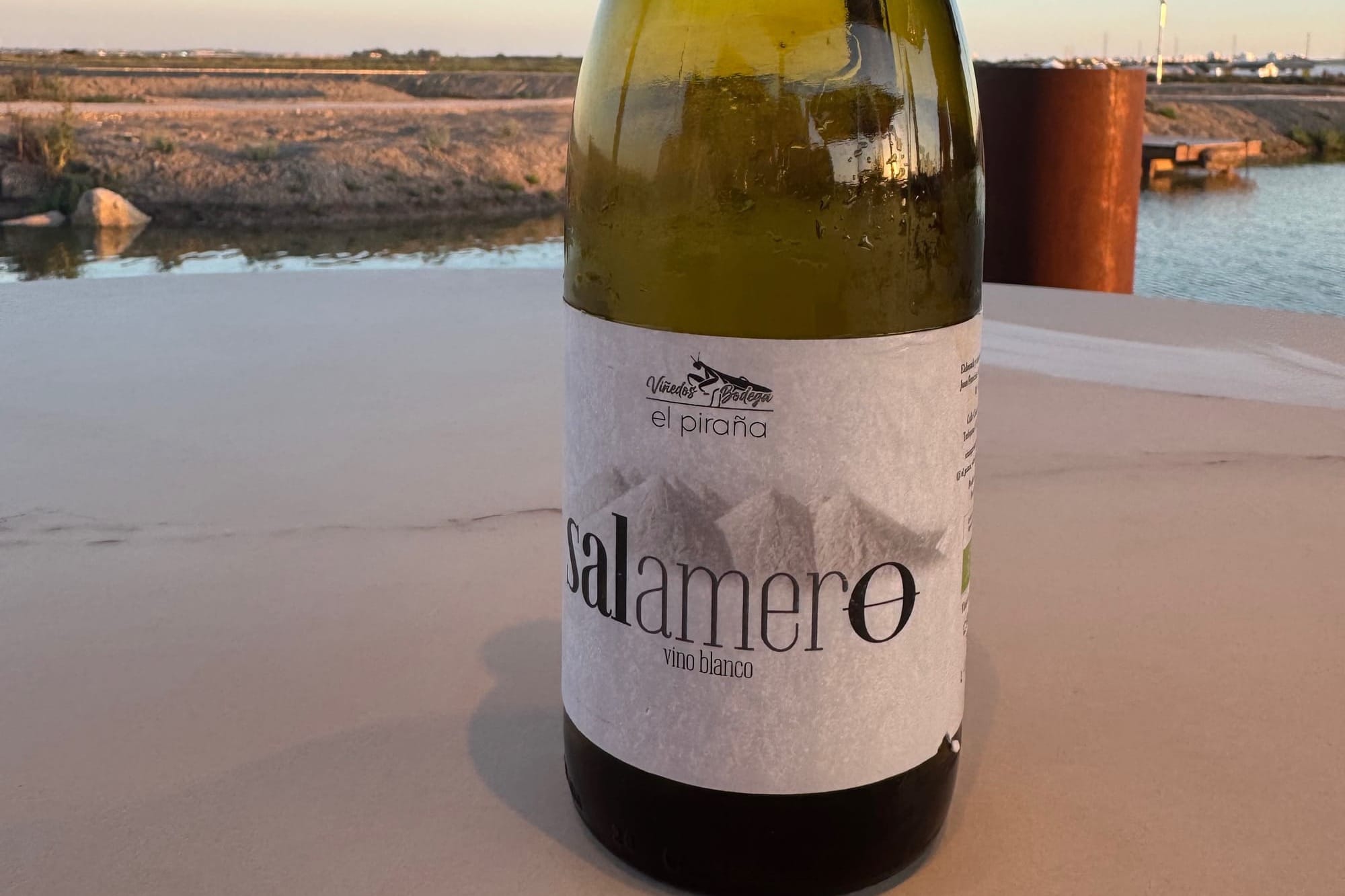
The pairing stayed close to Cádiz and Jerez. It was built less around familiar luxury than around salinity, flor, oxidation, chalk, and Atlantic tension. Wines such as Salamero from Viñedos y Bodega El Piraña and Corta y Raspa from Mayetería Sanluqueña suited the outdoor marsh sequence particularly well, echoing the exposed, saline character of the first dishes.
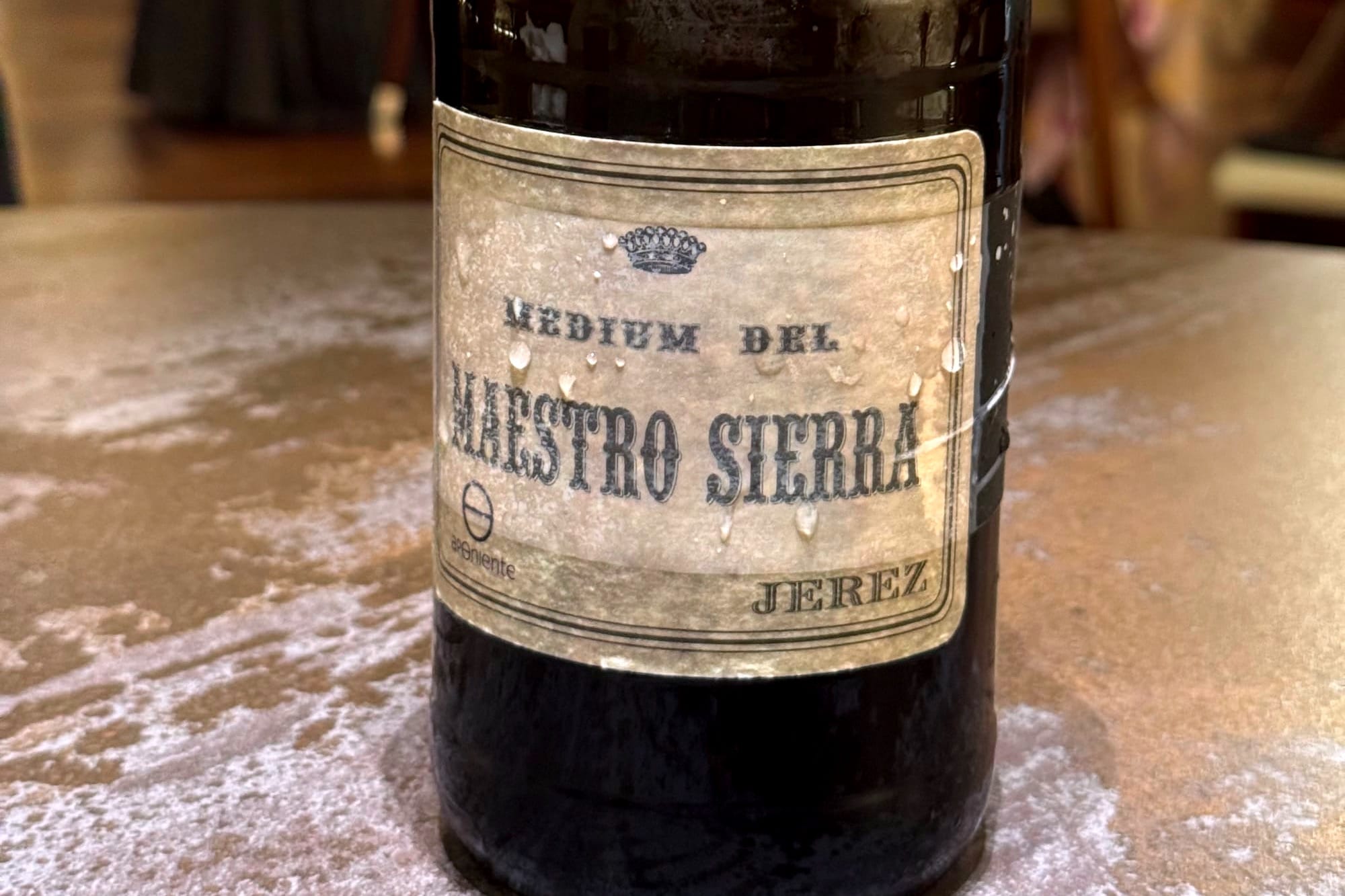
Later, the pairing moved through more explicitly Jerez-driven bottles, including Maestro Sierra, Bodegas del Río Manzanilla, and Valdespino Viña Macharnudo Alto 2023, a barrel-fermented Palomino from one of the region’s great vineyard names. These wines had the structure needed for iodine, smoke, fish skin, liver, and darker marine sauces. The sweet ending continued locally with Ximénez-Spínola 2021 Vino de Uva Soleada, selected especially for Aponiente.
The local pairing was also an interesting way to explore the current wine culture of the Sherry region beyond the most familiar categories. Alongside Manzanilla and more oxidative styles, it included lesser-known local bottles and non-fortified Palomino wines, a category that has become increasingly important in and around Jerez. In the context of Aponiente, these wines felt especially relevant: close to the landscape, shaped by salinity and albariza, and able to speak to the food without forcing themselves into the foreground.
Verdict
Aponiente is one of the most innovative restaurants in the world, but what impressed me most on this nineteenth visit was not innovation alone. It was coherence.
The restaurant has developed visibly over the years. It has moved from brilliance to confidence, from discovery to deeper articulation. In 2026, with part of the dinner now served outdoors in the marshes, that development feels especially clear. The new format is spectacular, but its value is not spectacle. It makes the meal more meaningful because it brings the diner closer to the ecological and cultural world from which the cooking emerges.
This is destination dining in the fullest sense. It is worth a special trip not only because the cooking is technically exceptional, but because it could not be easily transferred elsewhere. Aponiente feels world class and, at the same time, unmistakably grounded in El Puerto de Santa María.
There are moments that may challenge some diners: live shrimp, fish liver, tendons, marine plants, moray eel skin. But these are not provocations for their own sake. They are part of a serious culinary language, one built from the sea and from the less familiar edges of appetite. This has long been part of Ángel León’s mission: to show how much edible life remains overlooked in and around the oceans, and how many unused marine resources can become meaningful food when approached with knowledge, discipline, and respect.
After nineteen visits, I do not feel that Aponiente has become predictable. Quite the opposite. It has become more legible, more rooted, and more courageous. The best restaurants do not simply improve by adding refinement. They improve by clarifying why they exist. With its 2026 season, Aponiente seems to know this with unusual force.
• Location: El Puerto de Santa María, Spain
• Chef: Ángel León
• Michelin rating: ★★★
• Visited: April 2026
For another restaurant where storytelling, landscape, and cuisine become inseparable, read my review of Mirazur.
Update (July 2026): I returned for my 20th visit and a second meal this season; the cuisine was every bit as outstanding as before, although this time, due to the weather, we dined entirely indoors - noting that Aponiente’s outdoor experience adds a truly magical dimension to an already exceptional restaurant.