
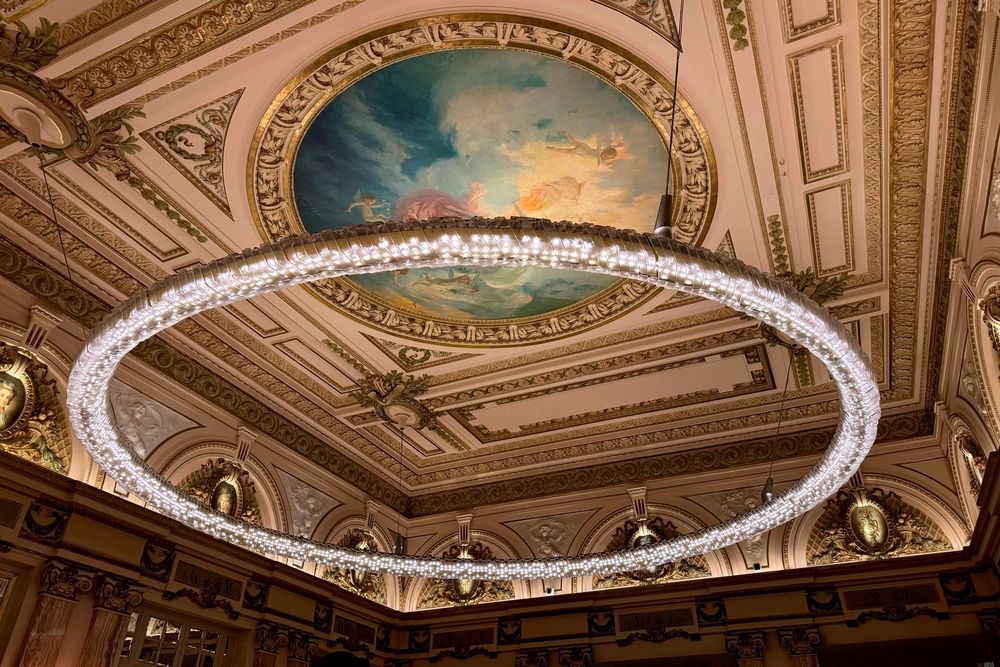
FDJ Score: 8.5/10 (Three-Star Level)
Review
The journey began with another reservation. We were travelling to Menton for the twentieth anniversary of Mirazur, four friends at the table, all serious gourmets in the best sense of the word. Since the Côte d’Azur rewards appetite with unusual density, we added two further meals to the itinerary: dinner at Le Louis XV in Monaco and lunch at La Chèvre d’Or in Èze.
Le Louis XV is not simply another Alain Ducasse restaurant. It is the house from which much of his international language of luxury became legible. Ducasse took over the restaurant at the Hôtel de Paris Monte-Carlo in 1987, and within three years it had received three Michelin stars, a historic achievement for a hotel restaurant.
I had known Ducasse’s cooking before, most clearly from Alain Ducasse at The Dorchester in London, but also from his more pastoral addresses, including Hostellerie de l’Abbaye de la Celle and La Bastide de Moustiers. What fascinates me is that the Ducasse style remains unmistakable across such different categories of restaurant. It is not a fixed vocabulary of dishes, but a way of thinking: clarity before decoration, product before technique, Mediterranean memory even when the setting is urban, luxurious, or deliberately rustic. The cooking often appears simple, but it is never casual. It trusts the ingredient, then surrounds it with just enough structure to make its character more precise.
Location & Atmosphere
Le Louis XV sits inside the Hôtel de Paris, on the Place du Casino, in a version of Monaco that seems almost too complete to be real. The hotel has the grammar of a palace: polished stone, controlled movement, soft light, the faint choreography of guests who know how to arrive.
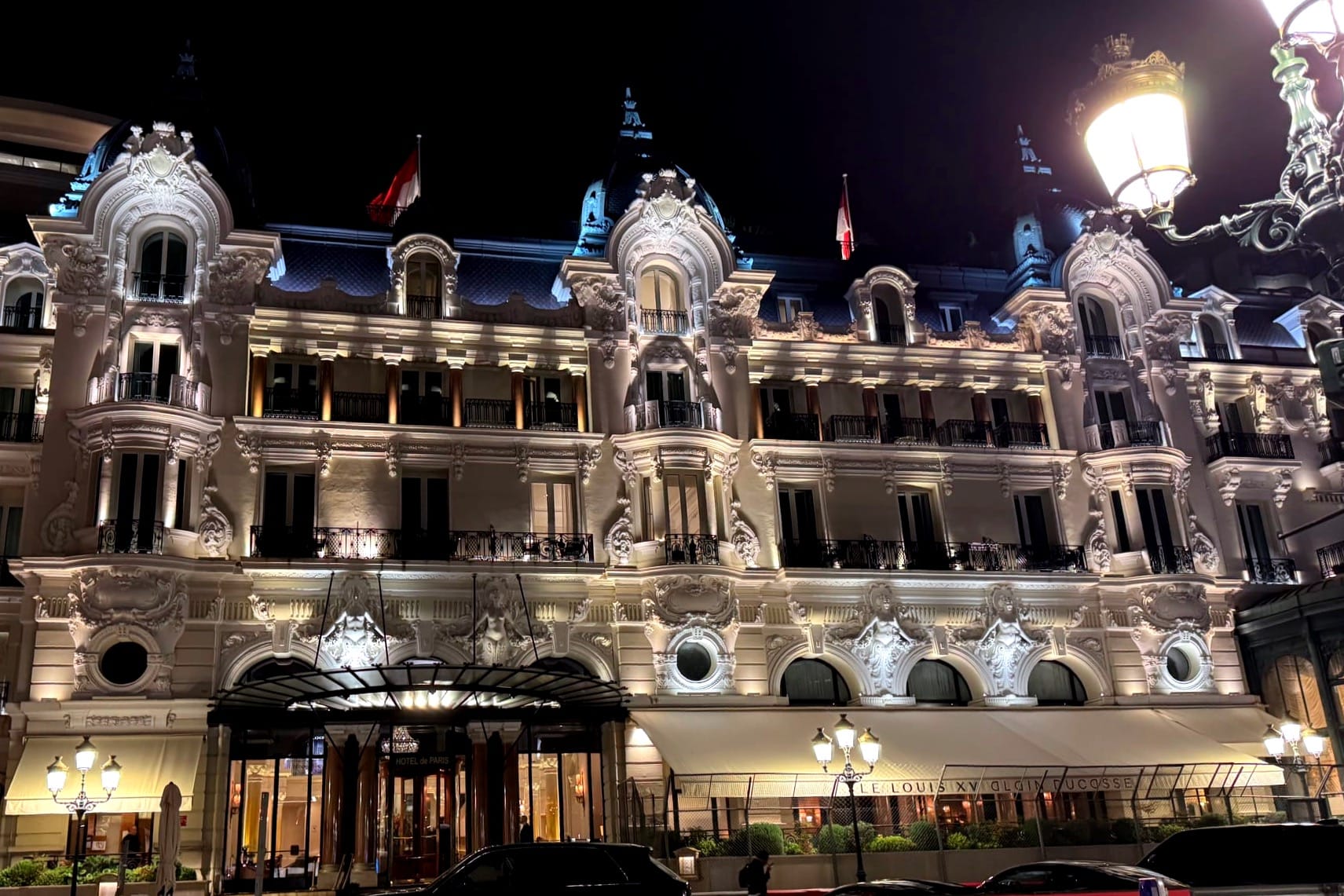
On entering the restaurant, I was recognised immediately. It was a small moment, but not a minor one. At this level, service is not only about correctness. It is about memory, anticipation, and the ability to make formality feel personal without dissolving it.
The room itself is a grand restaurant in the classical sense. There is a jacket requirement, and at the beginning the atmosphere carried a certain stiffness. Not unpleasantly so, but noticeably. One sits a little straighter. Voices are lower. The first gestures are measured. After the first bottle of Champagne, the room softened. The service remained exact, but the evening began to breathe.
Culinary Style or Distinctive Character
Ducasse’s style has often been described through the language of product, but that alone is too simple. Many chefs claim devotion to produce. Ducasse builds an entire moral architecture around it.
At Le Louis XV, this means the Mediterranean not as a postcard, but as a discipline. Fish from nearby waters, vegetables from Provence, citrus, herbs, shellfish, olive oil, bitter notes, saline accents. The kitchen does not try to impress through force. It impresses through confidence. The sauces are not merely decorative. The vegetables are not secondary. The luxury is present, of course, but it is usually absorbed into balance rather than displayed for its own sake.
This is also why the restaurant still feels old school in the best possible way. It believes in the dining room as a complete organism: kitchen, cellar, service, tableware, pacing, silence, and ceremony. Nothing is casual, yet the best moments are not theatrical. They are exact.
Menu / The Dishes
We chose the Agapé tasting menu at €420, although Le Louis XV also offers an extensive à la carte selection. This is very much a restaurant where ordering à la carte can make sense. The room, the cellar, and the style of cooking all support the pleasure of choosing one’s own rhythm.
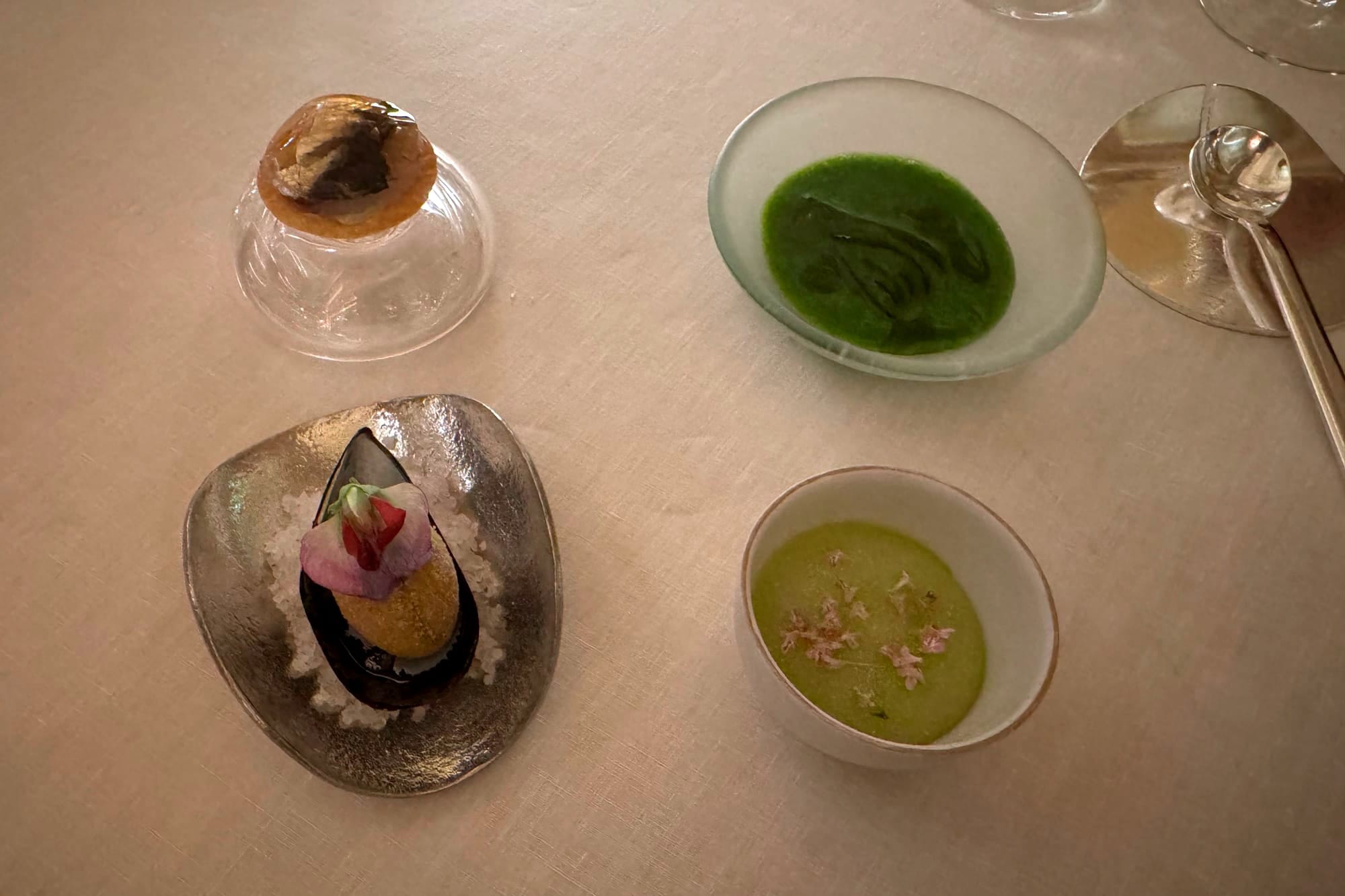
The meal opened with amuse-bouches.
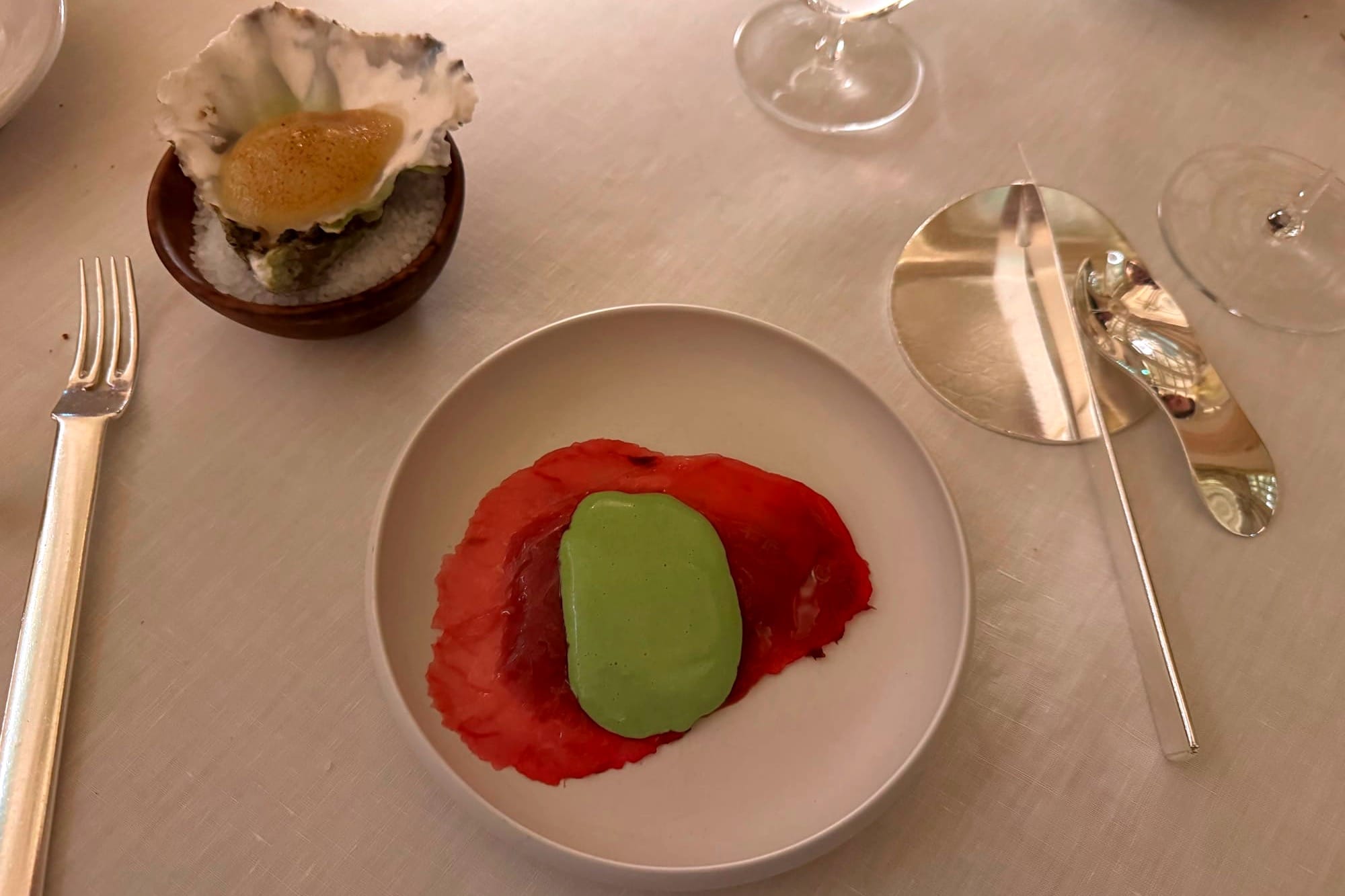
Next was a pre-starter of raw red tuna with raspberries. The combination was excellent. The fruit did not push the fish into sweetness. Instead, it brought acidity, a small aromatic lift, and a clean contrast to the density of the tuna.
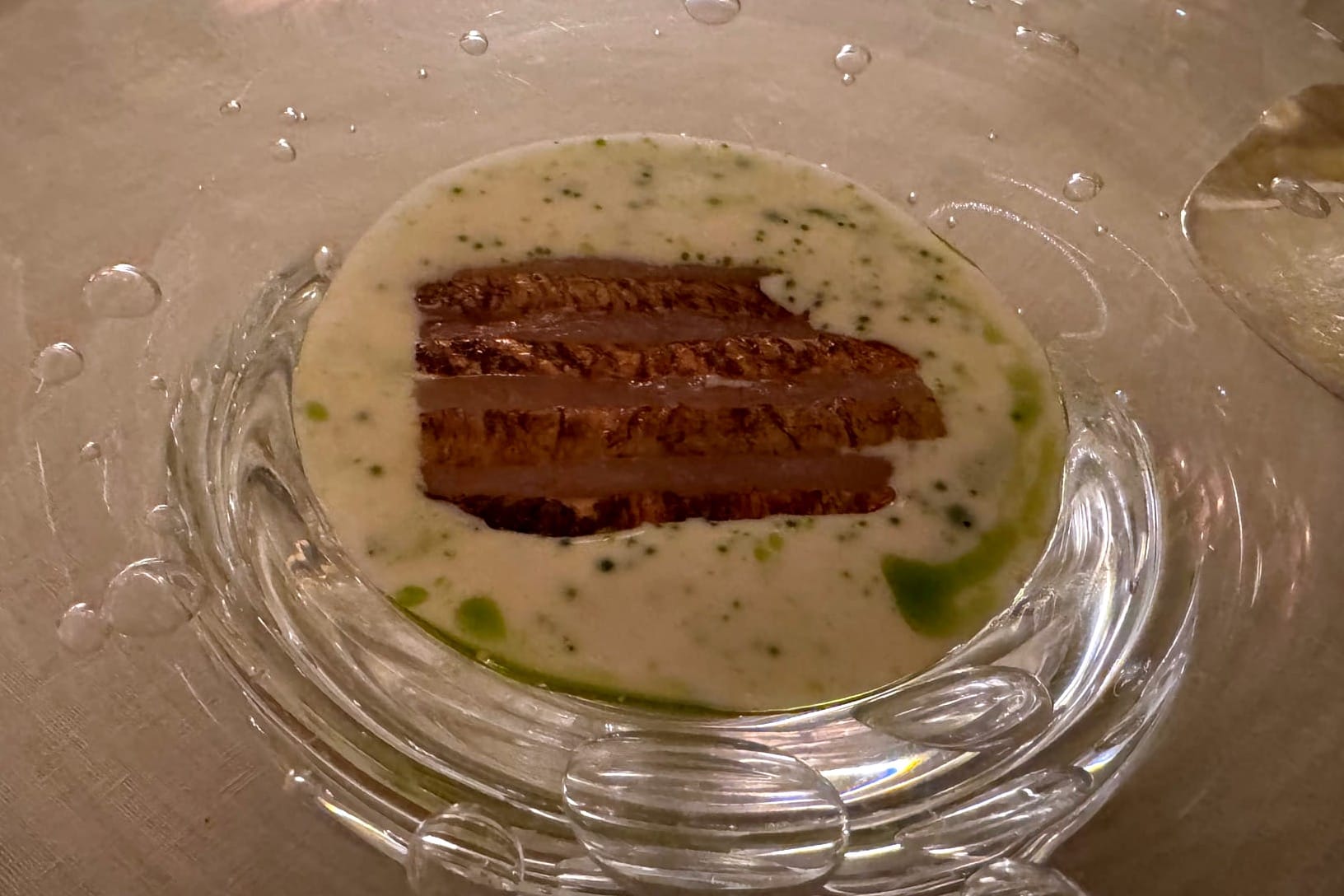
The first listed course was citrus, hazelnut, and red mullet: citrus and hazelnut with combava oil, red mullet from the coast served almost natural and charred. The fish was largely raw, only lightly touched by flame. It was a fine Ducasse construction: minimal intervention, but not minimal thought. The citrus sharpened the flesh, the hazelnut added warmth, and the combava gave the dish a fragrant, almost green brightness.
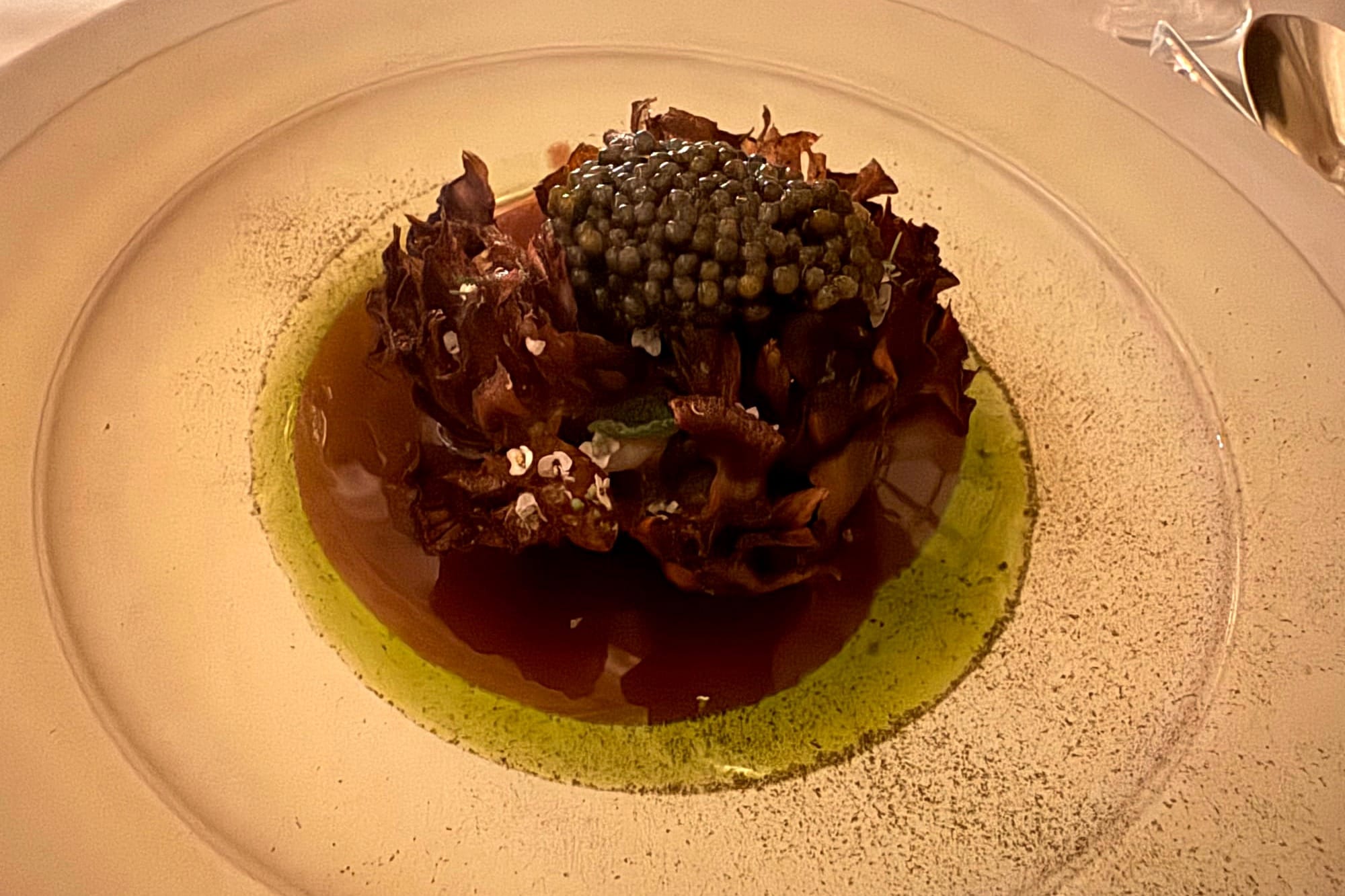
Then came artichoke, sea anemone, and caviar: Provençal artichoke “alla giudea”, Olivier Bardoux sea anemone, burrata, and caviar. It was an interesting and ambitious combination, moving between bitterness, iodine, cream, and salinity. For my taste, the artichoke was a little too firm. Still, the dish had intelligence. It asked the palate to move between the vegetable and the marine rather than simply admire the caviar.
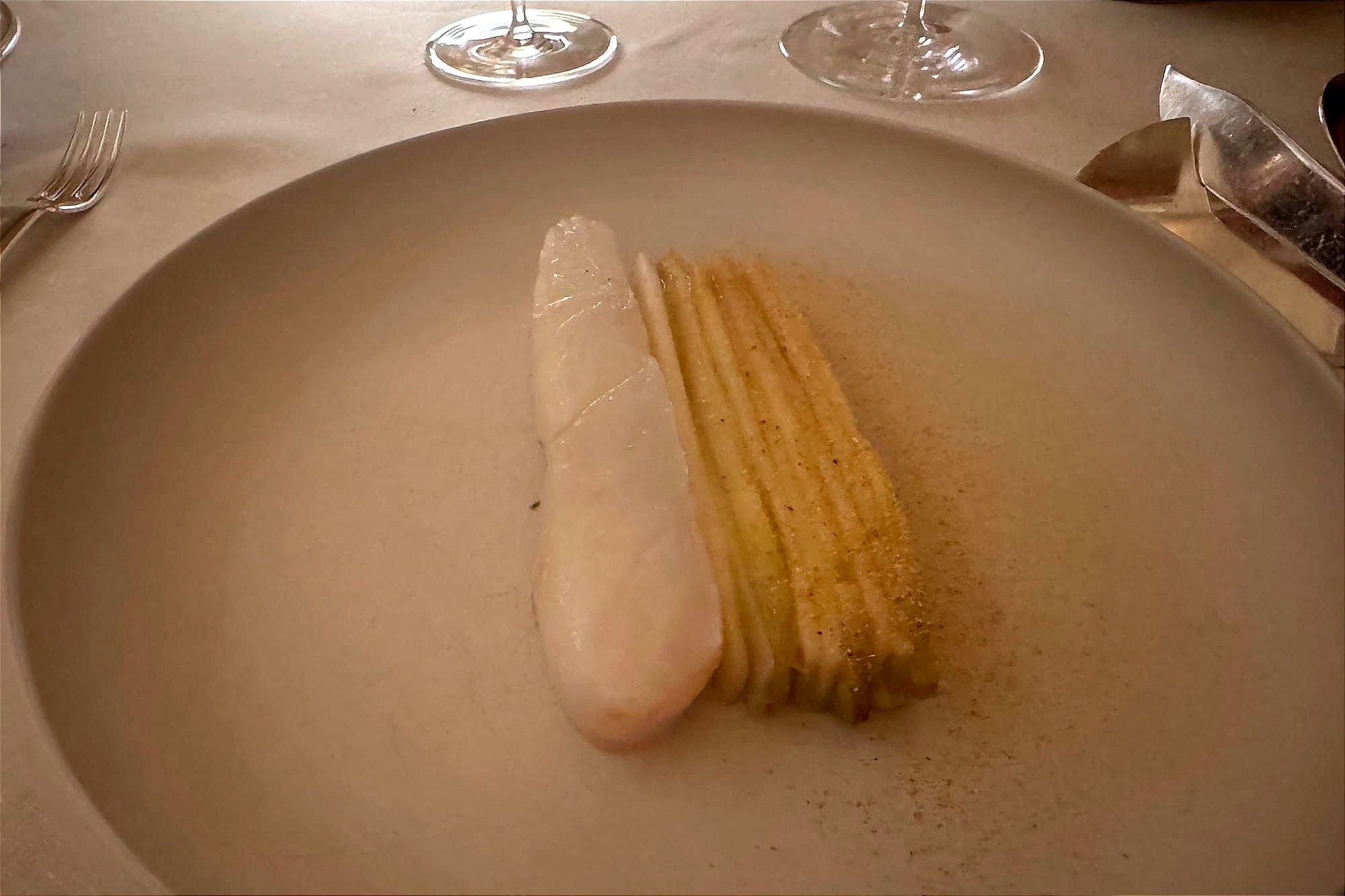
The white asparagus with bergamot and John Dory was the first truly exceptional dish of the evening. Barely cooked white asparagus, bergamot, Mediterranean John Dory confit, and a “pil pil” made from the head. The fish was sensational: precise, moist, and deeply flavoured without heaviness. The bergamot gave the dish lift, while the pil pil brought a quiet intensity from the bones and head. It was refined, but not fragile.
A small human moment stayed with me here. The service had by then lost its initial stiffness without losing its form. Plates arrived with the soft confidence of people who know the room completely. There was no need to explain too much. A glance, a pause, a slight adjustment of the glass. In such restaurants, hospitality is often revealed not by grand gestures, but by the absence of friction.
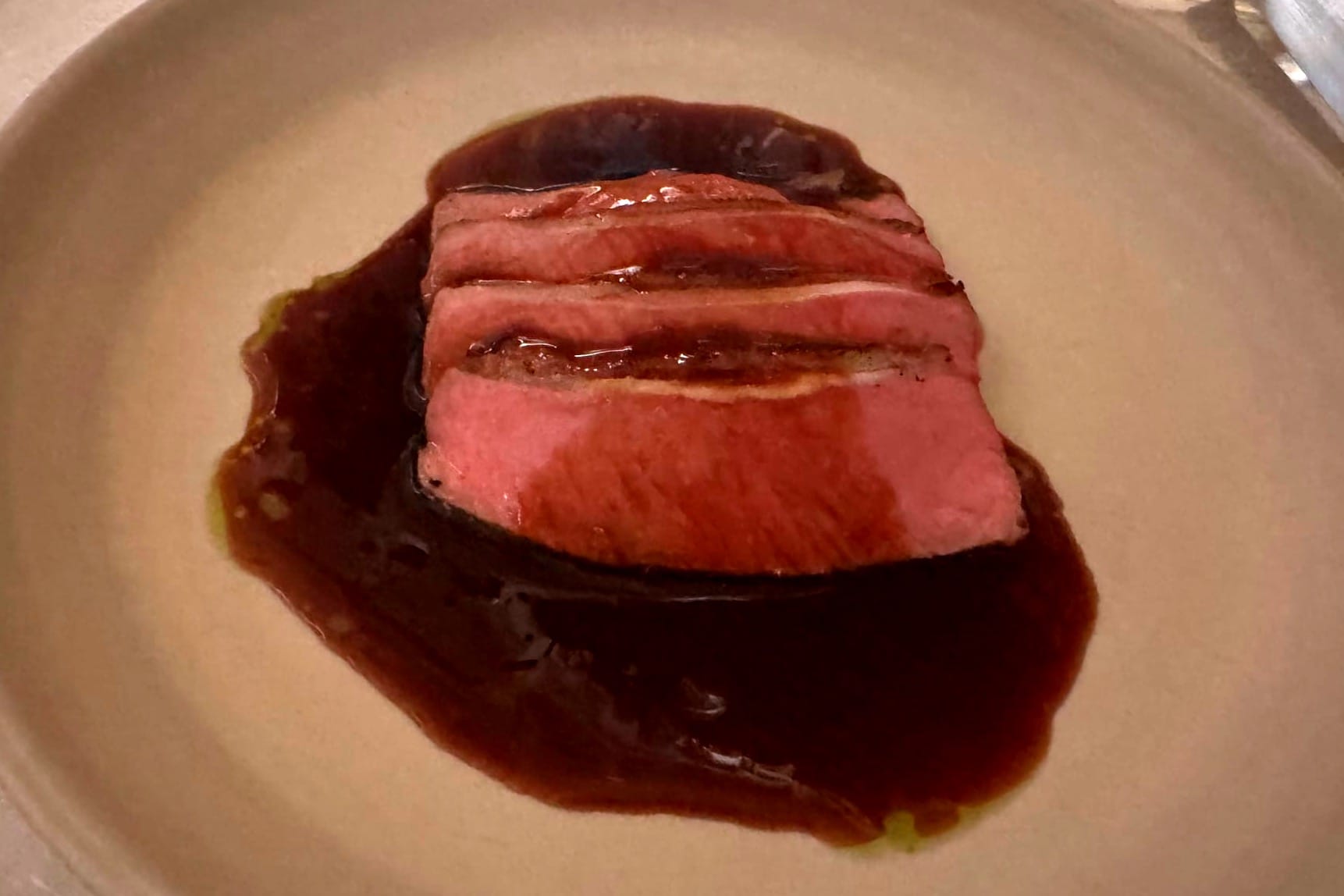
The main savoury course was green pea, murex, and lamb: green pea bulgur, samphire and murex ravioli, lamb from Quercy cooked in the fireplace. The murex appeared within the ravioli, bringing a discreet marine depth rather than standing apart as a separate element. This detail mattered. It allowed the dish to move between the sweetness of pea, the saline edge of samphire, and the extraordinary depth of the lamb without becoming fragmented.
The table was unanimous. It was the best lamb we had ever eaten.
That is a large statement, and one I do not make lightly. The meat had extraordinary depth, but also tenderness and restraint. The fireplace cooking gave it aroma without turning it rustic. The ravioli added a quiet maritime undertone, a reminder of Ducasse’s Mediterranean grammar, while the green pea kept the dish lucid and fresh. It was a composition of land and sea, but not in the fashionable sense. It felt older, more instinctive, more assured.
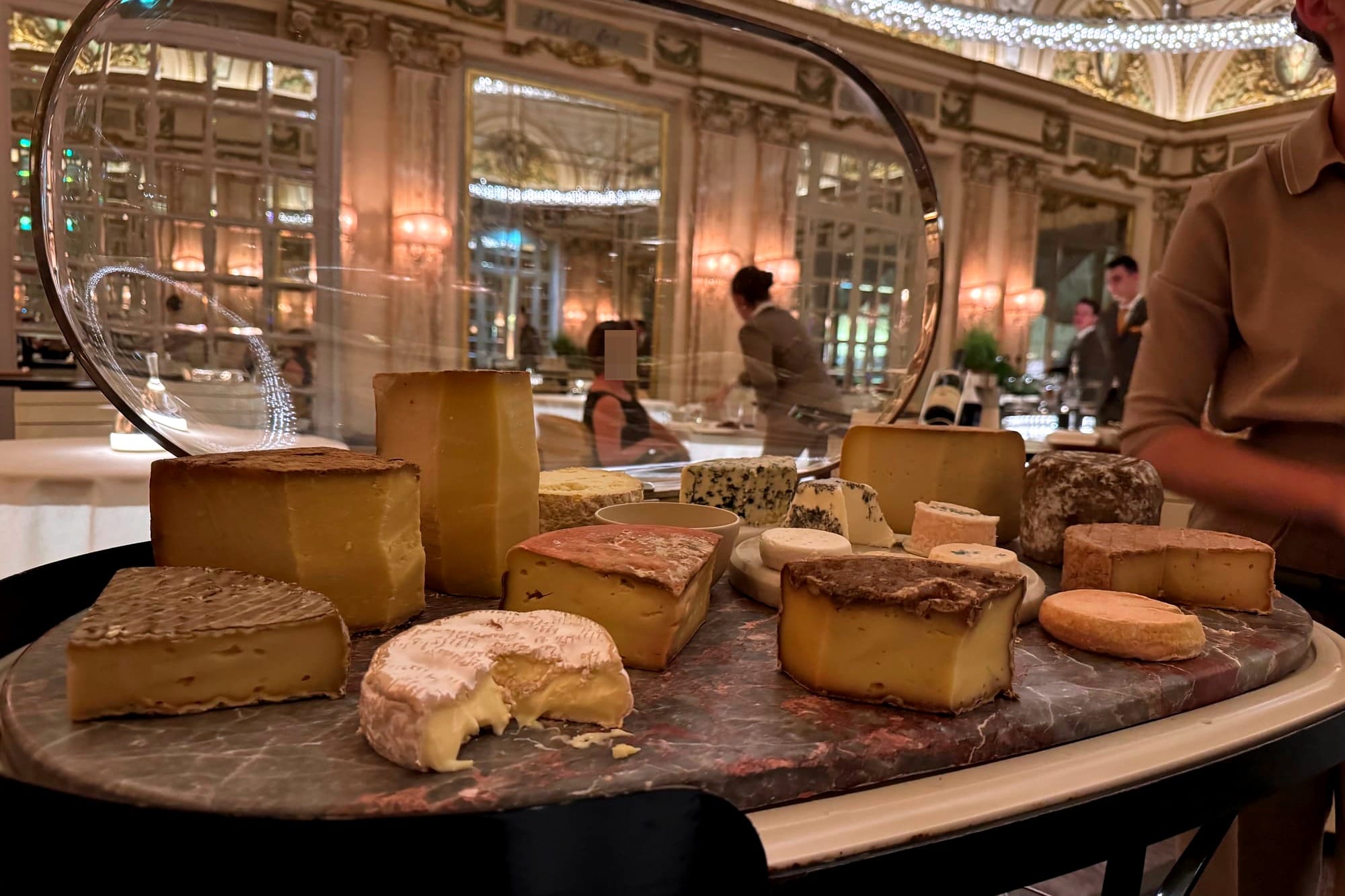
Cheese followed from the cart, a pleasure that belongs naturally to this kind of restaurant. The cart has its own rhythm, its own small theatre, and here it felt less like abundance than continuity.
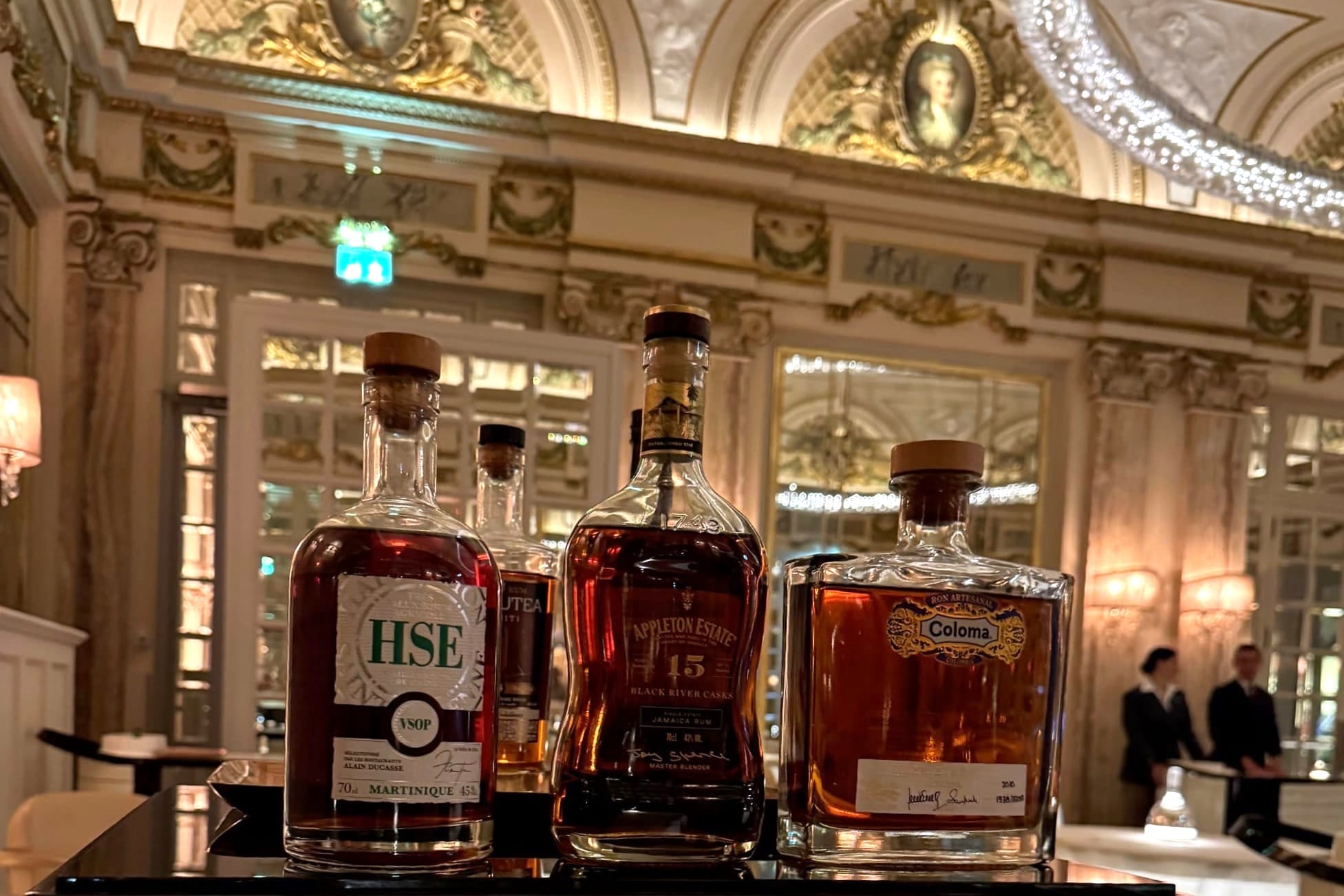
Dessert was the classic rum baba with vanilla, orange peel, and half-whipped Chantilly. In another restaurant, such a dessert might feel nostalgic. Here it felt correct. The baba was not an intellectual ending, but a generous one: saturated, fragrant, and carried by cream rather than sugar alone. It closed the menu with warmth.
Wine
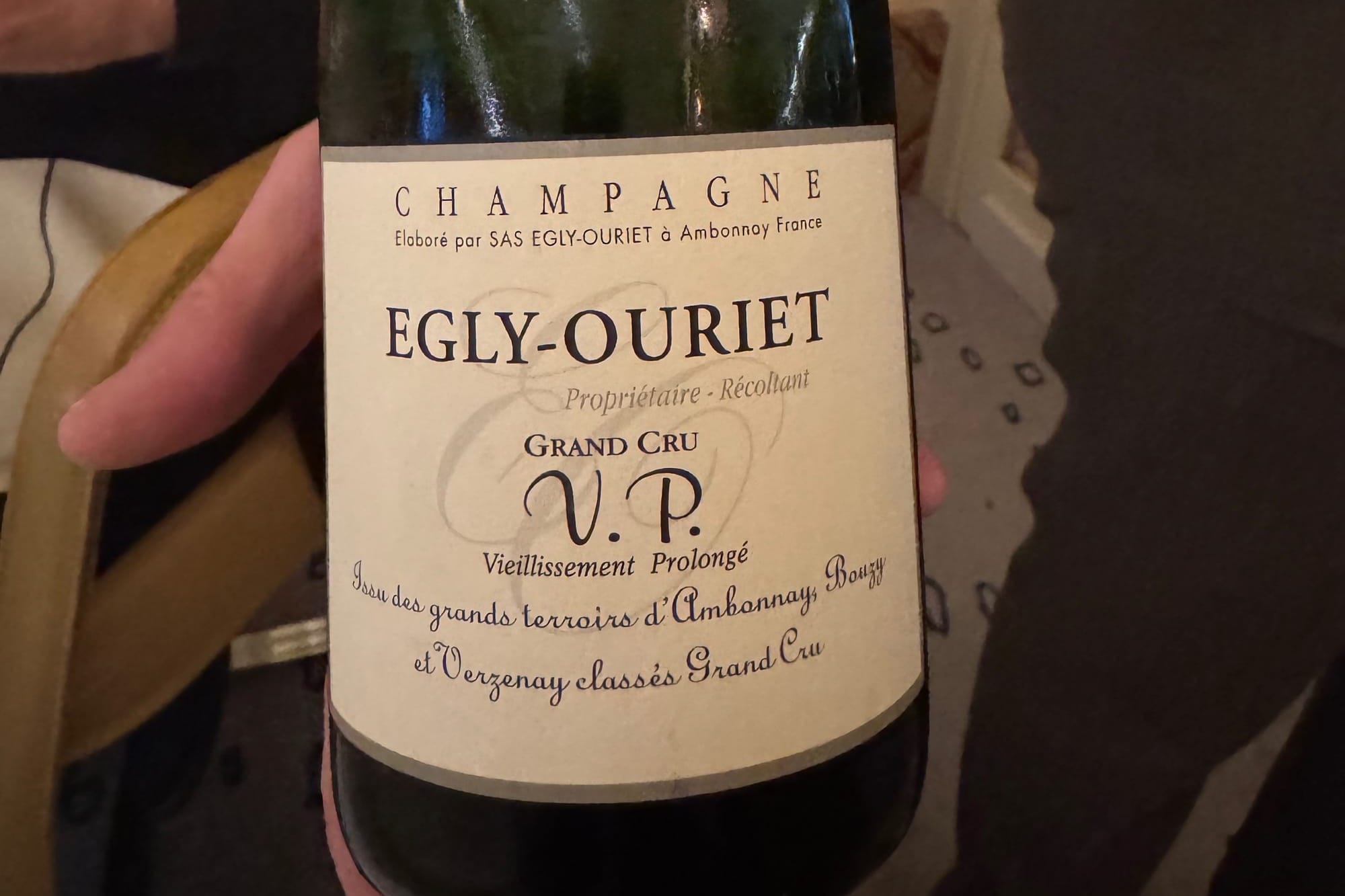
We chose to order bottles rather than opting for a pairing. For example, the evening opened with Egly-Ouriet Grand Cru VP, a Champagne of notable depth and persistence, well suited to both the cuisine and the setting. Later, we moved to Domaine Labet from the Jura, Le Champs Rouge Chardonnay. These give a sense of the direction of the wine choices throughout the meal.
What can be said is that Le Louis XV is a restaurant where wine matters profoundly. The Hôtel de Paris is known for one of the great hotel cellars, and the sense of vinous depth is present even when one engages with it selectively rather than encyclopaedically.
Verdict
Le Louis XV is a great restaurant, but not because it tries to appear contemporary at every turn. Its strength lies elsewhere. It understands ceremony. It understands produce. It understands that luxury, when handled properly, is not noise but concentration.
There were small reservations. The opening atmosphere was somewhat formal, and the artichoke course was firmer than I would have preferred. But these are details within an evening of very high command. The best dishes, especially the John Dory and the lamb, had the quiet authority that separates technical excellence from true gastronomic memory.
Ducasse in Monaco is a classical restaurant of the old school, in the very best sense. It is not a place for diners seeking informality or surprise as an end in itself. It is for those who still believe in the grand restaurant as a complete cultural form, where architecture, service, wine, product, and time are brought into alignment. By the end of the evening, what remained was not spectacle, but composure.
• Location: Monaco
• Chef: Alain Ducasse, with Emmanuel Pilon
• Michelin rating: ★★★
• Visited: April 2026